Sarvjeet Tamta on Carrying Forward the Qawwali Tradition

Sarvjeet Tamta reflects on devotion, spontaneity and the enduring influence of Nusrat Fateh Ali Khan in shaping his journey with qawwali.
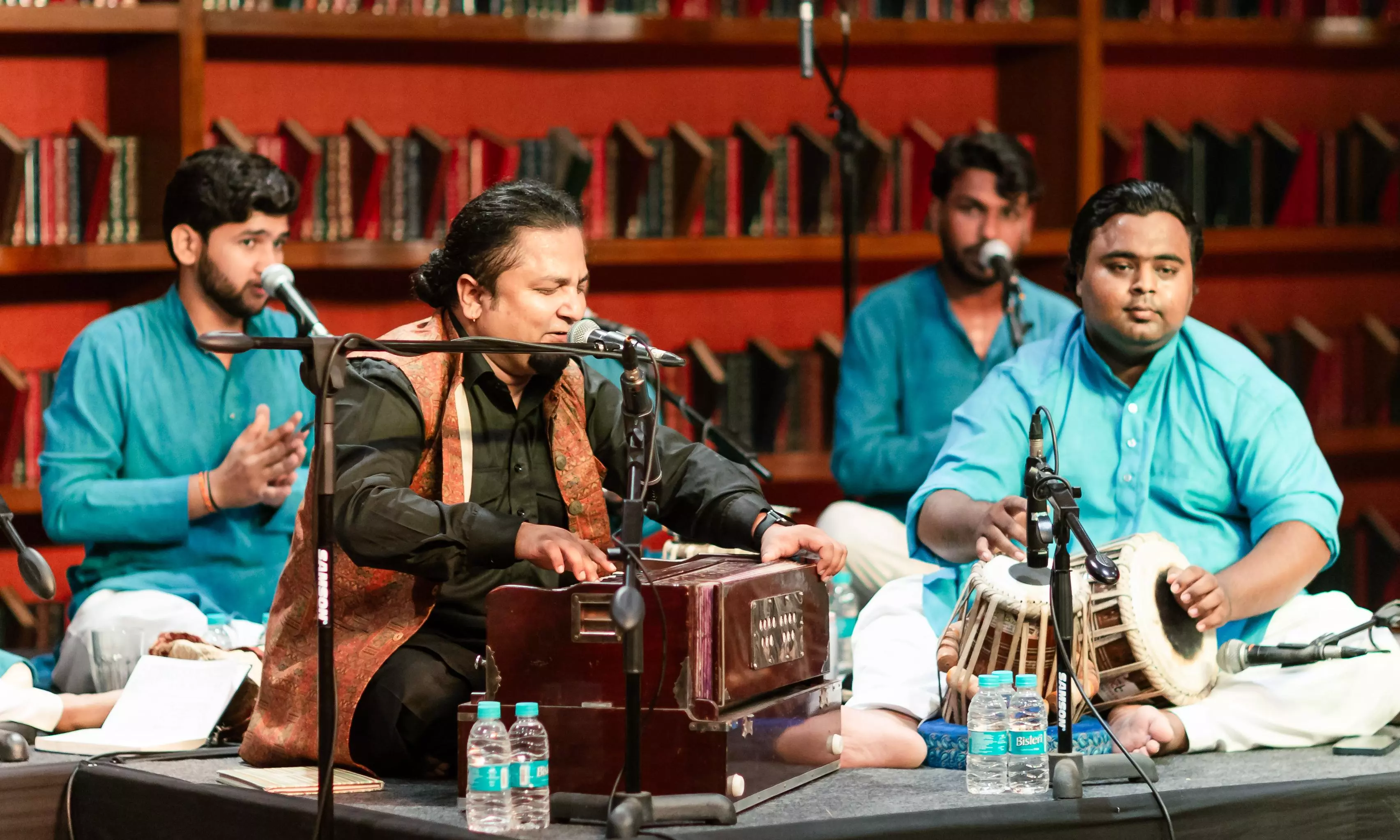
Ahead of Rehmat-e-Nusrat’s performance at Windmills Craftworks on April 24 and 25, vocalist and harmonium artiste Sarvjeet Tamta speaks about his deep-rooted connection to qawwali and Sufi poetry. From early influences to the spontaneity of live performance, he shares what drives his music and what he hopes audiences take away.
What first drew you personally to qawwali and Sufi music?
Khan Sahab Ustad Ji Nusrat Fateh Ali Khan Sahab—after listening to him, no other voice has ever truly touched my heart. I first came to know him by name in 2010; subsequently, when I heard his compositions, I fell deeply in love with Qawwali and Sufi poetry.
How would you describe your musical journey
Since childhood—from the age of five, in fact—I used to sing the folk music of Uttarakhand. Subsequently, as I have mentioned, I heard Khan Sahab perform for the very first time; from that moment on, a complete transformation took place in both my temperament and my music. Now, my life has but one sole purpose: to serve the art of Qawwali.
Which Sufi poets or kalaams resonate most deeply with you personally, and why?
It is extremely difficult to single out just one name... All the Sufi poets wrote exactly what they felt, and through their poetry, they all ultimately arrived at the very same destination... I hold them all in high esteem.Nevertheless, Kabir's Nirgun hymns—along with the works of Hazrat Amir Khusro, Baba Bulleh Shah, Anwar Jogi Sahab, Bari Nizami Sahab, and many other poets—possess a power such that their words seem to unveil every single page of the book of life.Hazrat Amir Khusro is truly peerless.
What role does improvisation play in shaping your live performances?
To be honest, nothing in a live performance is ever pre-decided. In that moment, everything is spontaneous... and perhaps that is the true magic of this art form.
How does performing at Windmills Craftworks, Hyderabad influence the energy or structure of your set?
We are performing here for the very first time, and we are incredibly excited. From its very inception, Hyderabad has carried with it a rich history of Sufi music and Qawwali. We are deeply grateful to Windmills for granting us this opportunity. It will be our earnest endeavor to serve the art of Qawwali to the best of our ability here at Windmills.
How do you emotionally prepare yourself before going on stage?
Before taking my seat on the stage, I simply visualize Khan Sahib and seek his forgiveness—both for past mistakes and for any errors that may occur in the future.
In one line, what do you want your audience to feel when they hear you sing live?
Equal love for everyone in the entire world.
