Creativity Must Come From Truth, Not Trends: Ravi Basrur

“After these eight or nine years in cinema, I felt it was time to create something beyond it,” he says.
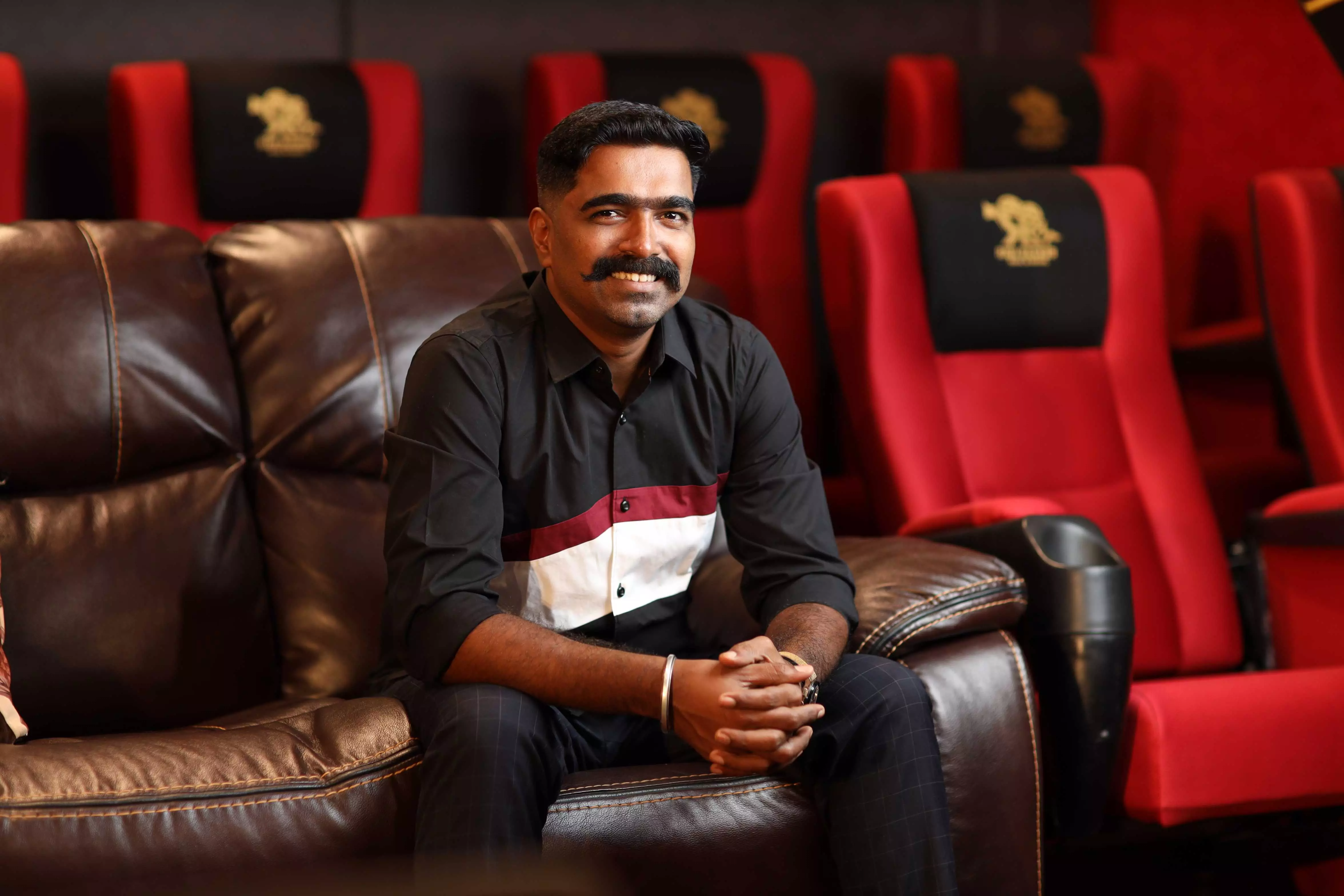
For nearly a decade, Ravi Basrur has shaped some of Indian cinema’s most unforgettable soundscapes — from the thunderous energy of KGF to the emotional gravitas of Ugramm and Salaar. But now, the acclaimed composer is venturing into a space that belongs wholly to him — his first-ever original score album, TITAN, a project born not from a film script but from instinct, emotion, and a deep desire to experiment.
“After these eight or nine years in cinema, I felt it was time to create something beyond it,” he says. “Whatever was inside me needed space to come out. In films, I can’t always do that.” For Basrur, this album is a journey into sound without boundaries — a chance to experiment, to unlearn formulas, and to rediscover the soul of music itself.
The project, he explains, took shape after months of observing trends, playlists, and the listening habits of younger audiences. “I studied what young people are listening to,” he recalls. “I went through their Spotify playlists, I visited clubs, and I realized — 90% of what’s played is international. Hardly any Indian tracks. Even my daughter’s playlist was full of English songs. That’s when I decided: it’s time to change that.”
His goal isn’t to imitate the West but to reclaim the global sound space for Indian emotion. “We have the strongest emotions in the world,” he says. “You can’t find the emotions of Baahubali or KGF in any Hollywood movie. But we haven’t experimented enough with the presentation. That’s what I want to change — to show that Indian emotions can also have modern, hybrid sounds.”
The first track of his album carries the message that every end is also a beginning — uncertain, unpredictable, but necessary. “We never know if the next beginning will be good or bad. But we have to be ready. That’s life, that’s creativity. For me, music is like a battlefield — we go in not knowing the result, but we give it everything.”
Basrur’s studio, tucked away in the coastal town of Kundapur, is a world of its own — built, quite literally, by hand. “My team and I built it ourselves,” he says proudly. “We did the carpentry, the welding, everything. Some of my assistants are carpenters, jewellery workers, or welders — and also singers. Everyone has talent. You just need someone to notice it.”
His chorus in KGF — the unforgettable “Salaam Rocky Bhai” — featured singers from his village, none of them professionals. “They had never sung before. But there was music inside them. Everyone has something inside. You just have to wait for the right opportunity.”
Ask him about success, and Basrur tells a story — a simple memory from his childhood that still defines how he sees life. “When I was around ten, I wanted to buy a leather shoe from a shop in Kundapur. It cost ₹700, which was huge for us. My father told me, ‘Earn it yourself.’ So every day after school, I worked sharpening scissors. I earned 50 paise a day. After months, I collected the money, bought the shoe, came home, wore it — and that excitement was gone. That day I realized something: the real joy is in the journey, not in the goal.”
He pauses for a moment. “Even today, after doing big films, that’s what makes me happy — the process, the work, the struggle. Success comes and goes, but the journey stays.”
Basrur believes that creativity must come from truth, not trends. “A creative person should never follow,” he says. “We have to create. There’s no fixed formula for success. You just keep experimenting. Sometimes it works, sometimes it doesn’t — but every time, you learn.”
That belief defines how he mentors younger musicians. He encourages them to think freely, take risks, and see failure not as a loss, but as part of learning. “Failure is not the end,” he insists. “Even a so-called failed movie gives jobs to thousands of people. How can that be a failure? It’s just another lesson for the next generation.”
With his new album TITAN, Basrur hopes to ignite something — a cultural shift that puts Indian music back in the global rhythm. “We have the talent,” he says. “We just need to believe that our sound, our emotion, can stand next to anyone in the world. We have to build an army — not of followers, but of creators.”
For Ravi, it isn’t about fame or numbers. It’s about freedom — the freedom to express what’s inside, to make music that’s not bound by a screenplay or a scene, but led by feeling. “Music is not mine,” he says softly. “I am just the tap. The water comes from somewhere else. My job is to serve it to people.”
And with that humility, Ravi Basrur continues to remind us — that in art, as in life, every end is just a new beginning.
Watch Interview Here
Ravi Basrur: The Journey Matters More Than Success
