Sitar That Sings: Ustaad Shujaat On Mehfils, Music, and Universality

Sitar maestro Ustaad Shujaat Husain Khan on Hyderabad’s tehzeeb, the intimacy of mehfils, and carrying centuries of memory through music
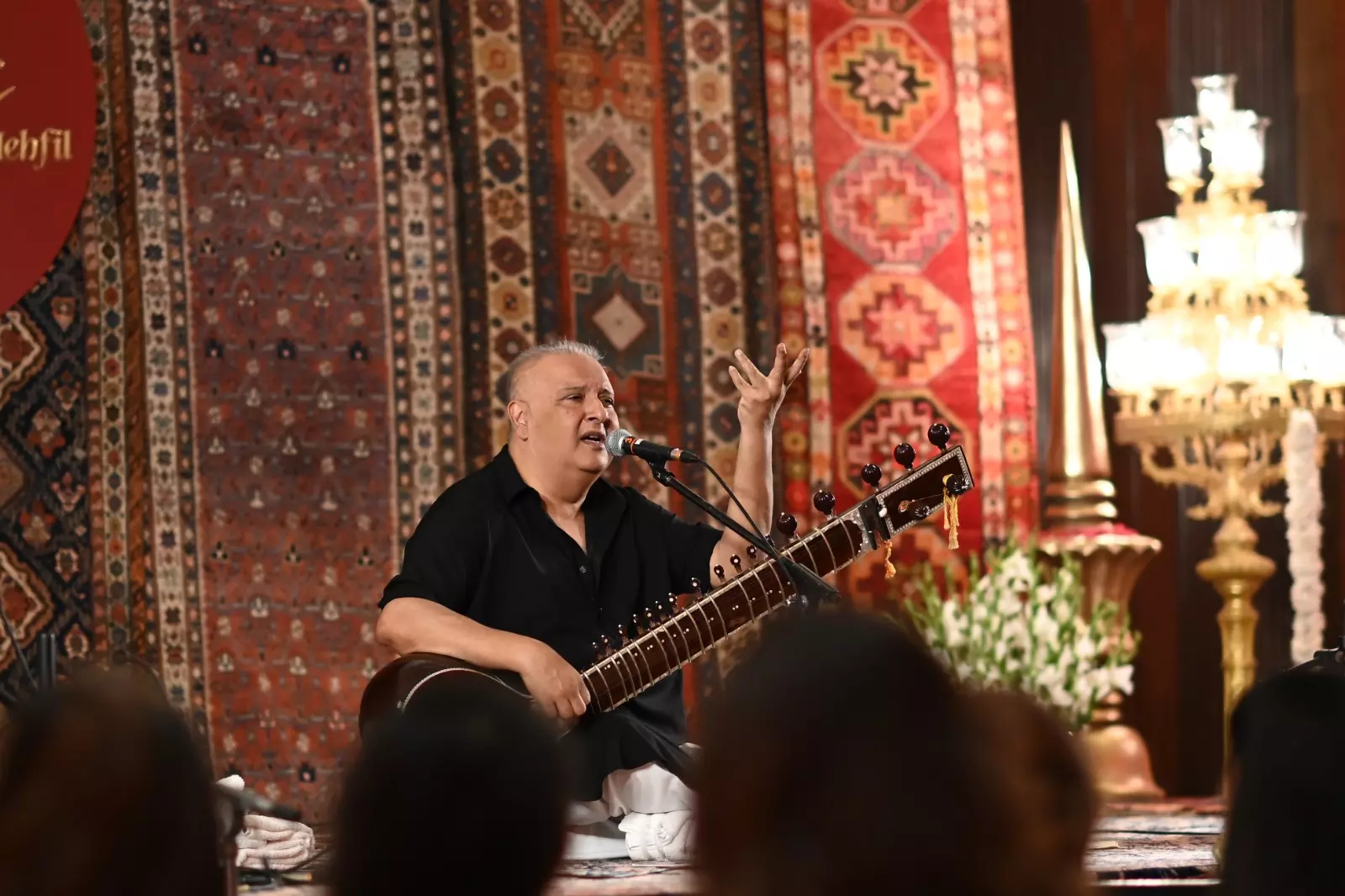
Ustaad Shujaat Husain Khan, one of India’s most celebrated sitar maestros and the seventh-generation torchbearer of the Imdadkhani Gharana, is known for his signature gayaki ang style, where the sitar seems to sing. Ahead of IBTIDA – Ek Mehfil in Hyderabad, he speaks about the timeless spirit of mehfils, his journey of carving an identity within tradition, and the universality of music that connects cultures across the world.
On Hyderabad’s tehzeeb and charm:
Hyderabad is famous for so many things — tehzeeb, poetry, food, music, culture, history. For someone like me, whose life revolves around all of this, visiting the city is always very special. Meeting friends, enjoying authentic food, experiencing tradition, or even just the adaab — it’s all very exciting for me.
On pre-concert rituals:
Everyone has their own rituals before a performance. For me, it’s about taking my mind away from the stage until it’s time. I might have a cup of coffee, take a shower, shave, go for a drive, do some shopping, meet friends, or take a nap. Then I do my sound check, and about half an hour to 45 minutes before the concert, it becomes about winding down and focusing so I can deliver at the exact designated time.
On IBTIDA – Ek Mehfil and Hyderabad’s spirit:
This is very deep. Hyderabad has always been a city of tehzeeb and culture, an upholder of traditions admired worldwide. The spirit of mehfil — intimate gatherings where people come together to listen to music — is exactly how our music was meant to be heard. IBTIDA – Ek Mehfil captures that essence beautifully, preserving heritage while creating a space where the tradition can truly come alive. Performing in Hyderabad makes this journey even more special.
On his ‘gayaki ang’ style:
I call my style gayaki ang because it brings the vocal essence into the sitar. Earlier, the instrument was known more for staccato notes, but I try to make it lyrical, almost like it is singing. I learn compositions vocally first and then try to express them on the sitar as closely as possible to the human voice.
On balancing tradition and identity:
Being the seventh-generation representative of the Imdadkhani Gharana, and the son of Ustad Vilayat Khan, comes with immense expectations. It has been a bittersweet journey. For many years, people only saw me as his son. Over time, I have been able to establish my own identity and my music, while of course carrying forward the gharana. Every performance feels fresh and alive to me — this is what I live for, playing music and making people happy.
On cross-cultural collaborations:
I have collaborated across genres — with ghatam, kamancheh, saxophone, and more. But what truly shows the universality of music isn’t just performing together, it’s spending time with great musicians around the world — like Miles Davis or Stan Getz — and exchanging thoughts, feelings, and experiences. That’s where I feel the real connection of music across cultures.
On the memories behind his music:
Travel has been a big part of my life. I might be sitting in a small village in the Pyrenees, between Spain and France, listening to a piece of music that moves me — and I think, this is something I would like to bring into my own playing. Feelings and inspirations come from so many places. I am grateful that I can share them with audiences, and even more grateful that people come to listen. For me, that exchange is the greatest joy.
