A week after Dharma Productions gave Bollywood viewers the brilliant ‘Homebound’, they are back in familiar territory.
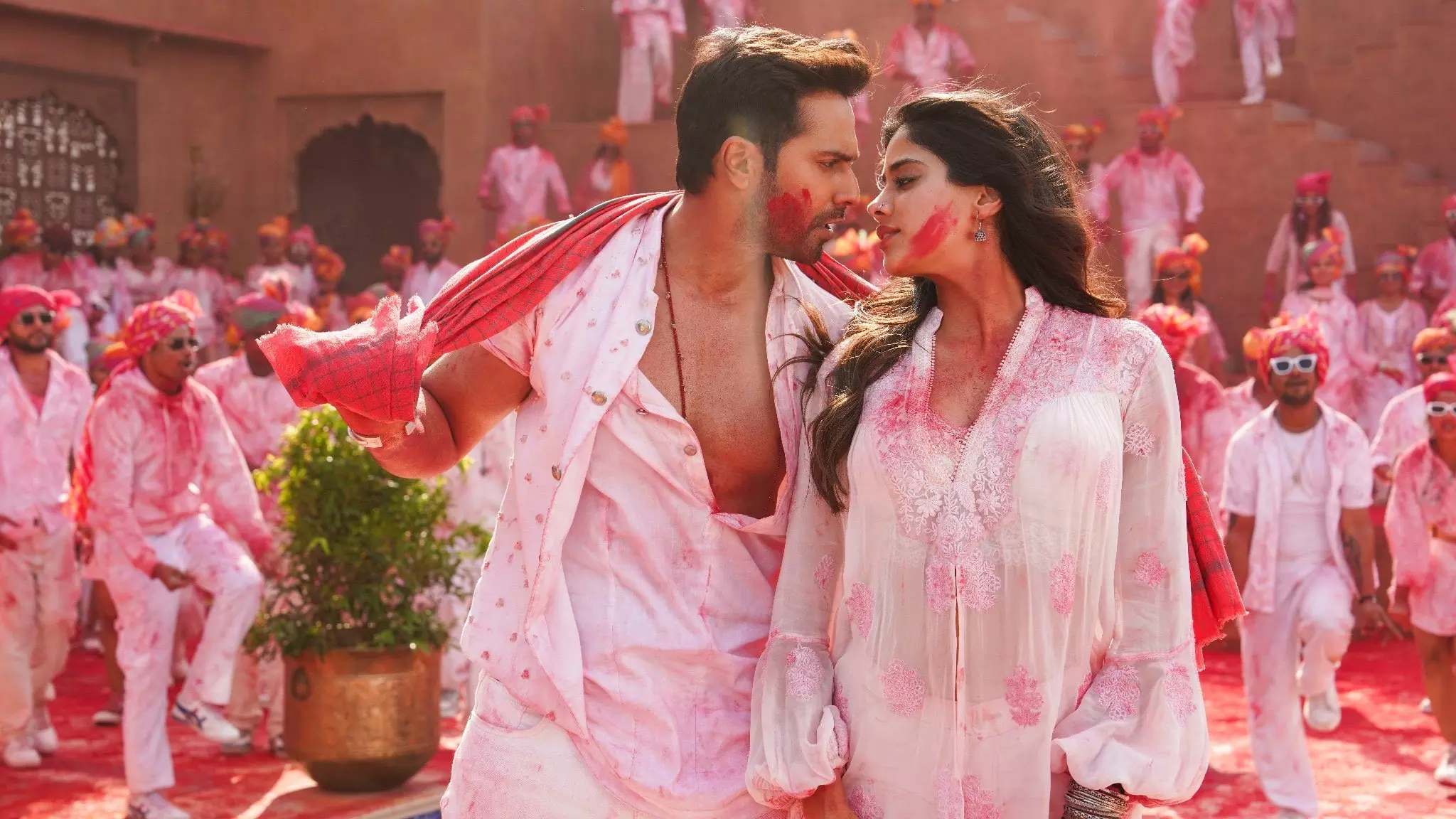
Starring: Jahnavi Kapoor, Varun Dhawan, Sanya Malhotra, Rohit Suresh
Direction: Shashank Khaitan
A week after Dharma Productions gave Bollywood viewers the brilliant ‘Homebound’, they are back in familiar territory. Not surprisingly, the footfall for the latter is much higher than for the former. People get the government they deserve, and perhaps the cinema too. Why would so many people go to watch ‘Sunny Sanskari Ki Tulsi Kumari’? Perhaps it is the same curiosity that killed the cat, perhaps a weekend habit or maybe just a lack of choice at the multiplex.
It could be the fans of the star system or of Jahnavi Kapoor or Varun Dhawan. You might well regret your choice, unless, of course, you are a Varun Dhawan fan. Comedy is invariably a risky creative space. This film is neither in the Priyadarshan zone nor in the ‘Golmaal’ zone. It is certainly not the Rajkumar Santoshi brand of fun and frolic we last saw in ‘Ajab Prem Ki Ghazab Kahani’. Our comedy films today are ‘Housefull’ and ‘Son of Sardaar‘ and you can add this one to the list.
In modern cinema, those visible, discernible muscles behind the multiplexes determine the collective taste, viewing trends, likes, preferences and choices. You do not have to be Hitchcock to notice how and where films are distributed, screened,and how their earnings are manipulated and the floodgates of box office collections are wide open. The grass has no abyss when someone like Shashank Khaitan (writer of ‘Rocky Aur Rani Ki Prem Kahani’) is at work. You expect a modicum of credibility, but even that is asking too much here. He had a plot on hand and lost it, completely.
The film begins with two connected break-ups. Both characters start off in emotionally weak places. Ananya (Sanya Malhotra) and Vikram Singh (Rohit Suresh) have dumped their respective love interests, Sunny Sanskari (Varun Dhawan) and Tulsi Kumari (Janhvi Kapoor), yet continue to remain entangled with their former lovers. Mainstream cinema is also trying hard to push the concept of “situationships,” an emotional evolution influenced by modern culture and social media.
Ananya has pushy parents, Pulkit and Kriti (Gaurav Sikri and Nazneen Madan), particularly the latter. Vikram has a brother, Param (Akshay Oberoi), who exists only to live up to his mother’s expectations, along with his wife Rakhi (Manini Chadha). There are other nondescript moms, dads and hangers-on populating the story. In the world of ‘Sunny Sanskari Ki Tulsi Kumari’, we also have Sunny’s comedic friend Bantu (Akshay Sharma) and a marriage broker, Cuckoo (Maniesh Paul). The entire crowd lands at Raffles, Udaipur, to present a rich ‘Hum Aapke Hain Koun..!’ style spectacle, only for it all to go wrong. The experience is akin to that of a passenger on a flight that never takes off, stuck eternally on the runway.
What is even more excruciatingly painful are some dialogues (Ishita Moitra), like Sunny telling Tulsi, or Janhvi Kapoor, being told, “Tere andar ek Meena Kumari hai.” Even as a joke, this is too much. So poor is the creative juice of the filmmaker that in the dance competition between the jilted lovers on one hand and the wedding spoilers on the other, you have Sanya and not Janhvi doing ‘Kate Nahi Kattey…’.
You have horrendous one-liners like “short man telling long story,” “you touch my chest,” “higher middle class to lower middle class,” and poetic lines inspired by Boseesh (refer ‘Mr and Mrs Sarabhai’). The giggle-weep pendulum of Tulsi and the stance of Sunny Sansari do everything a filmmaker could do to unwittingly test our patience. Maniesh Paul, as the wedding planner, advises everyone not to worry since that is his job. Must release? It is easier said than done in a scenario like this.
In a wedding packaged as elitist, everyone is over the top. Also, the guest list is disproportionately minimalistic. It is sad to see Abhinav Sharma reduced to near nothing. Ditto Akshay Oberoi. Nazneen Madan, as Ananya’s mom, tries hard but falls flat. Ditto Dharna Durga as Tulsi’s friend. The script must swim or sink on the credibility of its four main characters. Sanya Malhotra looks plastic and acts wooden. Rohit Suresh is endearing but lost, and often looks like he is clueless, not just about his life but about the script too. Jahnavi Kapoor is a near replacement for Alia Bhatt in the Shashank Khaitan space. A poor replacement. She fails to display any perceivable chemistry, both in her poorly scripted relationship with Rohit and at the centre of the script with Varun. Rohit Suresh apart, the saving grace, if any, in SSTKT is Varun Dhawan. Even flat, clichéd statements like “you don’t just see tears, you hear them too” come with genuine intensity. Varun has made it a habit, a la Rishi Kapoor in the 70s and 80s, to overcome a poor script with a steady performance. He is quick-witted, well-footed and cleanly presented. He carries the poorly scripted, badly executed love quadrangle on his gym-packed shoulders.
To go back to what was stated earlier, SSTKT is not just a poor reflection of our cinematic skill sets; it is a poor refractive index of what film production houses conceive as entertainment or audience choice. Take Varun Dhawan out, and the entire thing falls like a well-decked pack of cards. No bother to pick or reshuffle, simply let go.

