'Kahaani 2' Row: SC Quashes Copyright Case Against Sujoy Ghosh

20 March 2026 8:40 PM IST20 March 2026 8:40 PM IST
Court found no similarity between Ghosh's 'Kahaani 2' and complainant's script, highlighting the need for thorough legal scrutiny.
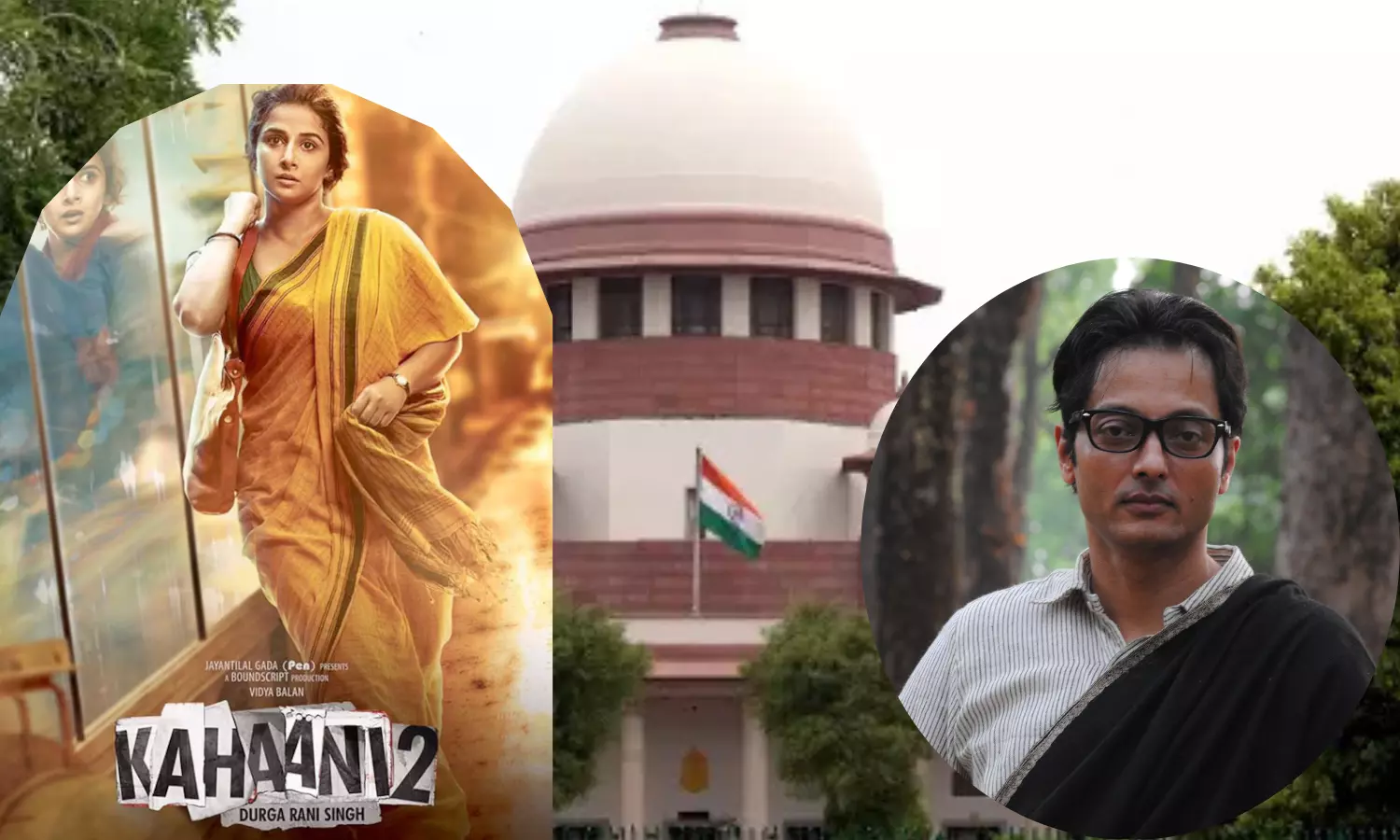
It said the question of copyright infringement does not arise as the complainant's script was not even in existence when Ghosh registered his screenplay. (Photo by arrangement)
New Delhi: In a relief to filmmaker Sujoy Ghosh, the Supreme Court on Friday quashed the proceedings in a case alleging copyright infringement against him over his movie "Kahaani 2", which was released in December 2016.
A bench of Justices P S Narasimha and Alok Aradhe said the proceedings instituted against Ghosh were "manifestly frivolous and vexatious".
The bench set aside an order passed by the Jharkhand High Court on April 22 last year, refusing to quash the proceedings against the filmmaker.
The top court also quashed a June 7, 2018, summoning order passed by the chief judicial magistrate (CJM) of Hazaribagh in the case.
The bench said the complaint only contained "bald and unsubstantiated allegations" and did not even prima facie disclose the similarity between the film and the script of complainant Umesh Prasad Mehta.
"For the reasons stated above, the inevitable conclusion is that the proceedings instituted against the appellant (Ghosh) are manifestly frivolous and vexatious," the bench said, while allowing the appeal filed by the filmmaker.
The top court delivered its verdict on Ghosh's plea challenging the high court order.
It said there was no material on record to prima facie conclude that there was any similarity between the film and the complainant's script.
The court said in the summoning order, the CJM had even failed to record the satisfaction that there was any similarity between the film and the complainant's script.
"The summoning order, therefore, has been passed in a mechanical manner and suffers from the vice of non-application of mind. The high court has also failed to appreciate that the summoning order has been passed without any application of mind and in the absence of sufficient material on record," it said.
The bench noted that the material on record revealed that "Kahaani 2" was a sequel to Ghosh's earlier film, "Kahaani".
"The appellant (Ghosh) registered the synopsis of the film on December 10, 2012, under the title 'Kolkata'. The partial script of the said film, then titled 'Durga Rani Singh', was registered on October 10, 2013. The full script of the said film, then titled 'Karaar', was registered on December 2, 2013. Admittedly, the complainant went to Mumbai on June 29, 2015, and registered his script on July 31, 2015," the bench noted.
It said the question of copyright infringement does not arise as the complainant's script was not even in existence when Ghosh registered his screenplay.
"In the result, the summoning order dated June 7, 2018, passed by the CJM and the order dated April 22, 2025, passed by the high court are quashed and set aside. The proceeding in Complaint Case ... pending before CJM, Hazaribagh, is quashed and set aside," the apex court said.
It said the principles governing the summoning of an accused in a criminal case and the parameters for quashing criminal proceedings are well-settled.
The bench said summoning an accused in a criminal case is a serious matter and criminal law cannot be set into motion as a matter of course.
"It is not that the complainant has to bring only two witnesses to support his allegations in the complaint to have the criminal law set into motion. The order of the magistrate summoning the accused must reflect application of mind to the facts of the case and the law applicable thereto," it said.
The top court said the magistrate must carefully scrutinise the evidence brought on record and determine whether any offence was prima facie made out.
It said when an accused seeks the quashing of either an FIR or criminal proceedings on the ground that such proceedings are manifestly frivolous, vexatious or malicious, the court is duty bound to examine the matter with greater care.
"In frivolous or vexatious proceedings, the court owes a duty to look into many other attending circumstances emerging from the record of the case, over and above the averments and, if need be, with due care and circumspection, and try to read between the lines," it said.
The top court noted in its verdict that according to the complainant, he had travelled to Mumbai and met Ghosh and one Prabhat Kumar Thakur in June 2015.
It was alleged that the complainant had sought a recommendation letter required for registering a film script and allegedly left a copy of his script, titled "Sabak", with Ghosh.
The complainant had claimed that he had registered the script, "Sabak", with the Screen Writers Association (SWA) on July 31, 2015.
The top court noted that the complainant had filed a complaint on December 23, 2016, before the SWA, alleging that "Kahaani 2" infringed the copyright of his script "Sabak", and the matter was referred to the SWA's Dispute Settlement Committee.
The complainant had also filed a complaint before the court of CJM, Hazaribagh, alleging that Ghosh had committed offences including under the provisions of the Copyright Act, 1957.
The top court noted that the Dispute Settlement Committee of the SWA consisting of experts had on February 24, 2018, held that there was no similarity between Ghosh's film and the complainant's script.
It said the CJM passed the summoning order on June 7, 2018, holding that there was sufficient material to proceed with the complaint against Ghosh and co-accused Thakur, and that a prima-facie case under section 63 of the Act was made out.
The filmmaker then moved the high court seeking the quashing of the criminal proceedings.
( Source : PTI )

Next Story