The Odyssey Review: Christopher Nolan’s Epic Storytelling at its Finest

Christopher Nolan transforms Homer’s timeless epic into a visually staggering, emotionally resonant adventure led by a stellar ensemble. Grand in scale and intimate in emotion, The Odyssey is an immersive cinematic experience that rewards every minute of its three-hour runtime
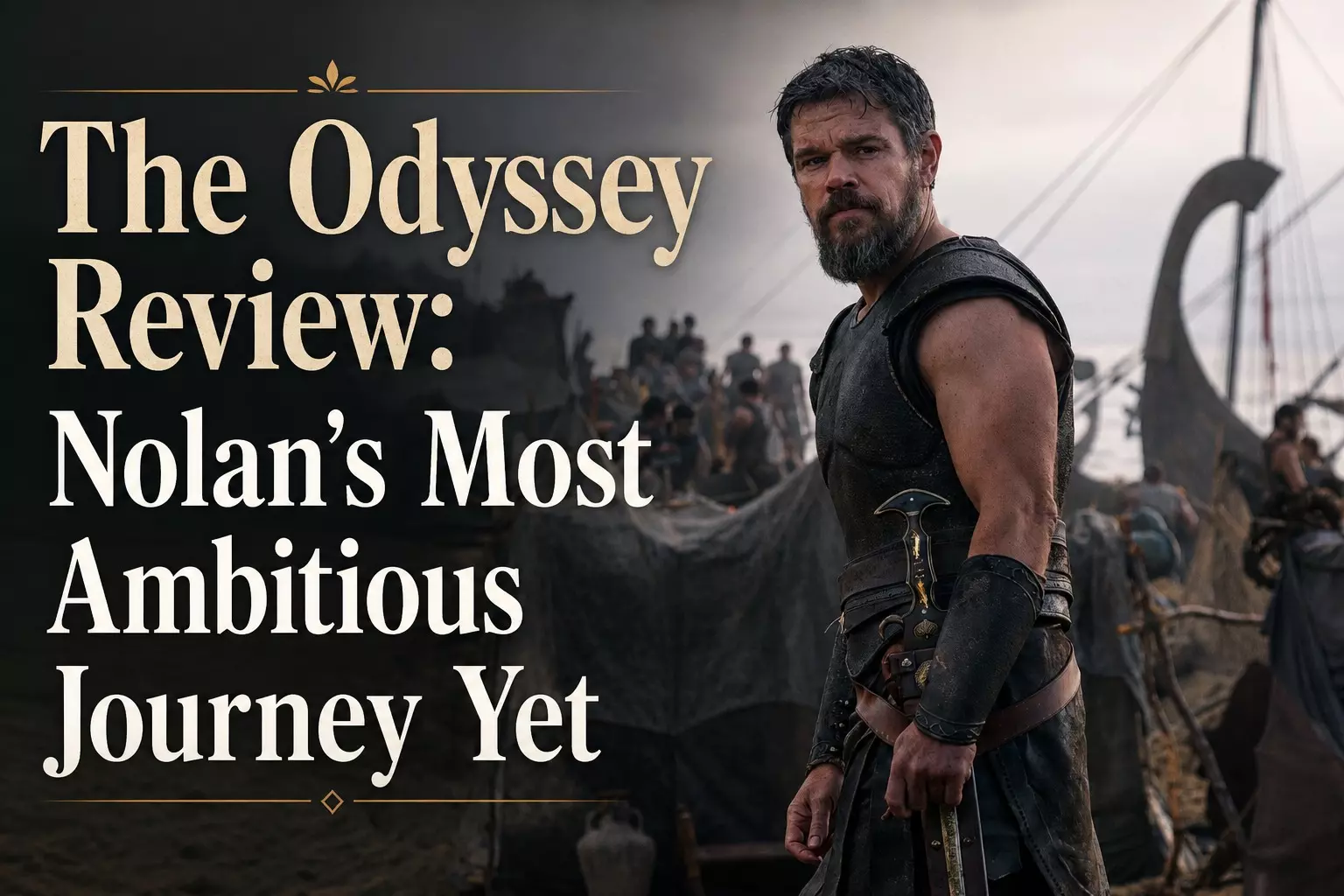
Christopher Nolan has never shied away from ambitious storytelling, but with ‘The Odyssey’, he ventures into territory few filmmakers would dare to touch. Adapting Greek poet Homer’s legendary epic is a challenge in itself. Turning it into a riveting cinematic experience for today’s audiences is something else altogether. Yet Nolan does exactly that, delivering a film that is as emotionally engaging as it is visually overwhelming.
‘The Odyssey’ picks up after the events of the Trojan War, following Odysseus’ decade-long struggle to return home to Ithaca after securing victory through the now-iconic Trojan Horse. While he battles gods, monsters, storms and impossible odds across treacherous seas, his wife Penelope and son Telemachus remain in Ithaca, protecting the throne from power-hungry suitors who have already begun writing off the missing king.
At just over three hours without an intermission, the film may sound intimidating on paper. On screen, however, time simply slips away. Every sequence feels earned, every detour adds to Odysseus’ emotional burden, and every challenge brings him closer not just to home but to understanding himself.
Nolan’s signature filmmaking is unmistakable, but this feels refreshingly different from his earlier work. The sheer scale is astonishing. Shot entirely on large-format IMAX film cameras, every frame is breathtaking. From towering kingdoms and raging seas to mythical creatures and massive battle sequences, the film constantly reminds you why cinema is best experienced on the biggest screen possible. With a reported budget of $250 million, the spectacle is impossible to ignore, but what lingers long after the credits roll are the people at its heart.
Matt Damon delivers one of the strongest performances of his career as Odysseus. Carrying the weight of guilt, hope, exhaustion and determination, he makes the legendary king feel remarkably human. Tom Holland is a revelation as Telemachus. Shedding every trace of his familiar superhero image, he confidently steps into a layered coming-of-age role that showcases impressive emotional maturity.
Anne Hathaway brings quiet strength and grace to Penelope, balancing resilience with restrained heartbreak as she keeps her relentless suitors at bay. Robert Pattinson commands attention whenever Antinous appears, while Charlize Theron lends Calypso an irresistible mystery. Zendaya’s Athena is calm, commanding and quietly powerful, and John Leguizamo leaves an impression as the fiercely loyal Eumaeus.
Some of the film’s most moving moments arrive not during its grand action set pieces but in its quieter scenes. Argos, the faithful dog who waits years for his master’s return, provides one of the film's most emotional sequences. Elsewhere, memorable exchanges such as Antinous taunting Telemachus, “You are pining for a daddy you never knew,” are met with the young prince’s unwavering reply: “My dad is coming home... bringing vengeance, bringing it to all.”
One of the most crowd-pleasing moments arrives in the climactic showdown when the seemingly harmless beggar asks for a chance to string Odysseus’ legendary bow. Anyone familiar with commercial Indian cinema will instantly recognise the dramatic build-up. The theatre erupted with whistles, cheers and applause as the sequence unfolded. Nolan stages the moment with remarkable restraint, allowing the tension to simmer before unleashing its emotional payoff. Even though the audience knows what is coming, the anticipation never fades. It is a scene that bridges cultures beautifully, proving that great storytelling, whether born in ancient Greece or celebrated in Indian cinema, thrives on the same emotions of hope, justice and triumphant revelation.
Despite its mythical backdrop, The Odyssey is ultimately about love, grief, loyalty, redemption and the price of defying destiny. Nolan updates the emotional language just enough to make an ancient tale resonate with modern audiences without losing its timeless soul. This is not merely a film about monsters, gods or war. It is about the long, painful journey back to oneself. Magnificent in scale, rich in emotion and powered by exceptional performances, The Odyssey is a cinematic experience that deserves to be seen on the biggest screen possible. It is, quite simply, a masterpiece worth the voyage.
