Hamnet Review: Grief, Parenthood, and A Shakespearean Tragedy

Hamnet is currently nominated for 8 Academy Awards this year, and Jesse Buckley stands as the frontrunner to win her first Best Actress Oscar award.
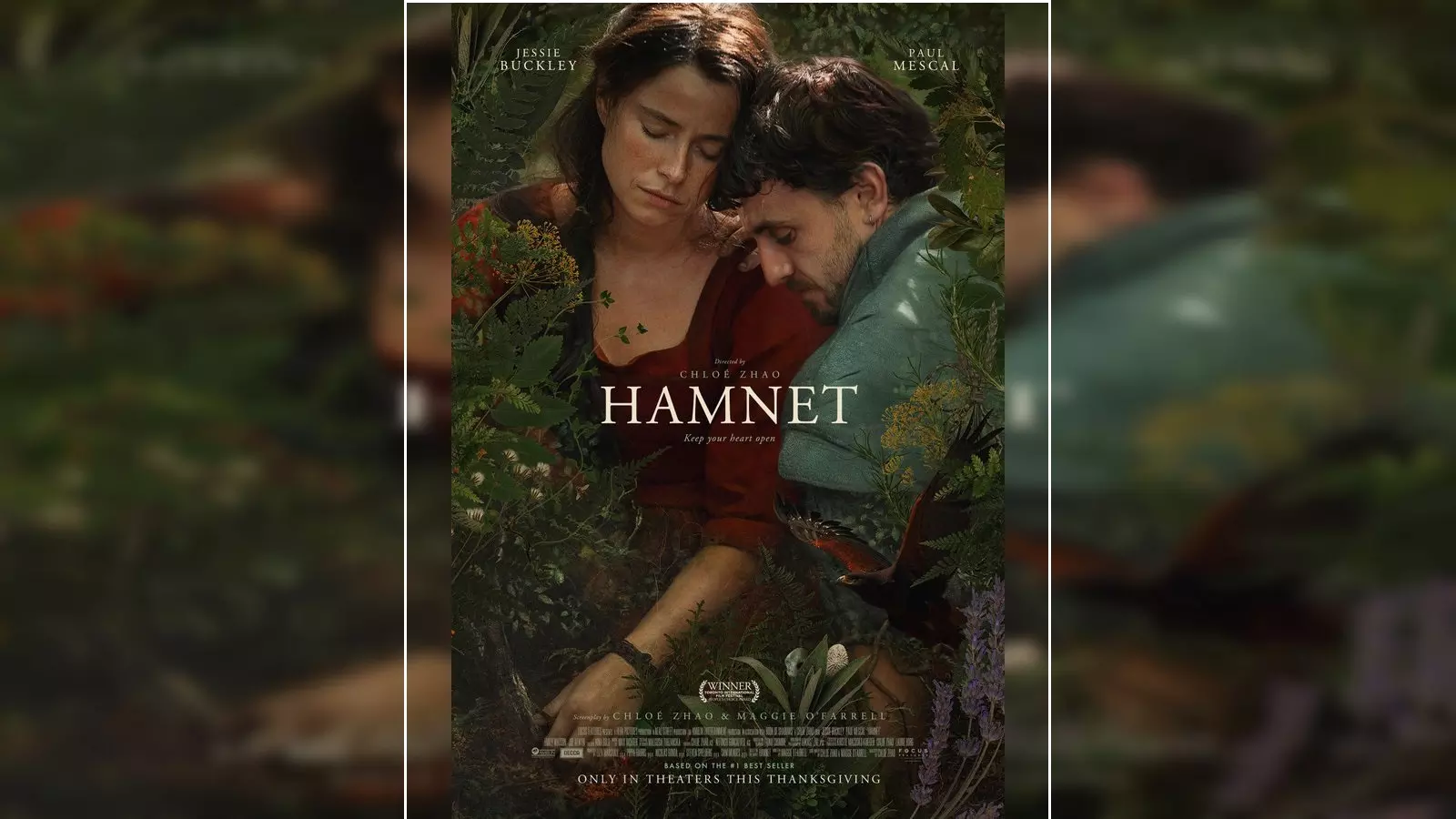
After her tremendous Oscar win for Nomadland, Chloe Zhao took a rather conventional path in her directing career with the big-budget MCU film The Marvels. That movie was very odd in her slate, and now, with Hamnet, she has hopefully washed away all of her cinematic sins.
Hamnet is an adaptation of a book of the same name written by Maggie O’Farrell. Shakespeare’s name resonates with grandeur, a mastermind and the creator of very big Jacobean dramas in Early Modern English. But in this film, his portrayal on screen by Paul Mescal is very nuanced and dramatic, establishing that the Bard of Avon was a family man like everybody else. The basic plot of the film is about the relationship between Shakespeare and his wife Agnes, and the tragic loss of their son Hamnet, which inspires the bard to write the original tragedy of Hamlet.
There’s an opening quote in the film which talks about this, and it says that “Hamnet and Hamlet are in fact the same name, interchangeable in Stratford records in the late sixteenth and early seventeenth centuries.” The major theme of this film is parenting. In the early scenes, we learn that Shakespeare didn’t have a good relationship with his father, as he was physically beaten by him and ridiculed for his choice to be an intellectual.
There’s a rumor surrounding Agnes, where people think that she’s the child of a forest witch and that she is cursed, but that doesn’t affect Shakespeare, and they both fall in love when he narrates to her the classic tale of Orpheus and Eurydice. The rest of the film deals with the struggles they experience mentally and physically while trying to survive as a family.
Zhao chose to follow her typical Nomadland and The Rider style of showcasing raw and intense visuals, and that is made possible with the flawless cinematography of Łukasz Żal, who provides an amazing visual texture to the canvas of this film, successfully convincing audiences that they’re transported into the late 1600s. He also brings in some shades of his previous works in films such as The Zone of Interest and Paweł Pawlikowski’s films, with the usage of static and long shots.
But the main stars of this film are Jesse Buckley and Paul Mescal. Nobody could have portrayed these characters better than them. Buckley’s acting reaches peak levels throughout the entire film. The same goes for Mescal, who, although he maintains a limited amount of screen time during the film’s second and third acts, nevertheless delivers his best. It’s a shame that he did not even get a nomination at this year’s Oscars, as he was badly snubbed. The entire film is very emotional; it’s hard-hitting and shocking to witness, especially the part where Judith is attacked by the bubonic plague, and the character Hamnet (played by Jacobi Jupe) wishes to sacrifice himself in place of his twin sister.
The supporting performances are equally astonishing, with Emily Watson (who plays Shakespeare’s mother) and Joe Alwyn (who plays the role of Agnes’s brother) providing two underrated performances, even though their character dynamics are subtle and quiet. The score by Max Richter also adds another layer of subtlety to the entire atmosphere of the film.
The ending scene of this film is one of the best closings of a movie, especially in 2025, wherein we get to see an enactment of the Hamlet play with sword duels (as Hamnet intended), and the score “On the Nature of Daylight” begins to play when Agnes holds the hand of the actor who plays Hamlet and the rest of the audience starts to do the same—it is mind-boggling.
Hamnet is currently nominated for eight Academy Awards this year, and Jesse Buckley stands as the frontrunner to win her first Best Actress Oscar award.
This article is authored by Yoga Adithya,
