Nani Walker on SHAKTI, Justice, and the New Awakening in Nepal

I feel very connected to India because culturally it’s so similar to Nepal… we share that culture of spirituality, says Shakti filmmaker Nani Walker
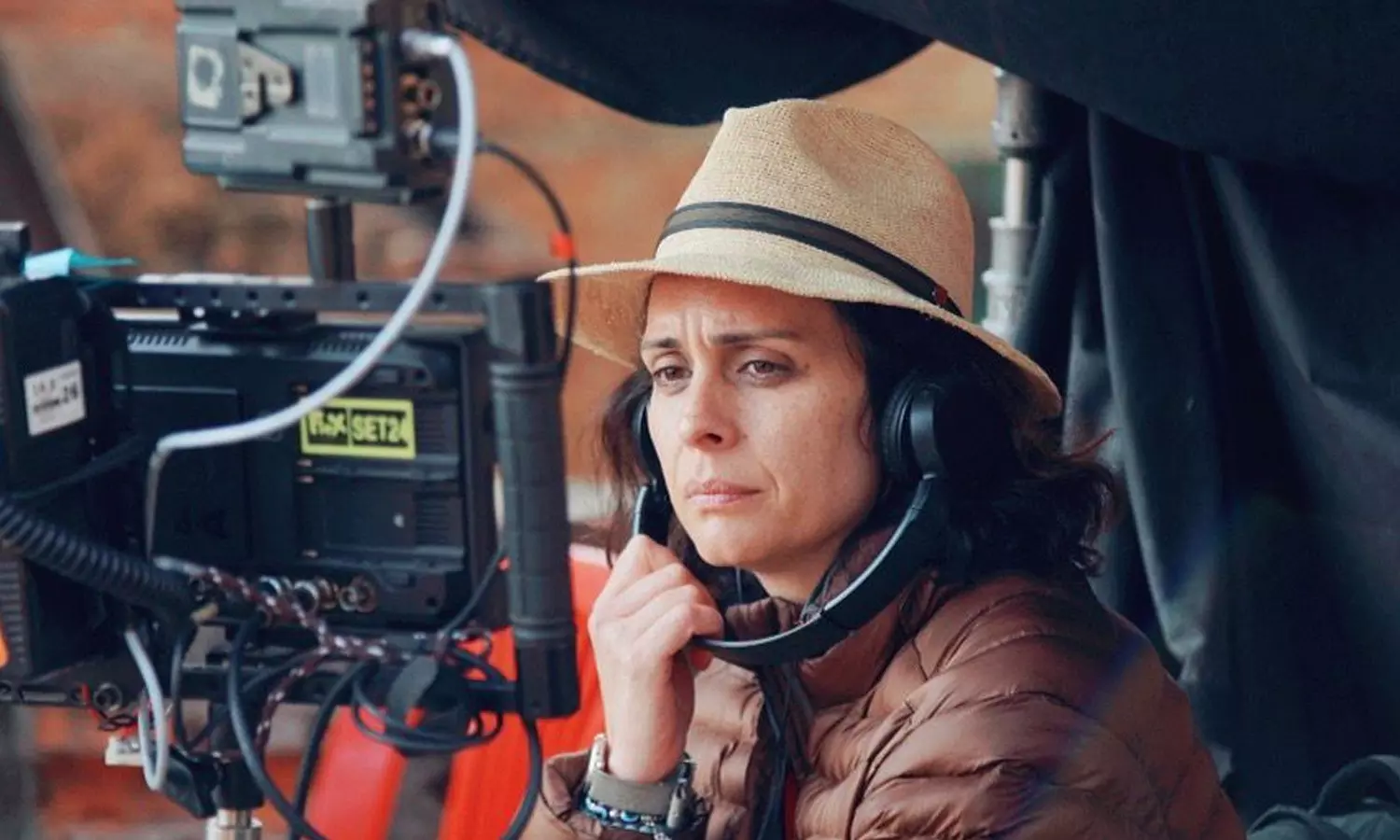
Nepalese filmmaker Nani walker describes the silence around caste and sexual violence as a “global culture… of complicity” that needs to be dismantled through open dialogue
In conversation with Nepalese filmmaker Nani Walker on her latest feature film ‘Shakti’, it becomes immediately clear how deeply personal and timely this project is for her. The film, which has already garnered praise across major festivals, marks a significant moment in her journey as a storyteller committed to social reflection and cultural truth.
When asked to speak about Shakti, Walker begins with the sense of momentum the film has already gathered. “Shakti is a feature film that I just completed and we have just started the festival journey. So in October, we had our world premiere at Heartland Film Festival in the U.S. And we have since been going to multiple cities. We were at IFFI Goa, that was our South Asian and international premiere last week. And it’s been an incredible response.”
The film follows a single mother and her fight for justice in Nepal, a story that has clearly struck a chord with viewers. As she explains, “The response has been really immense from people, audiences coming up to me personally and people opening up about their own stories. And yeah, I think it’s really the right time to be making a film about creating change in Nepal but also making a kind of ripple effect around the world.”
That resonance reached a meaningful peak when Shakti came to India for its South Asian regional premiere at IFFI Goa. Bringing the film to Indian audiences held emotional significance for her because the story grows out of a shared cultural soil. “It means so much because the story is grounded so much in the subcontinent, in our culture, in our kind of traditions, but also some of the really difficult things that are happening, especially, around Dalit women, particularly those from underrepresented and marginalized areas of society.”
She felt that connection instantaneously in the theatre. “For me, bringing the film back home is so important because this is where it really is felt deeply. And I could really sense that with the audience. For instance, many people came up to me after the film because it had resonated so deeply with them.”
Given the shared histories and social realities of India and Nepal, Shakti touches on themes both countries continue to confront. Walker explains why the film’s examination of gender and caste inequality travels so naturally across borders. “We are all kind of living under these systems that are much bigger than an individual, but also the film really looks at how that system impacts an individual’s experience. And so I think that it’s time for us to start reconsidering and really think about how do we want future generations to be living? Is it with this type of separation and hierarchy, or is it in a kind of community where we are respecting one another?”
The timing of the film’s release has aligned uncannily with political and social developments in Nepal. As Walker recalls, “It was such an incredible, for me, realization that when we had just started releasing Shakti, there was this big uprising in Nepal. And so really a lot of what the youth is doing and speaking about and wanting change against the corruption in Nepal is very much also what the film is aligned with.”
The fight for justice within the film mirrors the obstacles faced by ordinary citizens. “The characters in the film are looking for justice, they're fighting it, but there's so many obstacles to it. So I think what it is is really about standing up to the old guard and to say, you know, when is it that we are able to live in a society that is just and safe for everyone?”
At its core, however, Shakti remains an intimate portrait of a family. Walker draws this emotional thread with deliberate intention. “I really took it more from this kind of personal experience of the family, a very intimate look through this family. And so it was really about, you know, what does it feel like as an individual, especially an individual that is so marginalized in society, to be up against such a big system that has so many barriers and restrictions to justice, barriers and restrictions to dignity and to living with respect.”
Traditional beliefs weave naturally through the film’s fabric, especially the shamanic journey, which she portrays with sensitivity and nuance. “What’s really important is also to kind of create a nuanced world because a lot of times the old and the new are pitted against each other and polarized, but for me there is a kind of seamless transition that happens… a way in which we need to take some of the old and ancestral knowledge, but also we need to update some of the old systems that are very oppressive.”
She adds, “Religion or spirituality is something that's so deeply inherent in our culture… there is a lot of richness around the mysticism, but also we need to question some of the traditions that we have been blindly going along with for centuries.”
As Shakti continues to travel globally, the conversations it sparks have become increasingly important to her. “With Western audiences a lot of times there's a shock that this caste system even exists… the awareness that we need to build also is that the caste system does still exist and in fact it is also sometimes transported into the diaspora.”
Talking about such topics, she believes, is essential. “Without the awareness and without talking about it… these systems that are very oppressive” remain intact. She describes the silence around caste and sexual violence as a “global culture… of complicity” that needs to be dismantled through open dialogue.
Walker has always gravitated toward socially conscious cinema. “Filmmaking and storytelling is a way in which we shape culture… create new mythologies for ourselves as societies, as human beings.” She admits she didn’t know how Shakti would be received, guided instead by a strong inner calling when she learned about “the 35 days of Statute of Limitation.” The discomfort the film evokes, she believes, is necessary. “Sometimes it’s important to be feeling uncomfortable for us to face things and to make the change that we want.”
Looking ahead, she shares that she has more projects in development—one in the U.S. and another in India, both holding social and spiritual layers she is drawn to exploring.
Her connection to India is lifelong. “I have been to India so many times because I'm from Nepal… my mom is a huge Shiva Bhakta.” Places like Gangotri, Varanasi, Gujarat, and Goa have formed her early memories. “I feel very connected to India because culturally it's so similar to Nepal… we share that culture of spirituality.”
With Shakti, Nani Walker stands at the intersection of storytelling, truth, and cultural courage—offering a film that not only mirrors society, but gently insists that we acknowledge its most uncomfortable corners.
