Parenting Without Pedestals: A Gentle Reimagining of Indian Fathers

In DC Conversations, Neeraj Udhwani reflects on how comedy, vulnerability, and lived experience shaped Single Papa into a story about emotional wellbeing, choice, and imperfect parenting.
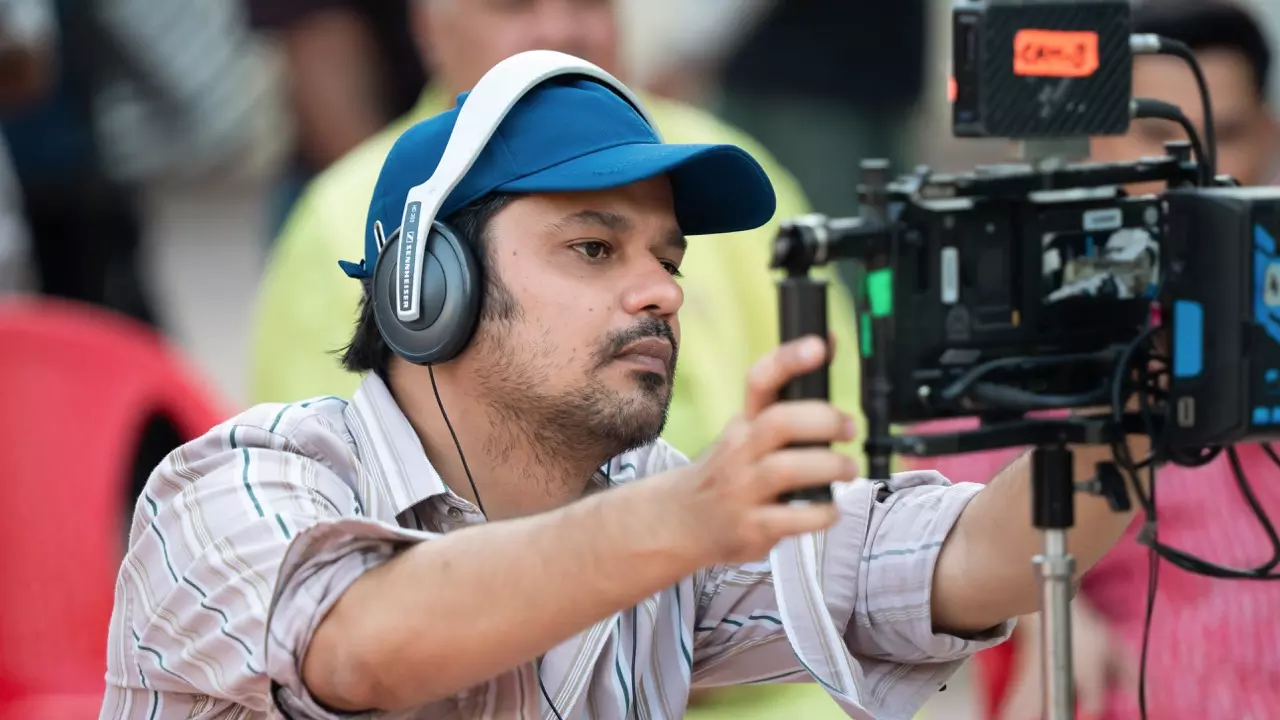
When I tell Neeraj Udhwani that I watched the trailer of his latest web series on Netflix starring Kunal Kemmu, ‘Single Papa’ before speaking to him, he laughs easily. The laughter feels apt because for him, humour isn’t just entertainment, it’s a tool for emotional survival.
Asked why he chose comedy to talk about adoption and single fatherhood—subjects often treated with gravity—he doesn’t hesitate. “To have any conversation or to be able to say anything, it’s best if you use comedy as a device,” he says, explaining that humour softens resistance, especially when the goal is to shift mindsets. “If you don’t make them laugh, chances are they will kill you for trying to change,” he adds, quoting an old saying that clearly guides his creative philosophy.
At its heart, ‘Single Papa’ is about the right of single men to adopt, and the emotional challenges of parenting. The idea, he shares, came from a moment that stayed with him. His wife and co-creator Ishita Moitra spotted a man at an airport struggling to find a diaper-changing station for his baby. “Usually diaper stations are in ladies toilets,” he points out. The man couldn’t enter those spaces, and the men’s washroom didn’t offer the facility either. “For no fault of his, he’s stuck,” Neeraj says, because the world has already decided that childcare is a woman’s job.
He calls it a form of reverse sexism—an institutional blind spot that quietly impacts mental wellbeing. “Why do you need to change a diaper if you are a man?” he asks, framing the invisible stress such assumptions place on fathers. Comedy, he felt, was the most effective way to explore this discomfort without alienating audiences.
The show, however, never loses sight of its emotional core. Neeraj explains that while the airport incident sparked the idea, the real journey began once they focused on the character. “The idea was always to tell the story of a man who wants to be a father badly,” he says. After a failed marriage, the protagonist decides he doesn’t need to be married to have a child. “I will do it solo. I don’t need a woman to be able to become a father.”
By staying loyal to the character’s wants, fears, heartbreaks and hopes, the message never overwhelms the narrative. “You are consciously focusing on the character’s desires,” he says, and the social commentary naturally finds its place.
Turning a fleeting observation into a layered emotional story took time. “That is the job of a writer,” Neeraj says—seeing something ordinary and slowly discovering what lies beneath it. He recalls how he and Ishita began speculating about the man at the airport. “Who is he? Does he have a wife? Is he a widower?” These questions led them to adoption, an experience rarely explored in mainstream Indian storytelling.
In India, he points out, personal decisions are rarely personal. “Your family is part of every decision you make,” he says, from marriage to parenthood to where you live. That inevitability shaped ‘Single Papa’ into a family comedy, where emotional wellbeing is negotiated not just individually, but collectively.
Neeraj believes Indian stories often struggle to show parents as emotionally vulnerable. “We keep our parents on a pedestal,” he explains, equating them to gods. On screen, this translates into extremes:either idealised parents or deeply flawed, negligent ones. “But parents are human beings and they are as flawed as us.” For him, acknowledging that imperfection is a form of emotional honesty and wellness.
His own journey into fatherhood profoundly influenced the show. “When I became a parent, I realised that I don’t know everything,” he admits. The anxieties, fumbling, and fear of getting things wrong all found their way into Gaurav, the protagonist. He compares parenting to falling in love—something you can’t fully understand until you experience it.
Interestingly, ‘Single Papa’ was written before Neeraj and Ishita became parents. But something was missing. “We were struggling with the parenting part,” he recalls. It was only after becoming parents themselves that “the missing piece of the jigsaw puzzle fell into place.” That lived experience unlocked emotional depth, allowing the story to finally come together.
Casting Kunal Kemmu as Gaurav was crucial. Neeraj speaks warmly of his comic timing and emotional range. “Comedy is such a difficult genre,” he says, noting that it often receives less appreciation than drama. What stood out about Kunal was his balance—childlike curiosity paired with strong control over craft. “Now when I look back, nobody else would have played Gaurav Gaylord better than him,” Neeraj reflects.
As messages pour in and the team basks in the response, Neeraj hints at the possibility of a second season—one that continues Gaurav’s journey forward. For now, ‘Single Papa’ stands as a reminder that wellness doesn’t always come from perfection. Sometimes, it comes from laughter, vulnerability, and the courage to say, I am learning too.
