Between Fact and Fiction: Deva Katta on His Sony LIV Series Mayasabha Inspired by Andhra Politics

2 Aug 2025 9:26 AM IST2 Aug 2025 9:26 AM IST
Mayasabha on Sony LIV explores the complex political, caste, and emotional landscape of Andhra Pradesh from the 1980s to the 2000s. “The rise and fall, the factionism, the caste conflicts—how all of these shaped our political awakening."
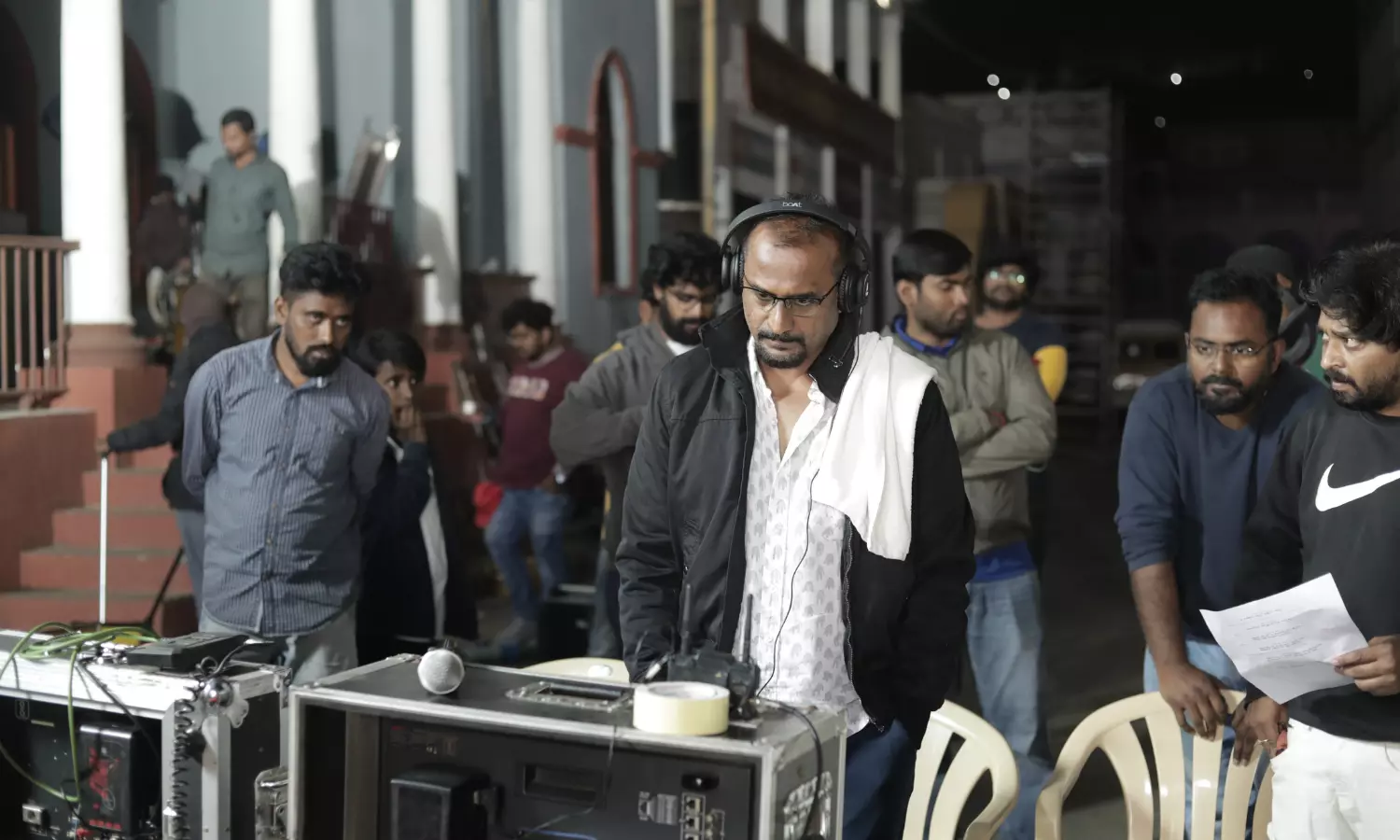
Filmmaker Deva Katta (Photo by arrangement)
In his own words, Deva Katta is not a political filmmaker. Yet, the labels stick—because his stories unravel within charged landscapes where power, caste, and societal structures influence human decisions. “I am finding it hard to tell people that the movies ‘Prasthanam’ and ‘Autonagar Surya’ are not at all political,” he says, shaking his head. “Only Republic is a political film.”
For the filmmaker, ‘Prasthanam’ is a family drama at its core. “A responsible big family—one man dies, and the old man gets his daughter-in-law married. It's a very progressive setup,” he explains. “The twin brothers, the biological son versus the sole son—it’s all about what we do in a vulnerable moment. Whatever crime we do then, we end up having to face it as a history of the day. It’s about human nature, moral vulnerabilities. That family just happens to be a politician’s family. That’s all.”
‘Autonagar Surya’, he says, is a deeper exploration of dignity and identity. “It’s about one man born in a tribal caste, in a compound filled with mafia tension. He’s fighting for self-recognition, for the respect of his values. That’s what I call dignity,” he says. “But the moment I call it ‘dignity of labour,’ people here start equating it to communism. I am still discovering my language. I grew up professionally in the US, and terms like that carry a different connotation there.”
If ‘Prasthanam’ was about family and ‘Autonagar Surya’ was about identity, then ‘Republic’ was Deva Katta’s way of holding up a mirror to democracy itself. “It’s not even about politics—it’s about the definition of democracy,” he says. “We are living under the illusion that we are a democracy, but we haven’t discovered it yet. The checks and balances, the three wings of government—none of that exists if one wing holds too much power. ‘Republic’ was my way of making that statement.”
But does that make him a political filmmaker? “Politics is part of every emotion we talk about,” he answers. “Even if I write a love story, the characters are defined by their socio-economic and political conditions. That’s what makes it real.”
It’s this layered, lived-in writing that sets his work apart. “When I open up a character, I ask: what is the ocean they are in? What is the pond they are in? I don't want to write people in boxes,” he says.
That perspective comes from a deeply personal place. Deva was born in Kadapa district, near Tirupati, and raised by his uncle until the age of 11. “My uncle was a well-respected politician,” he recalls. “We lived in a building with two portions—one side was us, let’s say Naidu, and the other side was Reddy. There was no caste barrier between them; they were one family.”
But as political alignments hardened along caste lines, tensions began to brew. “Followers would turn personal rivalries into caste and party conflicts. Yet, these two men—my uncle and the neighbor—remained respectful. They would go to each other’s homes, attend family deaths, defuse tensions through panchayats,” he recalls. “That relationship stayed with me. It was beautiful.”
In 2016, a friend and fan of his films, Sriharsha, approached him with an idea. “He loved ‘Vennela’ and ‘Prasthanam’. One day, he said, ‘Imagine the politics of united Andhra Pradesh in the early decades after 1956. It was like British rule—Delhi was the Queen, and the Chief Ministers were Viceroys.’ That clicked,” he recalls.
From that conversation sparked what is now his most ambitious project yet—a political drama series for Sony LIV, loosely inspired by the relationship between two towering leaders of united Andhra Pradesh. He doesn’t name them, but everyone knows: the inspiration comes from Chandrababu Naidu and Dr. YS Rajasekhara Reddy.
“We wanted to bring in two big leaders—dynamic, natural-born leaders—who had a shared past as friends and then enter politics as rivals. Through their eyes, we show the political awakening of our Telugu family,” he says.
But Deva is clear: this is not a biopic. “Even if I say these names, even if I want to portray exact events, I can’t. Everyone’s truth is different depending on their vantage point. So, even to tell the truth, we have to lie,” he explains. “That’s why I say it’s inspired—not true. But the emotion is true.”
In the story, the transformation of these leaders happens over three parts. “First, they are thick friends who turn rivals. Then, even while in rival parties, they are still friends. By the third, they are true enemies,” he says. “To me, it felt like a ‘Godfather’ arc.”
Initially imagined as a film trilogy, the plan was shelved due to logistical constraints. “It’s drama. It’s not ‘KGF’ or ‘Baahubali’. People weren’t sure about committing to three parts,” he says. But when COVID hit, he reimagined the narrative as a series. “OTT gave me the muscle to tell this story. Sony came on board with full creative freedom. We felt like it was home,” he says. “They have nurtured culturally rooted stories like ‘Scam’ and ‘Maharani’. It was the right fit.”
Deva Katta insists the project is deeply personal. “This is my dream. I want people to see my dream,” he says. “In a dream, you see a snake, a frog, someone walking—all of them are you. I am every character in this story. Even the negative ones. This is the ‘me and me’ story.”
The upcoming show explores the complex political, caste, and emotional landscape of Andhra Pradesh from the 1980s to the 2000s. “The rise and fall, the factionism, the caste conflicts—how all of these shaped our political awakening,” he says. “It’s the scars we still carry today.”
His next film, however, is entirely different. “It’s a saga. An action drama with no politics or caste. It’s my reinvention,” he says. “I want to do different kinds of stories for OTT and match the event-level expectation for films. This is going to be high-stakes storytelling, but still honest, still me.”
For all his candor, Deva remains elusive about names—of his characters, of his leading man in the upcoming film. “I will reveal it on a new course,” he laughs. “But no, it won’t be a fake name.”
( Source : Deccan Chronicle )

Next Story