Cue the Spotlight and the Guitar and Maybe a Pirouette

Nithin Ram refuses to stick to one talent — or one time zone.
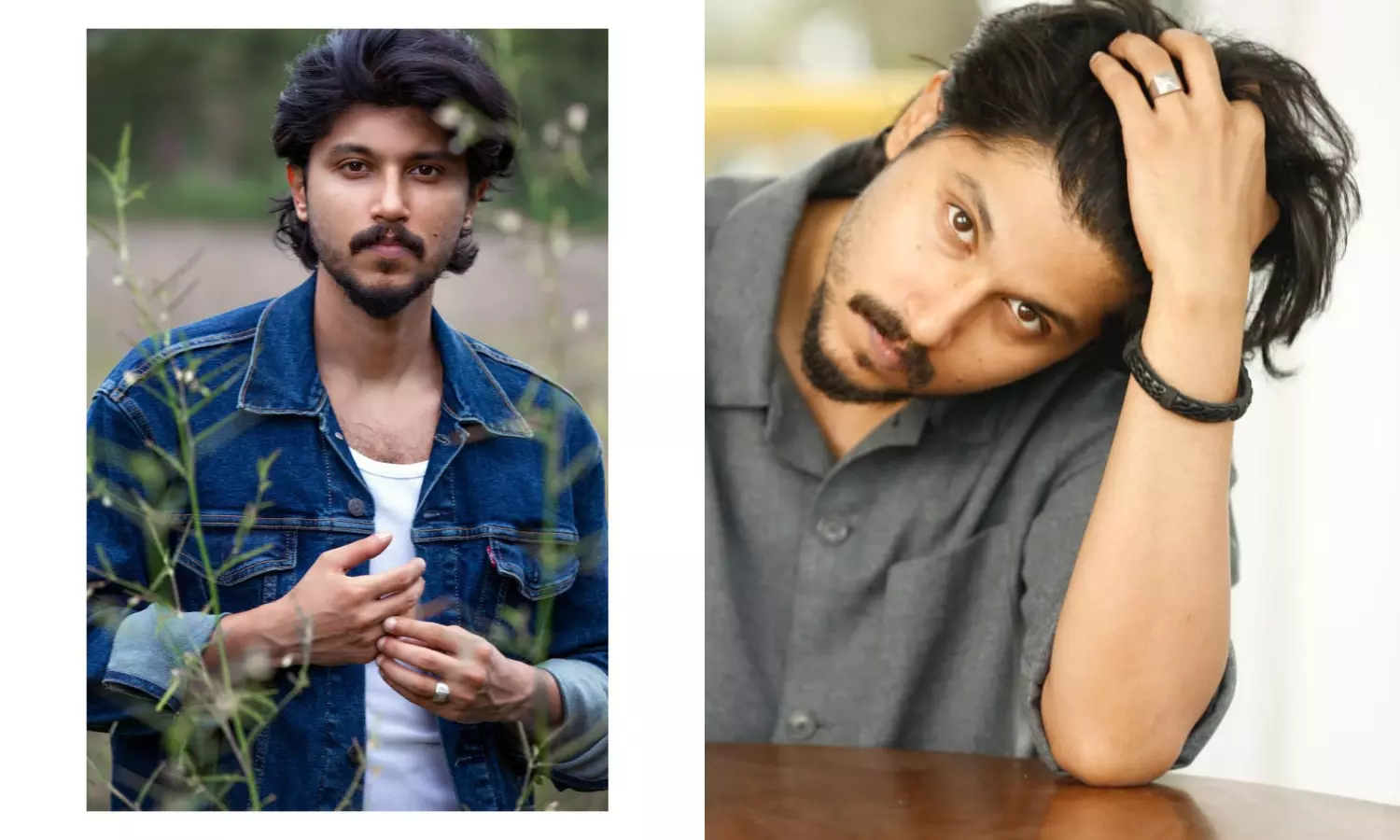
You’re a multidisciplinary artist, which means acting, dancing, and music are all a part of your creative toolkit. What inspired you to pursue all three — acting, dancing, and music — instead of focusing on just one?
Nithin: I think it happened pretty organically. I’ve loved being on stage ever since I was a kid — that’s when the acting seed was planted. Then I took ballet classes, and something about having a live accompanist playing piano in the room really stayed with me. That’s where the dance part began.
So acting and dancing went hand in hand through my early life, all the way into my teens. Music came later. Honestly, I picked up the guitar because I thought, “Maybe someday I’ll play a musician on screen, and I don’t want to look like I don’t know what I’m doing.” So I learned a few chords — and that was it. It pulled me in.
Music became the one thing I didn’t plan on pursuing professionally. It was my way to unwind while still staying connected to the arts — kind of keeping it pure, in a way.
How did your training in New York and Los Angeles shape your approach to performance today?
Nithin : Well, I’ve always loved hip hop culture — I grew up listening to a lot of rap. So I decided to do what felt like a pilgrimage: I took a gap year after high school and trained in New York, which is kind of the dance and hip hop capital of the world.
The level of talent there was mind-blowing. It was humbling and a little scary. But that feeling has stayed with me in a good way — it reminds me how far there is to go and how much people are capable of expressing.
Later, I trained in method acting at the Lee Strasberg Institute in LA. I wanted some formal training, and LA just felt like the right place. Method acting was intense. It teaches you to work from the inside out — to find the character within yourself and build from there. That process helped me grow not just as an actor, but as a human being.
And practically, it gave me a glimpse into what it’s like to wake up every day and live this life — managing personal stuff, staying focused, and still showing up with your whole self.
What was the most challenging part of making your short film *Michael, and why was that story important to tell?
Nithin: Honestly, with a short film like Michael, or really any indie film, the biggest challenge is always racing against time. You have a vision, but once you're on set, things shift. The story evolves. And you either fight it — or you roll with it.
We chose to roll with it. Getting it done on schedule and on budget was a challenge, of course, but creatively it was very fulfilling.
The film itself was very close to my heart. It was directed by Arun Narain, a close friend, and I really loved his storytelling style. It's about a Sri Lankan woman trying to escape her past, and a laid-back travelling musician who ends up entangled in her world.
What drew me in was the transformation of my character — from someone directionless to someone with a clear purpose, just by meeting this one person. It’s about how a single moment or connection can change the entire fabric of your life — if you're open to it.
You’ve worked in both theatre and screen — how do you shift your mindset between the two?
Nithin: You don’t always have a choice — it’s something that just happens. Like, I’m flying back to Bombay later today, and I start theatre rehearsals tomorrow. As soon as I enter the rehearsal space, something in me just switches. Same thing happens on a set. The energy of the space shifts you automatically.
If I had to describe it, I’d say it’s like a little volume knob you adjust. With theatre, you turn it up — project, physicalize more, reach the last row. With film, you dial it down — it's more internal, more subtle.
But in both cases, you’re constantly adapting. The key is staying open and responsive to the space, the people, and the moment.
What does being a "multidisciplinary artist" mean to you in today’s fast-changing creative landscape?
Nithin: It has its perks and its drawbacks. Some days I think, “Should I just focus on one thing?” But then again, I get to do a play where I’m mostly playing guitar — and right after that, I jump into something like The Motherf*er with the Hat, where I’m fully in acting mode.
To me, being multidisciplinary means having perspective. If I’m stuck in a scene as an actor, I might approach it like a dancer — think of how the body moves through space, and that unlocks something new.
At the core, I believe all art forms operate on the same fundamental principles — openness, relaxation, honesty in expression. The technique might differ, but the goal is always to connect, to express, to tell the truth.
That’s beautiful. And speaking of The Motherf*er with the Hat, tell us a bit more about that show.
Nithin: Sure. I first encountered the play in LA in 2013 during a scene study class and was instantly drawn to its rawness. It’s about people trying to hold it together while falling apart — love, addiction, loyalty, all wrapped in this gritty, big-city energy.
It’s set in uptown New York, but the themes are universal. What makes someone a friend? What’s real loyalty? What defines your support system?
This play is my way of honestly exploring those questions at this stage in my life.
You’ve been in Hyderabad for the show. Have you had the chance to explore a bit?
Nithin: Not much, unfortunately — I usually fly in a day before, do the tech, perform, and fly out. But I did get some amazing biryani, though I have no idea where it was from — a fellow actor ordered it. It was solid!
