Comedy Was the Hook, Conversation Was the Goal: Mallik Ram on Super Subbu

For Mallik Ram, sex education was never a "bold" subject. The director of Netflix's first Telugu original says comedy became the perfect bridge to start conversations that many Indian families continue to avoid.
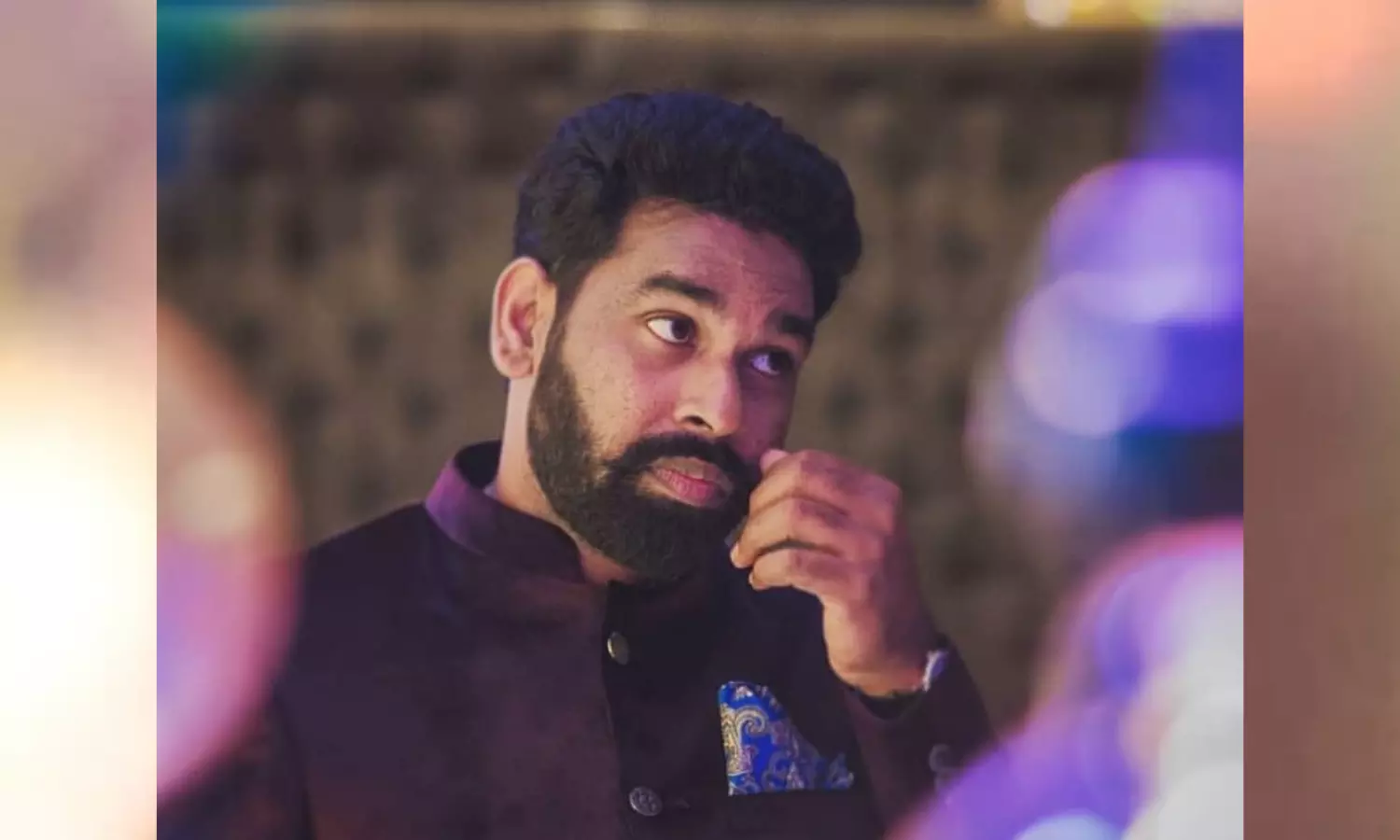
Mallik Ram doesn't like describing Super Subbu as a bold show. While many have labelled Netflix's first Telugu original as an unconventional take on sex education, the filmmaker believes the real surprise is that these conversations have remained absent for so long.
"I don't see it as bold to start with," he says. "I see it as a very important conversation that should have happened during my generation and should continue with the next. We still don't talk about sex education openly, and I felt this was my bit."
For the director, the challenge was never choosing the subject. It was figuring out how to make audiences embrace it without feeling lectured.
"I enjoy taking up challenging subjects as a writer," he says. "The biggest challenge was asking myself how I could convince audiences to accept a story like this. Humour became my route. But finding that balance between comedy and the seriousness of the subject was difficult during both the writing and the making."
Comedy, he believes, has a reach that drama often doesn't.
"There are films that have dealt with consent beautifully, but comedy reaches a lot more people. Telugu audiences enjoy comedy immensely, so I felt this was the best way to wrap an important idea inside something entertaining. I was simply playing to my strengths because comedy has always been one of my favourite genres."
Despite the premise, Ram insists Super Subbu was never written to provoke or sensationalise.
"From the beginning, the intention was never to titillate anyone. Netflix understood that in our very first meeting. Once they understood why we wanted to tell this story, it became about bringing together like-minded people, from the actors to every department, to make it happen."
The biggest test, however, wasn't Netflix's approval. It was his own family.
"My yardstick was very simple," he says. "I should be able to sit with my mother and watch this show comfortably."
That thought shaped every scene.
"We kept asking ourselves how to present these difficult conversations without making people uncomfortable. Whether it was consent, unwanted pregnancies or contraception, these are stories that exist in every family. They shouldn't be hidden under the carpet or reduced to cheap jokes."
Instead, he wanted viewers to laugh first and think later.
"It's almost like slow poison," he says with a smile. "You enter the story because of the humour, but after finishing the show you realise it is saying something much deeper."
Beyond conversations around sex education, Ram believes Super Subbu is also about discovering purpose.
"Subramanian is every middle-class youngster who is struggling to find his calling. His journey is about becoming someone important in the most unexpected way. Sex education is the path he takes, but his personal transformation is equally important."
The show's biggest emotional anchor, according to Ram, is the relationship between Subbu and his authoritarian father, Kukkuteswar Rao.
"We've seen controlling fathers in many films, but Kukku represents an entire generation that believed love meant control. He is an amalgamation of many fathers."
His appearance even came from an unlikely source.
"The look was inspired by my mathematics teacher in school," he laughs.
Murali Sharma's performance, however, elevated the character beyond what was written on paper.
"On the first couple of days, we were trying to figure out how he should stand and carry himself. I suddenly told Murali sir, 'You're a T-Rex for Subramanya. He's terrified of you.' That image immediately clicked. After that, I hardly had to direct him. It was a pleasure just sitting at the monitor and watching him perform."
To make the series feel authentic, Ram spent months researching.
"My sister works with the government, so I asked her for reports and material on sex education programmes. We met sex educators, spoke to people who had actually travelled to villages to conduct awareness sessions and spent months discussing the subject."
The most valuable inputs, however, came from women around him.
"Our writers and members of the creative team shared their own experiences. Sometimes they would laugh while narrating them, but behind that laughter there was pain. Whether it was sanitary pads being wrapped in black covers or girls being told not to enter prayer rooms, these were things I hadn't fully understood growing up."
The response has reassured him that those conversations have found their audience.
"The most unexpected thing has been the love coming from outside Telugu-speaking audiences. Many journalists from Mumbai told me they didn't expect a show like this from the South. They connected with its heart because the subject is universal."
While some viewers felt the series unfolded at a measured pace, Ram says that too was intentional.
"I never wanted to tell this story like a film where everything moves quickly. I wanted audiences to spend time with these characters until they felt like real people. That's why the pacing is what it is."
With discussions already underway for a second season, Ram believes Super Subbu has only scratched the surface.
"There is still so much material left. We have many more conversations to explore."
For him, that is perhaps the biggest success of the series. It has reminded audiences that sex education is not a controversial idea. It is simply a conversation whose time has long arrived.
