Indian Storytelling Changing the Way World Sees Heroes and Villains

Producer-writer Adi Shankar opens up about how his Indian identity, instinct-driven risks, and belief in infinite perspectives have shaped some of the most influential adult animated series of our time
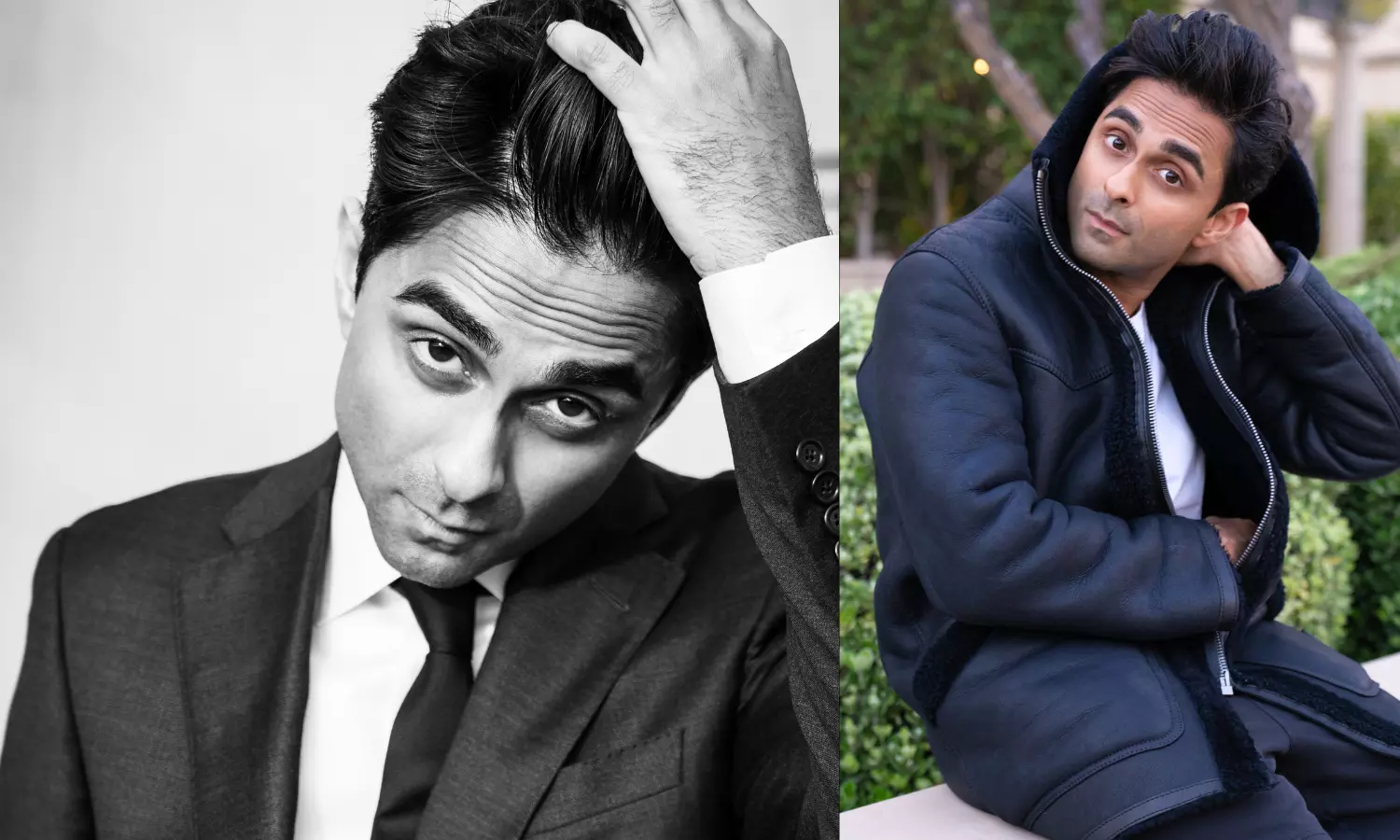
When asked whether his Indian identity influences his storytelling today more consciously than earlier in his career, Adi Shankar pauses… not in disagreement, but in reflection.
“That’s an interesting question. I haven’t thought about it in that context,” he says, before quickly conceding, “Yes. Absolutely.”
For Shankar, the shift hasn’t been sudden, It’s been gradual, organic, and deeply tied to how the world itself has changed. “The world has changed so much. Reality is shifting. Paradigm shifting on a daily basis,” he explains. “When things are changing, it’s natural to look back at your past and go, ‘Oh man, I remember the world differently.’ And so much of my past is rooted in India.”
That reflection, he says, has begun to permeate his work more clearly now than before. Especially in how stories frame morality.
“Western stories are fundamentally tales of good versus evil,” Shankar observes. “The good guy, the bad guy. The cowboy with the black hat versus the cowboy with the white hat.” In contrast, he points to South Asian storytelling traditions that complicate that binary. “We switch perspectives. We ask-why is the villain the villain? What happened to them? What karmic tie are they repaying?”
That philosophical shift, from judgment to curiosity, now defines his creative lens. “We are not good or bad. We are complicated. And if someone is bad, I am more interested today in what made them bad. What was the chain of events? What were the patterns of behaviour? What is their story?”
That thinking is evident in ‘Devil May Cry’, where Shankar deliberately interrupts the action-driven narrative to centre the antagonist. “Two-thirds of the way through the story, I zoom out and put you in the perspective of the villain,” he explains. “You see how they never really had a shot. They were a victim of the life they were born into. You are supposed to feel bad for the villain.”
The result, he believes, is a story that acknowledges “not two sides, but an infinite number of perspectives.” And that, he says, is where Indian cultural philosophy quietly enters his work. “That’s the beauty of our culture. It celebrates infinite perspectives. And it condemns narrow-mindedness.”
It may also explain why ‘Devil May Cry’ found such a massive audience in India. While the show is set in America, Shankar insists its appeal is universal. “It’s a global action-adventure story. It’s inherently international — thematically.”
Comparing it to his earlier Netflix series ‘Captain Laserhawk’, which featured an Indian protagonist modelled closely on himself, Shankar notes an important distinction. “Thematically, ‘Captain Laserhawk’ didn’t touch on any of the things we just talked about,” he says. “Here, it’s not about representation alone. It’s about perspective.”
Risk has been a constant companion in Shankar’s career, not a calculated choice, but a necessity. “I didn’t have safety. The whole thing was risky.”
Breaking into Hollywood as an Indian-origin creative more than a decade ago came without a roadmap. “There was no safe path. Everything was insane,” he recalls. “So I leaned into the insanity. Playing it safe at that point would’ve just been fear.”
Trusting instinct, he says, was the only option. “The instincts are what got me in the position to begin with.”
That same clarity drove ‘Castlevania’, the series widely credited with reshaping perceptions of adult animation in the West. Shankar doesn’t hedge when asked whether that was intentional. “Absolutely. That was the goal.”
Growing up across India, Hong Kong, and the US, he noticed a glaring gap. “I didn’t understand why there weren’t violent, dramatic, dark stories in animation for adults,” he says. “It seemed like a massive oversight.”
Years before ‘Castlevania’ premiered, Shankar publicly declared his ambition. “I literally said, ‘What Akira is to Japan, I want to bring that to America.’ And then ‘Castlevania’ happened.”
For him, success wasn’t just about one hit, it was about opening floodgates. “I knew studios would try to capitalise on it,” he says. “And that’s how movements happen. One anomaly becomes a category.”
While he believes American animation has “arrived” by many metrics, he’s clear about what’s still missing. “It hasn’t arrived when you compare it to Japanese anime,” he says. The solution, in his view, is competition. “We need more auteurs. One person isn’t a movement.”
Shankar’s approach to animation itself is deeply rooted in live-action cinema. “In my mind, I’m not doing animation. It’s just storytelling,” he says. From writing to shot composition, he applies the same discipline. “Treat it as sophisticated, not cartoons.”
Netflix, which has become his primary creative home, offers what he calls genuine creative freedom, though he’s quick to clarify. “That freedom was earned. And freedom doesn’t mean no collaboration.”
His process is exhaustive. “We do 20–25 drafts sometimes” he says, likening writing to sculpture. “The more hours you put in, the tighter it gets.”
Ultimately, Shankar rejects the idea of control as power. “I have never felt I couldn’t get my vision across,” he says. “But the real work is understanding why you are saying what you are saying.”
He’s candid about past missteps. “I thought I was too clever. Subverting expectations for the sake of it doesn’t serve the audience.”
What matters, he says, is ego and knowing when to remove it. “A lot of creative conflicts are ego-driven. The trick is to remove ego from the equation and bring it back only when it’s time to promote the thing.”
