Rana Daggubati Treated Me Like Family: Harshvardhan Rane

Hyderabad is school, Hindi cinema is college, says Harshvardhan Rane, who was in the city, in an exclusive interview with Deccan Chronicle
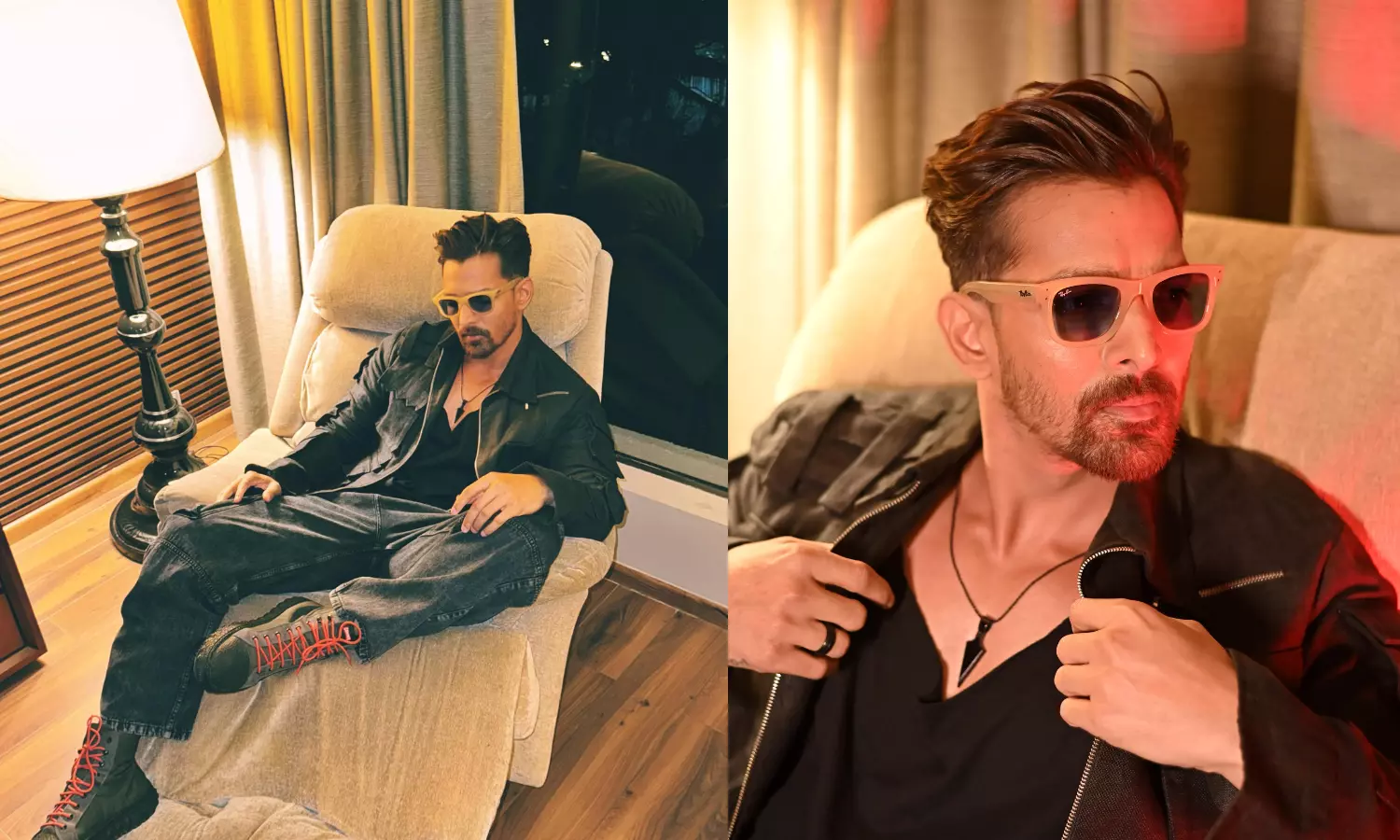
Every time Harshvardhan Rane lands in Hyderabad, it feels less like a visit and more like a quiet return to where it all began. “Hindi films is college, Telugu films is school,” he says, summing up his emotional geography with a line that carries years of memory.
Hyderabad, for Rane, isn’t just a city on the map. “It’s like my school,” he says, explaining why the Telugu roots can never be shaken off. For the unversed, the actor was born in Rajahmundry and his mother is a Telugu. Before even boarding a flight, he had already made his food requests. “I don’t think anybody can come to Hyderabad and not enjoy the delicacies. Marag is my favourite.”
Though disciplined about fitness, the city’s food still pulls at him. “I try to focus only on the proteins and minus the desserts. The taste you get in Hyderabad is unmatchable, he adds.
Time, however, is rarely on his side. For the past 11 years, his visits have largely revolved around work. “Even if I come for two hours to the city, I straight away go for my event and leave,” he says, referring to his long association with Bajaj Electronics. Sightseeing often takes a backseat, but nostalgia finds its own way.
There is one place he longs to revisit. “I used to stay on Road No. 10, Banjara Hills. There was a small room on a terrace. I love visiting that lane near the Cancer Hospital. There’s nostalgia there.”
His connections to Hyderabad also extend into friendships shaped by theatre and early film work. From the film industry, he says, “The only person I am in touch with is Rana Daggubati.” Their bond, forged during their second film together, left a lasting impression. “He treated me with a lot of warmth and love and respect, just like a family member,” Rane says, adding that the gesture “blew me away.”
Beyond films, theatre played a crucial role when work slowed down. “There was a time when I was not getting film work. So I was just polishing my skills at theatre workshops.” He trained and worked with groups like The torn curtains and Dramanon, building friendships that remain intact even today.
Fitness, meanwhile, has become an inseparable part of his public identity. No wonder his airport looks often catch attention. Rane explains his routine. “Cardio for the lungs. strength training the muscles and mobility for joints.” For him, the goal is to balance strong muscles, flexible joints, and enduring stamina.
His diet mirrors that discipline. “Very strict,” he asserts. “I absolutely avoid carbs and sugar.” When asked if he never gets tempted, he says, “Temptation is inevitable but it is up to us.”
As labels like “Gen Z heartthrob” follow him online, Rane remains grounded. Studying psychology, he sees labels differently. “Labels are just a way to recollect a person. I am grateful they are using blessed words, and I hope I deliver to those labels.” But his real priority, he insists, lies elsewhere. “My number one priority is to be profitable to the producer.”
That belief guides his choice of roles. Asked about intense, physical or emotionally layered performances, his answer is blunt. “I only want to be in profitable films. That is the genre I want to do.” Cinema, he adds, costs money, and as long as producers invest in films, he feels responsible to deliver what audiences want to see.
Looking ahead, he says, “2026 is the most interesting curve of my career.” With three films lined up, two of them franchises, he is acutely aware of the responsibility. “The legacy they carry is a baton given to me. I want to respectfully and responsibly take it forward.”
