From Inclusion to Impact: How ITC’s Skilling programme for the Differently-Abled is Unlocking Potential

Across India, many such journeys of resilience and transformation are taking shape.
Kavali Jyothi, a 33-year-old woman with 65% locomotor disability from Anantapur, Andhra Pradesh, faced severe social and financial challenges with limited exposure to employment opportunities due to her mobility constraints. Today, she works as a Customer Support Associate at Kempegowda International Airport, earning ₹16,000/- per month. She now supports her family and lives with greater confidence and independence, becoming a role model in her community. With the job, Jyothi is challenging long-held beliefs in her community, demonstrating that with the right opportunities and determination, rural women, even those with disabilities, can achieve just as much as anyone else. Jyothi’s success story is not an isolated one.
Across India, many such journeys of resilience and transformation are taking shape. In Pune, Jayram Ramesh Sonune, from Shikrapur village in Pune district with 40% visual impairment has received employment at the Pune Airport after being equipped with computer proficiency, communication, and workplace readiness skills. He earns ₹25,000/- per month, supporting his family’s household needs, easing agricultural income pressures, and beginning to build personal savings and assets. Sunil Kumar, a youth from Barabanki, Uttar Pradesh, with 90% locomotor disability, now works as an Accountant earning ₹15,000/- per month.
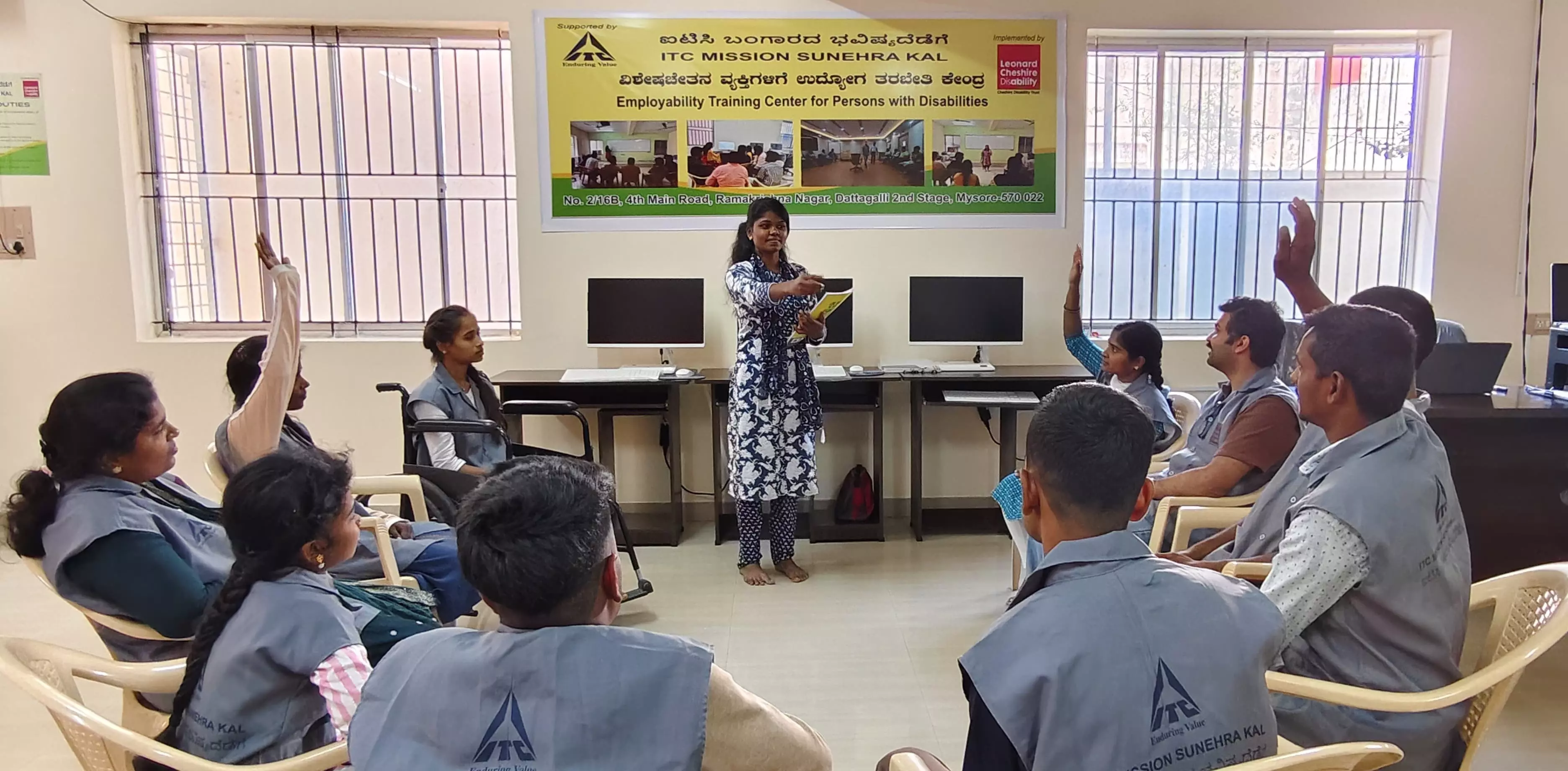
These stories are connected by the common thread of ITC’s skilling programme for the specially-abled. Through its skilling programme for persons with disabilities, ITC equips individuals like Jyoti, Jayram, and Sunil with practical, industry-relevant skills, workplace readiness, and essential support such as sign-language interpretation and mentorship. The programme also imparts crucial soft skills covering Spoken English, and workplace etiquette, digital and financial literacy.
The impact of ITC’s initiative is already visible. In less than four years, over 2,370 differently abled young people have already been trained, with women making up over 30 per cent of participants. Many have secured jobs across sectors such as retail, hospitality, IT-enabled services, logistics, customer support, and back-office operations. ITC’s larger vocational skilling programme has so far covered around 1.45 lakh youth in the country.
Having started in January 2023 in Bengaluru, today, ITC’s focused programme to skill the specially-abled operates across five cities (Bangalore, Mysuru, Lucknow, Howrah and Bhubaneswar) through eight centres in partnership with specialised implementation organisations - Youth4Jobs, Anudip, Cheshire Disability Trust, Science & Technology Park, Sarthak, and Dr. Reddy’s Foundation. Each partner brings deep expertise in working with diverse disabilities, including locomotor, hearing, visual, and intellectual disabilities. While the centres vary in structure, trainings offered, and local adaptations, they are united by a common purpose: to equip PwD youth with market-ready skills while nurturing self-belief and independence.
Another unique initiative by ITC is the Mangaldeep Sixth Sense programme designed for the visually challenged to train them on fragrance evaluation by honing superior olfactory abilities. Started in December 2021, the initiative has covered 210 such individuals across five cities.
Commenting on the Company’s initiative, Mr. Prabhakar Lingareddy, Executive Vice President and Head - Social Investments, ITC Limited, said “At its core, our programme is about nurturing dignity and self-belief among the specially-abled, enabling individuals to see themselves as contributors to their families and society at large. As the programme continues to scale and expand, and as more success stories emerge from individuals like Jyoti, Jayram and Sunil, one simple truth is being powerfully reinforced: when given the right opportunities, everyone can prosper.”
Corporate India has played a key role in supporting this effort. Persons with locomotor disabilities are being trained, helping them secure employment in roles such as data entry operators, back-office executives, packaging and scanning staff, tally operators, and office assistants. These are roles where ergonomic adaptations and assistive technologies enable them to perform with high productivity. Candidates with disabilities who are being trained by ITC in specialised skills are now working with leading organisations across sectors such as FMCG, retail, restaurants, courier services and conglomerates, highlighting growing industry acceptance of inclusive hiring practices.
For candidates with speech and hearing impairments, ITC’s skilling programme has facilitated placements in organised service-sector roles in sectors such as retail, petrol pumps and e-commerce, where visual instructions and process-based workflows are effective.
The significance of these skilling initiatives is reflected in the fact that in India, millions of persons with disabilities (PwDs) often face barriers in accessing education, training, and employment, especially in rural areas. A significant majority - 69% of the people with disabilities reside in rural areas According to research estimates, the literacy rate among the specially-abled stands at just 54.4 per cent, and employment outcomes remain deeply concerning, with only one in four PwDs engaged in employment. The most common forms of disability include locomotor impairments (20%), followed by visual (19%) and hearing impairments (19%), with disability prevalence notably higher in rural areas than urban ones.
Recognising the realities, and inspired by the Government’s focus in this area, ITC expanded its flagship youth vocational skilling programme to consciously include young persons with disabilities, with the aim of creating equitable, dignified, and sustainable livelihood pathways.
The biggest equity of the initiative is the resolve and grit demonstrated by trainees. Anima Karmakar, from Kolkata, with 50% locomotor disability, overcame social stigma and financial hardship and is now rebuilding her life with dignity and confidence. Today, she works as a Kitchen Support Staff, earning ₹16,000/- per month and supporting her family.
“Anchored in the belief that disability is not inability, ITC’s PwD Skilling Programme focuses on unlocking potential, building confidence, and enabling long-term social and economic inclusion as is the case with Anima,” added Mr. Lingareddy.
ITC’s approach for skilling the specially-abled aligns strongly with national and global frameworks such as the Indian Government’s agenda for Divyangjan guided by the Rights of Persons with Disabilities (RPwD) Act, 2016, and the Sustainable Development Goals (SDGs), particularly those focused on quality education, decent work, reduced inequalities, and inclusive growth.
For many participants in the programme, receiving their first salary is a turning point. It brings not just financial independence, but also self-respect and confidence. Families that were once hesitant now feel hopeful and proud. Employers, too, are seeing the benefits with greater inclusion, improved workplace culture, and stronger employee retention.
Through the integrated efforts, ITC is helping the specially-abled change the status-quo, from viewing disability as a limitation to recognising that it is not a deterrent to realise the potential.
The remarkable stories of change echo across every corner of India. Bindhu comes from a remote village in Mysuru, Karnataka. She started earning Rs 17,500/- a month working as a trainee on a shop floor. What makes her life journey remarkable is that she has achieved this despite living with an 85% orthopaedic disability. Bindhu’s aspiration was not just the job. Her new found confidence allowed her to dream bigger, and today she has decided to pursue higher studies and is doing so.
These stories of transformation have a multiplier effect, inspiring many more Bindhus, Sunils and Jyothis to rise above their constraints and win.
