Delhi Chokes as AQI Hits Severe Levels Despite GRAP-IV

Thick haze and extremely low visibility were reported in areas such as Ghazipur, ITO, and Anand Vihar
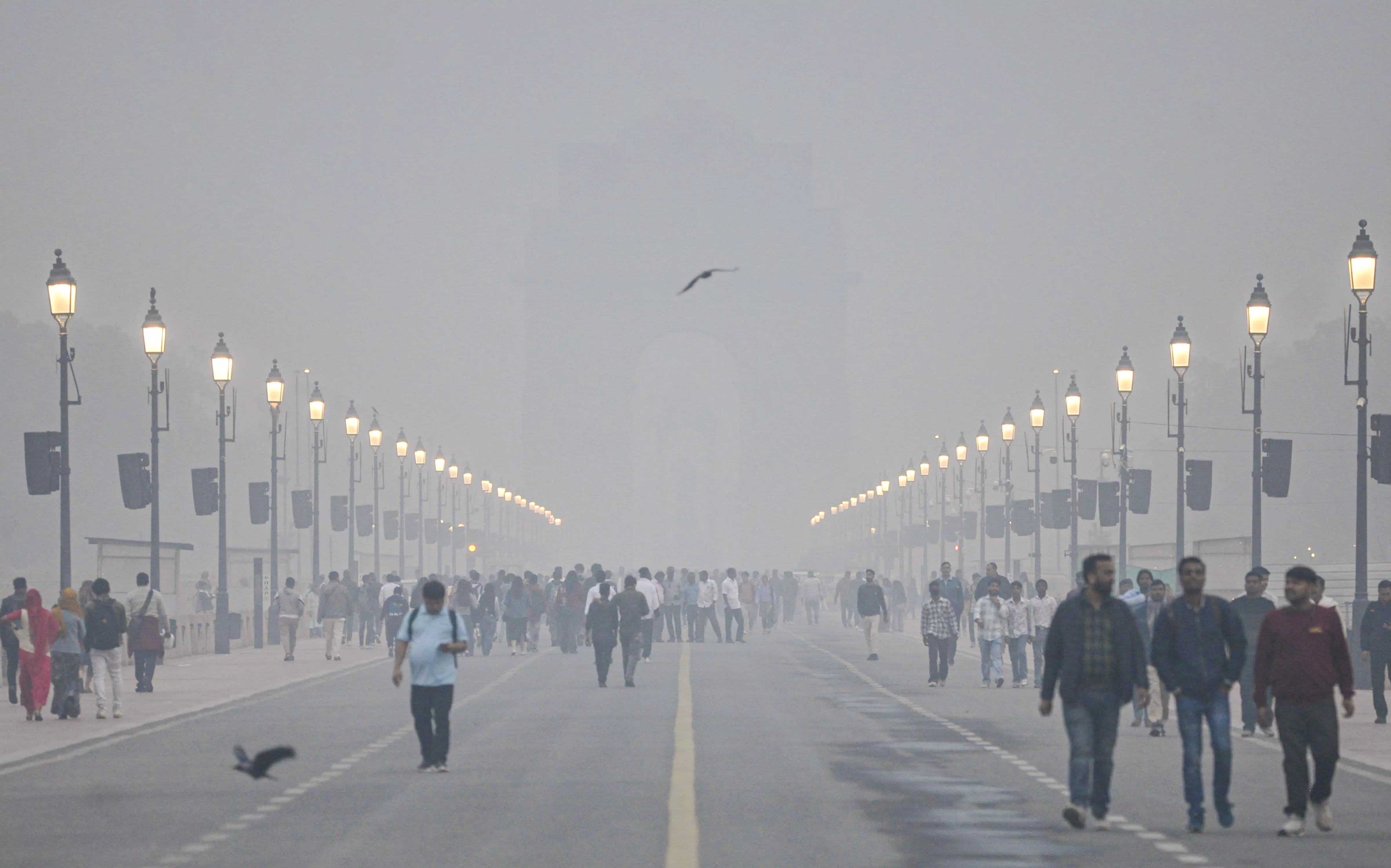
New Delhi: As the AQI in Delhi climbed to 461 on Sunday and marked the city's most polluted day this winter, the Commission for Air Quality Management (CAQM) directed Delhi and NCR state governments to ensure the immediate suspension of all outdoor physical sports activities. The commission also pulled up the DDA for gaps and "recurring negligence" in maintaining roads.
In a letter to the chief secretaries of Delhi, Haryana, Rajasthan and Uttar Pradesh, the commission said it is concerned that "some schools and institutions in Delhi-NCR are still holding outdoor sports activities" despite earlier directions issued in line with a Supreme Court order dated November 19. It warned that continued conduct of such events amid poor air quality poses a “serious health risk to children”.
The CAQM said continuation of outdoor physical activities during periods of adverse air quality is "contrary to the spirit and intent of the apex court's observations and the commission's instructions". The commission had, in a letter dated November 19, called for the "postponement of physical sports competitions scheduled during November and December".
It directed the NCR state governments and the Delhi government to ensure strict and immediate compliance with the earlier instructions, issue necessary directions to all schools, educational institutions, sports bodies and local authorities to discontinue outdoor physical sports activities and sensitise schools and parents about the health risks involved.
The CAQM also asked authorities to closely monitor compliance at the field level and take appropriate action in case of any violation.
As part of its "Operation Clean Air" drive, the CAQM pulled up the Delhi Development Authority for gaps and "recurring negligence" in maintaining roads under its jurisdiction, after inspections found high dust levels, waste accumulation and instances of waste-burning across several stretches in the city.
As part of its operation, the CAQM deployed 19 teams, including officers from its flying squads and the Delhi Pollution Control Committee (DPCC), to inspect roads maintained by the DDA on December 12.
A total of 136 road stretches were inspected across Delhi. The teams collected geotagged and time-stamped photographs, which were submitted to the commission as part of a consolidated inspection report.
According to the findings, 15 road stretches showed high levels of visible dust, while 38 recorded moderate dust levels. Sixty-one stretches had low dust intensity and 22 stretches were found to have no visible dust.
The inspection also found accumulation of municipal solid waste (MSW) on 55 road stretches and construction and demolition (C&D) waste on 53 stretches. Evidence of MSW or biomass burning was reported at six locations.
The commission said these observations point to "gaps" in upkeep and stressed that such incidents directly impact particulate matter levels in Delhi. It directed the DDA to intensify corrective measures and improve "operational efficiency" through consistent and timely dust mitigation interventions.
The panel on Saturday invoked the strictest measures under its air pollution control plan, GRAP, including a ban on all construction and demolition activities in Delhi-NCR after pollution levels rose sharply amid unfavourable meteorological conditions.
Under Stage IV of GRAP, the entry of trucks into Delhi is stopped, except for those carrying essential commodities or providing essential services. However, CNG, LNG, electric and BS-VI diesel trucks are allowed.
The plying of Delhi-registered diesel heavy goods vehicles (BS-IV and below) is banned, again with exceptions only for essential services. All construction and demolition activities are banned, including even linear public projects such as highways, roads, flyovers, power transmission lines, pipelines and telecom works, which are otherwise allowed in lower stages.
Schools are required to run classes in a hybrid mode (online and physical) not only for primary students but also for higher classes (VI to IX and XI) in Delhi and the most affected NCR districts, with students given the option to attend online where feasible.
Under Stage IV, state governments are asked to consider additional emergency steps, such as closing colleges and educational institutions, shutting non-essential commercial activities and even introducing odd-even rules for vehicles if the pollution situation worsens further.
Unfavourable meteorological conditions, combined with vehicle emissions, paddy-straw burning, firecrackers and other local pollution sources, lead to hazardous air quality levels in Delhi-NCR during winters
