“The case is being watched not just in America but across the world — including in India. The outcome will determine whether Donald Trump overstepped his powers when he invoked the International Emergency Economic Powers Act (IEEPA)—a 1977 national security law—to impose sweeping import tariffs under his “Liberation Day” program”: GTRI
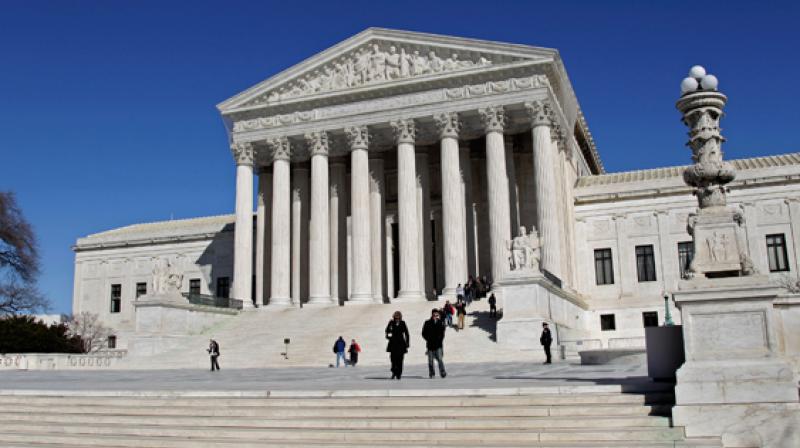
CHENNAI: The decision of the US Supreme Court on President Donald Trump’s ‘Liberation Day’ tariffs on November 5 could reshape the global trade policy.
The hearing in Learning Resources v. Trump case on US tariffs will decide whether a president can use emergency powers to impose tariffs without the Congress.
“The case is being watched not just in America but across the world — including in India. The outcome will determine whether Donald Trump overstepped his powers when he invoked the International Emergency Economic Powers Act (IEEPA)—a 1977 national security law—to impose sweeping import tariffs under his “Liberation Day” program,” said GTRI.
On April 2, 2025, when President Trump declared America’s chronic trade deficit a “national emergency” and imposed 10 per cent tariffs on nearly all imports, later raised to as high as 50 per cent on selected countries. The US administration argued that decades of trade deficits had weakened the US industrial base and posed an economic threat. Critics, however, called the justification unprecedented, noting that the US has run trade deficits since 1975 without such action.
The case was first heard in the US District Court for the Northern District of Illinois, which on April 26, 2025, rejected the government’s argument that IEEPA allowed broad tariff powers. The US Court of International Trade (CIT), on June 14, 2025, held that IEEPA does not authorize the president to levy general tariffs and that Trump’s use of emergency powers for routine trade matters violated the Constitution’s separation of powers.
The US Court of Appeals for the Federal Circuit on August 2 found that Congress had never delegated such sweeping authority to the executive branch.
The Supreme Court on August 23 agreed to take up the administration’s appeal.