Trump’s Pharma Price Cut Call May Dry Up Indian Pipeline of off-Patented Drugs
Trump’s drug price slash sends shockwaves through Indian Pharma sector
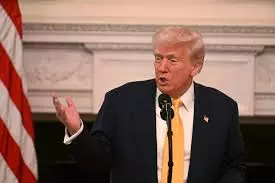
Chennai: US President Donald Trump’s decision to cut prescription drugs and pharmaceutical prices in the US saw Indian pharma stocks plunging on Monday. If the global drug manufacturers tighten the patent laws to recover costs, India’s pipeline of off-patented drugs will dry up and affect exports of generics.
The government will impose tariffs on pharmaceutical companies if the prices in the US do not match those in other countries. Trump is seeking price cuts between 59 and 90 per cent.
The executive order signed on Monday gives drugmakers price targets in the next 30 days. The government will take further action to lower prices if they do not make "significant progress" in six months.
Earlier in his social media post Trump said: “I will be instituting a Most Favoured Nation’s policy whereby the United States will pay the same price as the nation that pays the lowest price anywhere in the world”.
According to him, drugs in the US are sometimes five to ten times more expensive than those in other countries even if they were manufactured in the same laboratory or plant. The cost of research and development by drug companies is borne by the US alone, he added.
According to the industry, Trump has been referring to patented and branded drugs supplied by global multinational companies. “This may not directly affect Indian companies which largely manufacture generic drugs, which are already around 80 per cent cheaper than the patented drugs. The US may analyse the prices in the top 10 regulated markets and seek the lowest rates,” said P V Appaji, former director general of Pharmexcil.
According to Ravi Uday Bhaskar, former director general of Pharmexcil, Trump may not be able to cut drug prices by 80 per cent as the companies take cost and the market capacity into consideration while fixing prices.
However, under pressure patented drug manufacturers may tighten the patent laws to recover the costs. They could resort to data exclusivity, automatic patent term extensions, patent linkage, broader patentability criteria, and evergreening practices. India has been resisting such patent restrictions to be included in free trade agreements, said GTRI.
“India does not allow data exclusivity. Instead, it permits regulatory bodies to rely on existing clinical trial data to approve generic medicines—ensuring faster and cheaper access. It also rejects patent linkage, keeping regulatory approval separate from patent enforcement, which prevents unnecessary litigation that delays generics. Further, it blocks evergreening, disallowing patents on minor or trivial changes to existing drugs,” said Ajay Srivastava, founder, GTRI.
According to the industry, automatic patent term extension and evergreening will see lesser drugs going off-patent and will dry up the pipeline of Indian generic makers. Lower prices of patented drugs will also increase pressure on generic makers to bring their prices down. The makers of better-priced specialty generics are likely to be hit more.
On Monday, Sun Pharma stocks were seen falling 6.94 per cent in the early trade. Stocks which saw selling included Lupin, Aurobindo Pharma, Divi's Labs, and Glenmark Pharma.
