Trump Imposes 100 Pc Tariff On ‘Branded’, ‘Patented’ Drugs

Ambiguity in announcement creates uncertainty in Indian pharma market
Chennai: The US will be imposing a 100 per cent tariff on “branded or patented” pharmaceutical products from October 1. The inclusion of the word “branded” and omission of “generics” in the US President's terse social media post created uncertainty in the Indian pharma sector. While awaiting further clarification, Indian makers of low-cost generic drugs hope that they might be spared.
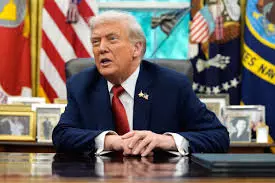
“Starting October 1st, 2025, we will be imposing a 100 per cent tariff on any branded or patented Pharmaceutical Product, unless a Company IS BUILDING their Pharmaceutical Manufacturing Plant in America. “IS BUILDING” will be defined as, “breaking ground” and/or “under construction.” There will, therefore, be no Tariff on these Pharmaceutical Products if construction has started,” Trump wrote on Truth Social.
The ambiguity in Trump’s post lies in the definition of “branded”.
India exported $9.8 billion worth of pharmaceutical formulations to the US in FY2025, which accounted for 39.8 per cent of India’s total pharma exports. Barring a small share of specialty drugs that have gone off-patent in recent times, India is largely a maker of generic drugs, which have brand names. These branded generics account for 90 per cent of the prescription drugs in the US market in volumes and India supplies more than 45 per cent of these generics. However, in value terms, these generics account for just 10 per cent of the US pharma market.
The US imported $212.82 billion in pharma goods in 2024 and bulk of the value goes to pharma majors like Roche, Novartis, Sanofi, GSK, and Bayer who manufacture patented drugs in countries like Ireland, Switzerland, and Germany.
“While there is ambiguity in the post, I think Trump should have been targeting the patented drugs which account for 10 per cent of the volume but 90 per cent of the value. The US may not levy tariffs on generics as it is already facing a shortage of over 250 drugs, and this will worsen the situation. Hence, I believe this will not have any major impact on Indian companies,” said Naveen Kumar, Associate Director, Care Ratings.
However, specialty drugs, which are both patented, and off-patented complex molecules may come under the tariffs. “Some of the top Indian companies are providing a few specialty drugs, but that accounts for just 5-7 per cent of the market,” he said.
Some of the companies like Dr Reddy’s manufacture a few specialty drugs in the US. Sun Pharma, which is another supplier of specialty drugs to the US, however, manufactures outside the US.
“But if US authorities treat branded generics as “branded imports,” such exports could be subject to the 100 per cent tariff, even though they are off-patent. This is a point of confusion. We must wait for US legal documents to say this with certainty,” said GTRI.
If the tariff is also levied on branded generics, Indian companies will have to pass on the taxes to the US importers as they already have thin margins of 15-18 per cent. The US exports have been facing pricing pressure due to increased competition in the generics space.
“Given the largely non-discretionary nature of these products, the majority of the tariff cost is likely to be passed through. Some of these domestic companies also have manufacturing facilities in the US, which would make them exempt from the new levies,” said Anuj Sethi, Senior Director, Crisil Ratings.
Dr Reddy’s, Sun Pharma, Lupin, Zydus Lifesciences, Aurobindo Pharma are some of the companies with high exposure to the US market.
Most of the pharma stocks were down up to 6 per cent on Friday following the announcement. However, market watchers find this as a knee-jerk reaction towards uncertainties in the sector.
