Chandrasekaran Unveils Tata Steel's Green Growth Vision

Chairman Natarajan Chandrasekaran highlights resilient India performance, European restructuring progress, and expansion push toward 40 MTPA capacity amid global headwinds.
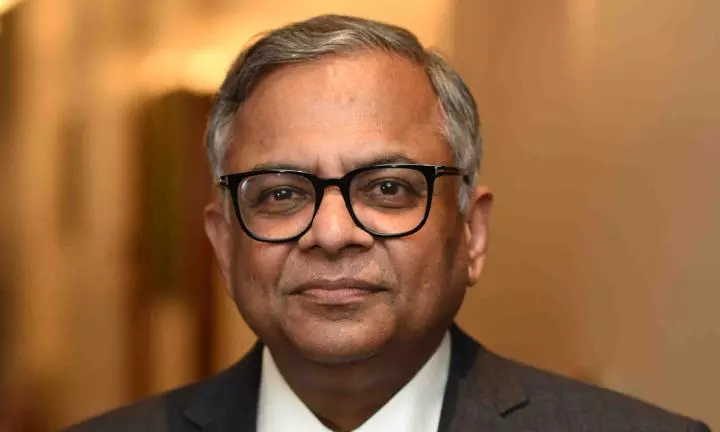
Steel Plant Chairman Natarajan Chandrasekaran on Thursday highlighted strong financial and operational performance by Tata Steel for fiscal 2026, even as global economic uncertainties and a slowdown in the steel sector weighed on markets.
Addressing shareholders at the company’s 119th Annual General Meeting, Chandrasekaran said the year began on a positive note with expectations of steady global growth and easing inflation, but conditions shifted following the onset of the West Asia crisis in March, triggering stagflationary pressures. Despite this, India’s economy remained resilient, recording a growth of 7.6%, supported by strong domestic demand and manufacturing.
The global steel industry witnessed subdued output, declining by 2% to 1.85 billion tonnes in calendar year 2025, largely due to China’s slowdown and weak demand in Western markets. In contrast, India’s steel sector continued to grow, with production rising 10.7% to 168.4 million tonnes and demand increasing 7.6% to 163.7 million tonnes.
Amid these conditions, Tata Steel delivered a strong financial performance. Consolidated revenue grew 6% year-on-year to ₹2,32,140 crore, driven by record crude steel production of around 23.4 million tonnes and deliveries of approximately 22.5 million tonnes in India. The company’s EBITDA rose 35% to ₹34,848 crore, while profit after tax surged 243% to ₹10,886 crore.
In India, revenue stood at ₹1,40,302 crore, with EBITDA increasing 17% to ₹34,272 crore and margins improving to 24%, aided by cost efficiencies, improved product mix, and higher volumes. The company also reduced its consolidated net debt to ₹80,144 crore, strengthening its balance sheet. The Board recommended a dividend of ₹4 per equity share for the fiscal.
Chandrasekaran noted that Tata Steel achieved a significant milestone with the Phase II expansion of its Kalinganagar plant, increasing overall capacity to 26.1 million tonnes per annum. The expansion includes India’s largest blast furnace and a modern cold rolling mill, enhancing the company’s presence in high-value segments such as automotive and defence. The company continues to target a long-term capacity of 40 MTPA.
The company also advanced its downstream capabilities and strategic initiatives, including consolidation in Tata Steel Colors and acquisition of a majority stake in Thriveni Pellets. Plans to expand Neelachal Ispat Nigam Limited (NINL) and the commissioning of a 0.75 MTPA Electric Arc Furnace in Ludhiana are expected to strengthen its long products portfolio. The Board has approved the amalgamation of NINL into Tata Steel to improve operational synergies.
In Europe, Tata Steel has entered a transformation phase focused on low-carbon steelmaking. In the UK, the company has begun work on a £1.25 billion Electric Arc Furnace project at Port Talbot in partnership with the UK Government. In the Netherlands, however, operations face challenges due to stringent environmental regulations exceeding European Union norms. The company is engaging with authorities to chart a sustainable and viable future for its Dutch operations.
Highlighting its digital transformation, Chandrasekaran said Tata Steel has deployed over 860 AI models across operations to improve efficiency, safety, and energy usage. Its digital platforms, Aashiyana and DigECA, recorded a combined gross merchandise value of ₹9,360 crore, marking a 161% growth over the previous year.
Reaffirming the company’s commitment to safety and sustainability, he said Tata Steel continues to aim for zero harm across operations. The company also spent ₹473 crore on corporate social responsibility initiatives, impacting over 6.9 million lives across India.
“Tata Steel is in a transformative phase towards becoming a larger, greener, smarter, and more resilient company,” Chandrasekaran said, thanking shareholders for their continued support.
