Rupee Undervalued After Its Recent Depreciation, Says RBI Governor Sanjay Malhotra

25 May 2026 10:51 PM IST25 May 2026 10:51 PM IST
His encouraging remarks along with easing crude oil prices amid renewed optimism around a potential US-Iran agreement helped the rupee strengthen by 46 paise to close at 95.23 per dollar on Monday
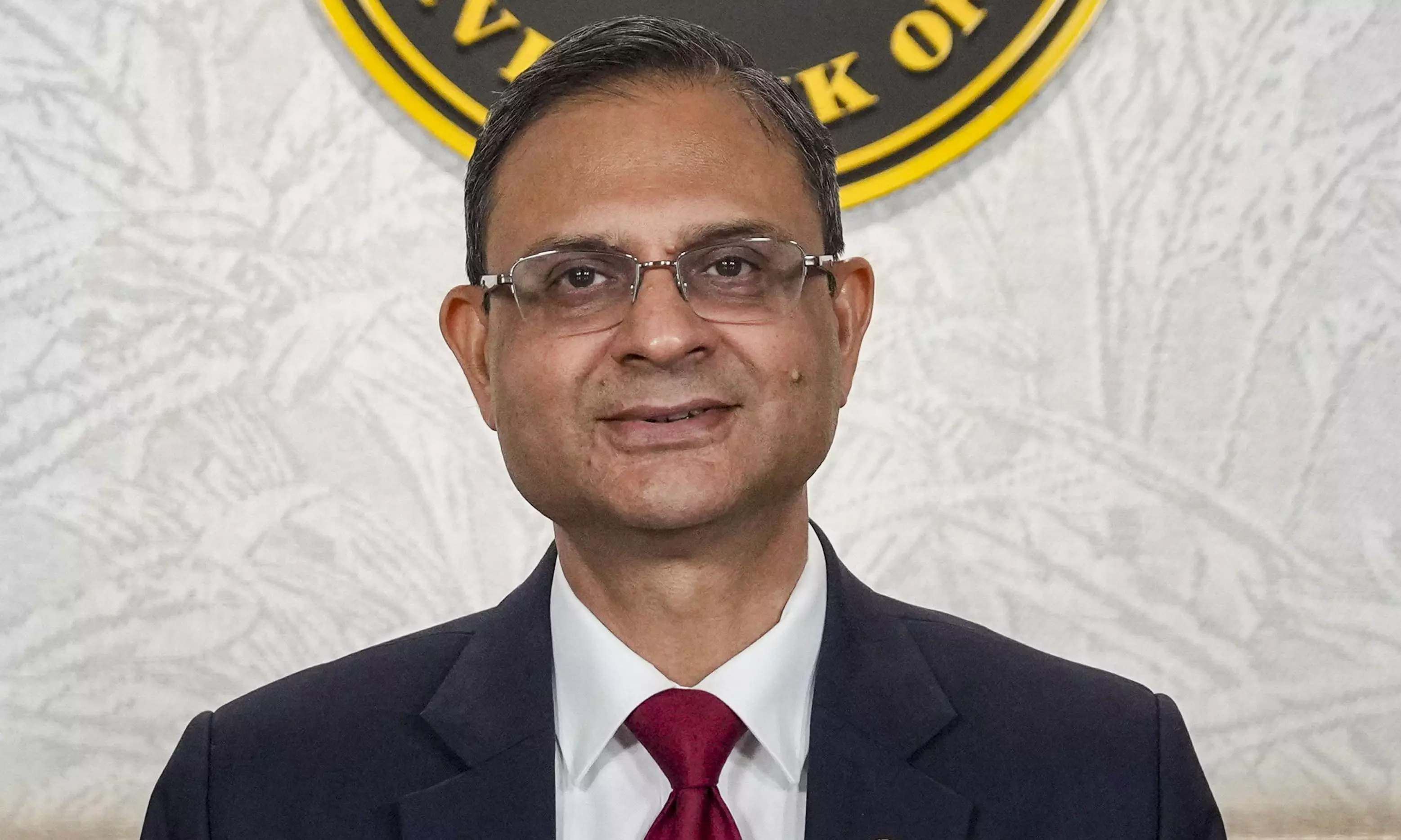
Reserve Bank of India (RBI) Governor Sanjay Malhotra.
Mumbai: The Reserve Bank of India (RBI) governor Sanjay Malhotra has said that the central bank stands ready to intervene in the foreign exchange market if needed while adding that the rupee remains undervalued in Real Effective exchange rate (REER) and in nominal terms following its sharp depreciation in the recent months.
His encouraging remarks along with easing crude oil prices amid renewed optimism around a potential US-Iran agreement helped the rupee strengthen by 46 paise to close at 95.23 per dollar on Monday. This was the rupee’s third consecutive gaining streak helping it become the second best Asian currency.
In an interview with a business daily, Malhotra said that the RBI does not target any specific exchange rate level for the rupee, but would intervene in the market if speculative pressures emerge. The Indian currency has fallen by 7 per cent to consecutive record lows, including an all-time low of 96.96 per dollar last week.
“The RBI will do whatever is required to ensure orderly price discovery in the forex market,” he said.
"With the recent depreciation, it would be reasonable to think that the rupee is not overvalued. If anything, one could argue that rupee has become undervalued, both in nominal as well as in Reer (real effective exchange rate) terms," Malhotra said.
The Governor said the RBI has many tools in its arsenal, including nearly $700 billion in foreign exchange reserves, to curb any undue speculative movement (compared to below $300 billion in 2013).
He also downplayed concerns over India's external position. Despite rising crude prices due to the West Asia conflict, he said the balance of payments (BoP) situation was "not an undue concern yet".
According to DSP Mutual Fund, the rupee’s REER at the end of April 2026 stood at 89.7 as per BIS data, and it is estimated to have slipped below 88 when USD-INR breached 96.96 on May 20, 2026.
According to Axis Mutual Fund, India remains structurally vulnerable to crude oil because it imports nearly 85 per cent of its oil requirements, and every $10 rise in crude can significantly worsen Current Account Deficit (CAD) by 40–45 basis points of GDP, increase inflation by 45–60 bps and increase fiscal stress if excise duty cuts are used to absorb the shock.
At the interbank foreign exchange market, the rupee opened at 95.35 per dollar, it made a high of 96.45 and a low of 95.10 before ending the session at 95.23, a 46 paise appreciation compared to Friday’s close of 95.69.
“The RBI usually does not comment on the direction of the currency but does speak of excessive volatility, but this time the Governor has clearly spoken on the direction of the intervention as it wants to control its weakness. This is a big change in the way RBI intervenes in the market, a rare from the Central Bank,” said Anil Bhansali, head treasury at Finrex Trading Advisors.
The Dollar Index was trading below 99 levels on growing optimism over a potential US-Iran agreement that could reopen the Strait of Hormuz. Brent oil was lower at $ 98.59 per barrel.
The rupee has been in the midst of a rapid and dramatic depreciation streak, falling by over 7 per cent in the calendar year 2026 against the dollar and touching successive record lows amid rising crude oil prices, elevated global bond yields, persistent foreign fund outflows and geopolitical tensions impacting global markets.
( Source : Deccan Chronicle )

Next Story