Rupee Inches Closer to Record Low of 92 Against Dollar

Rupee slides to fresh lows amid Adani stock sell-off, dollar outflows and global uncertainty; RBI steps in with liquidity measures
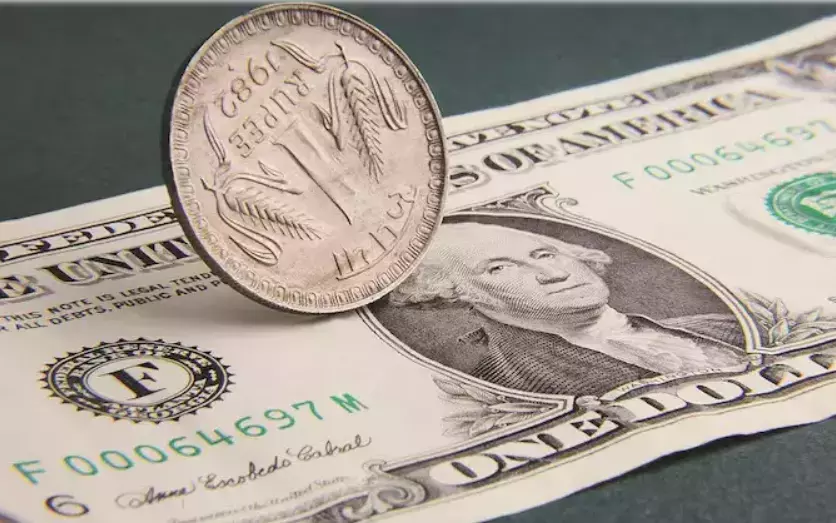
Mumbai Jan 23
The Indian rupee on Friday inched closer to a lifetime low of 92 against the US dollar weighed down by a fall in shares of Adani Group companies after the U.S. markets regulator asked a court for permission to personally email summons to founder Gautam Adani and group executive Sagar Adani over alleged fraud and a $265 million bribery scheme. Traders said the rupee looks vulnerable towards 93 levels due to ongoing pressure from dollar outflows, importer payments and speculative flows.
At the interbank foreign exchange market, the rupee opened at 91.50 against the greenback, it made a high of 91.97 and a low of 91.40. It finally closed at a new low of 91.94 compared to its previous close of 91.63, down 31 paise. Meanwhile, the dollar index, which measures the greenback's strength against a basket of six currencies, was trading 0.03 per cent higher at 98.38.
The domestic currency has retained its place as one of the regional underperformers, down 2 per cent against the dollar YTD, besides South Korean Won and the Indonesian rupiah. The bearish handover from last year was further fuelled by a confluence of global as well as domestic cues.
According to Radhika Rao, executive director and senior economist at DBS Bank, "The Rupee volatility is likely to persist in the near term, but depreciation is expected to be more gradual than the recent sharp moves. Dollar demand and capital flows will remain the key drivers, even as domestic growth and inflation stay supportive." "The RBI intervention and liquidity operations will help contain disorderly moves, with OMOs and FX swaps likely this quarter. The progress on EU and US trade talks could improve sentiment, offering some support to the rupee ahead," added Rao.
Despite India posting accelerating GDP growth and disinflation, the INR suffered its largest annual depreciation since 2022, sliding to a fresh record low of 90 per USD. Domestically, the downward pressure on the rupee comes at a time of apparent strength in economic growth, with the 1Q-2QFY average at 8 per cent yoy. Inflation has also been at moderate levels. Economists said that the INR’s underperformance in 2025 was less about India’s domestic fundamentals and more about US politics and trade uncertainties, raising the risk premium on Indian assets.
The 40 currency trade weighted REER as on December end stood at 95.30 compared to 97.52 as on Nov end. While a weak currency does cushion rupee earnings for exporters affected by higher tariffs, it has caused distortions elsewhere. After net outflows in 2025, equity markets have witnessed -$3bn outflows this CY, while bonds attracted tepid interest.
The RBI during the day also announced measures to inject more than $23 billion liquidity into the banking system through a combination of bond purchases, buy/sell FX swaps and repos. Under Governor Sanjay Malhotra, the central bank has stepped up liquidity injections over the past year to reinforce its rate cuts and to manage the impact RBI's market interventions to support the rupee have on banking system liquidity.
The RBI will conduct a 90-day variable rate repo (VRR) operation for Rs 250 billion ($2.7 billion) on January 30, making it the maiden 90-day cash infusion. This will be followed by a three-year $10 billion USD/INR buy/sell swap auction on February 4.
Meanwhile, India’s foreign exchange reserves jumped by $ 14.167 billion to $ 701.36 billion during the week ended January 16, the Reserve Bank said on Friday. The overall reserves had increased by USD 392 million to USD 687.193 billion in the preceding week.
