Recent Relaxation Of Chinese Investments Ineffective

Imports have more than doubled, but exports are even less than what they were five years back
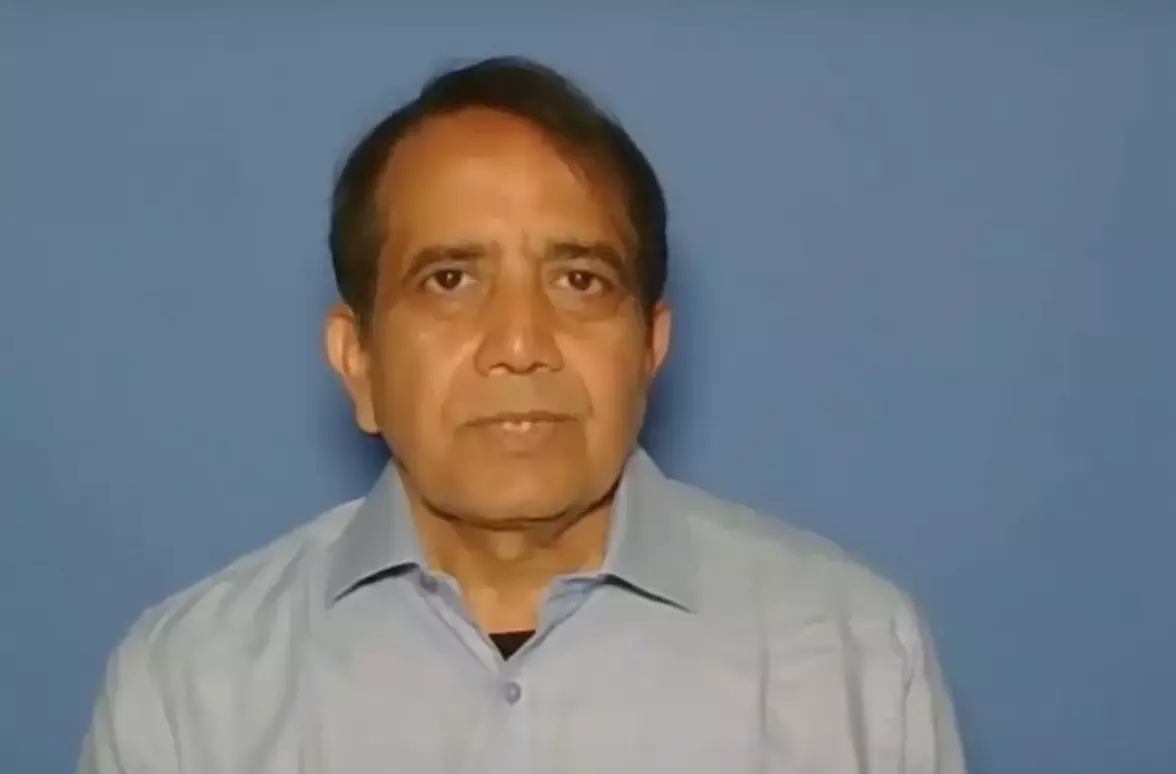
Chennai: India’s relationship with China in trade and investment has been contradicting. While imports and the trade deficit touched record highs in FY26, India has been restricting investments from the country, with only hesitant relaxations in recent months. Ajay Srivastava, Founder of GTRI, why fears around Chinese investments may be misplaced and why India needs a more nuanced approach.
Why should we be worried about a large trade deficit with China?
Let’s look at the data over the past five years. Imports have more than doubled, but exports are even less than what they were five years back. As a result, the deficit has increased 2.5 times—from about $45 billion to around $112 billion.
If we look at dependence, imports from China account for about 16% of India’s total imports, but that does not give the full picture. In agriculture, fuel, gold and silver, China’s share is less than 1.5%. The worry is in the remaining 98.5%, which are industrial products. China’s share in India’s industrial imports is more than 30% and rising. These are factory inputs—if something stops, it becomes a big issue for India’s industrial capacity.
What are the key vulnerabilities arising from this dependence?
More than 30% of India’s industrial imports come from China, and 66% of these are concentrated in four categories—electronics, computers, machinery and organic chemicals. Dependence in these categories is above 40%.
At a deeper level, the dependence is even sharper. Around 70% of chemical APIs and 90% of biological APIs come from China. In some cases, like erythromycin, dependence is as high as 98%. Silicon wafers (96%), solar cells (82%), flat TV panels (over 80%) and textile machinery components (over 90%) also show very high dependence. If China stops supplies, “we are not ready for that.”
If not China, what alternatives do we have?
Globally, countries like the US, Europe, Japan and South Korea are also dependent on China for industrial goods. The difference is that countries like Japan and South Korea export back to China at similar levels. Their imports and exports are almost equal.
So higher imports alone are not the issue. “High imports are a concern, but we are not exporting back to China—that is a bigger concern.” There are no ready answers; this has to be examined product by product.
Are Southeast Asian countries a viable alternative to China?
China has changed its strategy. It produces 80–90% of the value in China and finishes the product in friendly countries like ASEAN nations or Mexico. Components are exported from China and assembled elsewhere.
So while direct Chinese exports may appear to decline, exports routed through these countries are rising. These countries are not complete substitutes but extensions of China’s supply chain.
What should be India’s manufacturing strategy?
We should broadly divide goods into two parts. For more than 90% of products where we have the capability, we should manufacture in India. Even items like nuts, bolts and fasteners are being imported from China. These can be reverse engineered in IITs, NITs and CSIR labs.
“We are talking more about policies and schemes, but not doing enough on the ground.” India needs to start making things domestically and reduce dependence.
How much protectionism is desirable?
Every major economy has used protectionism selectively. But in the long run, it does not pay if misused. India should identify key sectors and provide protection against dumped imports, but not to “fatten the revenues of firms.”
In many cases, protection raises prices without improving competitiveness. Protection should come with a clear goal—making firms globally competitive in a few years.
Why is India allowing imports but restricting investments from China?
Imports and investments were open earlier, but after the Galwan clashes, checks were imposed. Even before that, Chinese investments in India were “very small, all bits and pieces.”
The idea that easing norms will lead to large inflows is misplaced. “That’s not going to happen.” If investments do come, they will likely be for marketing or assembly to sell Chinese goods in India, not for core manufacturing.
Should India allow Chinese investments?
There should be no blanket yes or no. Investments in sensitive areas like telecom should be rejected, but those in manufacturing components can be welcome if they help India. Decisions must be based on details, not a “helicopter view.”
What is your view on recent FDI relaxations?
The policy allowing automatic investment where Chinese ownership is below 10% appears too restrictive. “Which Chinese firm will be interested?” If Chinese firms are not in the driver’s seat, such investments may not materialise. “I feel it will be totally ineffective.”
What should be India’s broader policy going forward?
Two approaches are needed. First, reverse engineering and domestic manufacturing for the majority of products. Second, inviting global anchor investors where India lacks technology.
India has done this before—large joint ventures transformed sectors like automobiles. Similar high-scale investments are needed now. “For low and medium technology, let’s do it ourselves. For the rest, invite reputed manufacturers.”
