Industry Reaction to Nirmala Sitharaman's Budget 2026

Experts hail focus on semiconductors, data centres, real estate liquidity and workforce readiness
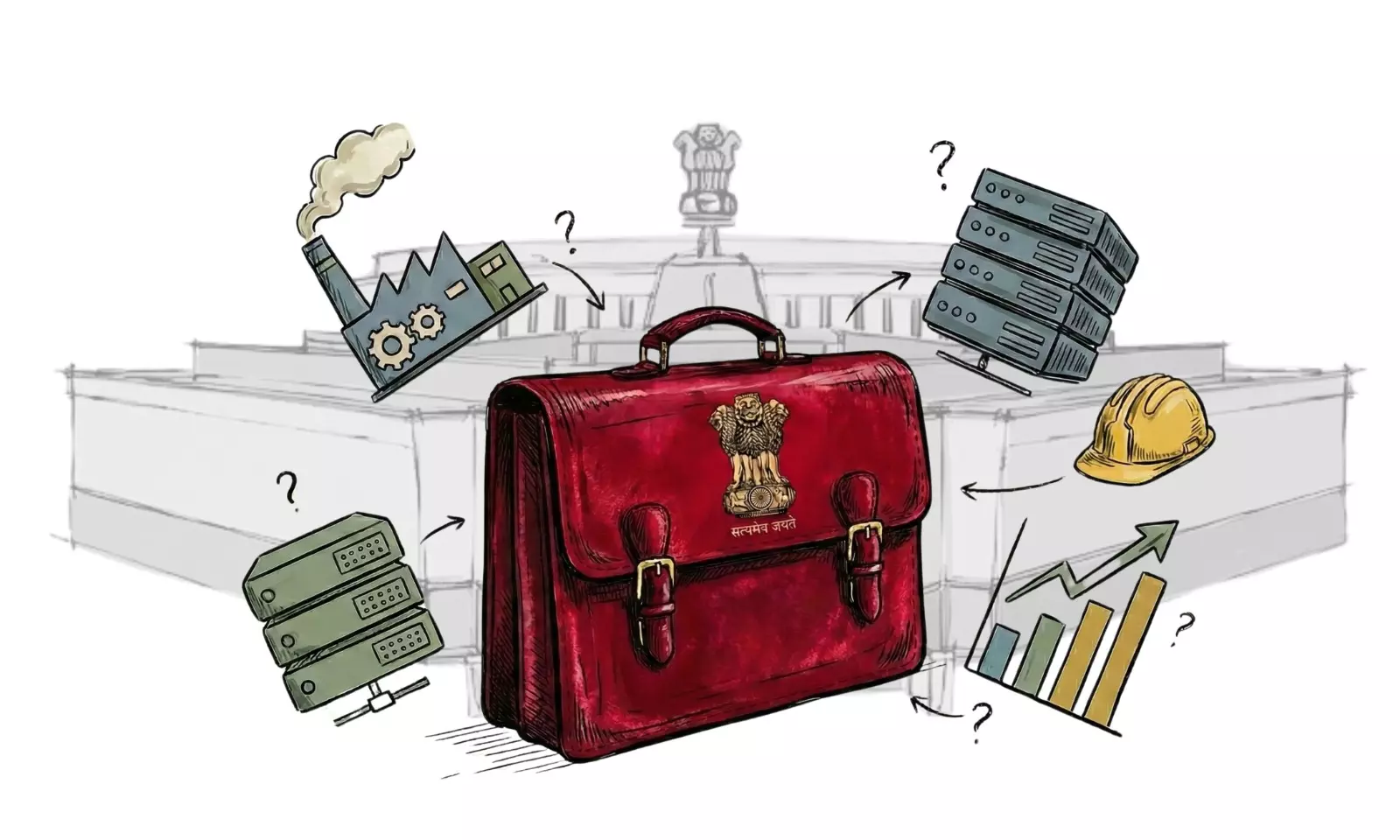
Industry leaders across technology, real estate and education sectors have welcomed the Union Budget 2026, presented by Finance Minister Nirmala Sitharaman on Sunday, calling it a forward-looking roadmap that balances infrastructure growth with talent development and technology-led transformation.
Jaspreet Bindra, Co-Founder and CEO of AI&Beyond, said the Budget’s strong emphasis on semiconductors, rare earths and advanced manufacturing signals a clear long-term vision to position India as a global technology and innovation hub.
“What makes this moment especially powerful is the opportunity to simultaneously build an AI-literate workforce that can fully leverage these investments. As manufacturing and services become increasingly intelligent and data-driven, AI will be embedded across design, production, quality control and supply chains,” he said.
Bindra underlined the importance of accelerated data centre infrastructure, noting that rising AI adoption will exponentially increase demand for secure, high-performance and energy-efficient facilities. He also welcomed the proposal to establish 15,000 AI labs in schools and 10,000 technology fellowships at premier institutions, calling it a significant step towards building a robust AI talent pipeline.
He termed the decision to set up a high-powered panel on the impact of AI and emerging technologies on jobs and skills as a “welcome and timely move”, saying it reflects the government’s recognition that technology adoption must go hand in hand with workforce transformation.
Reacting to the Budget, Ashka Pandit, Director, Sri Lotus Developers and Realty Limited, said the allocation of ₹12.2 lakh crore for capital expenditure and the proposed Infrastructure Risk Guarantee Fund would ease financing constraints in the real estate sector.
“The sustained focus on Tier-2 and Tier-3 cities opens up immense opportunities, positioning them as India’s next real estate frontier. Enhanced infrastructure connectivity will transform these regions into prime investment destinations,” she said.
Pandit added that while the construction equipment enhancement scheme would improve execution standards, the move to subject promoter buybacks to both capital gains tax and buyback tax would require careful assessment by developers.
Ranjita Raman, CEO of Jaro Education, said the Budget makes a “strong and timely push” towards workforce readiness in line with Viksit Bharat 2047 goals.
“By prioritising skill development and industry-linked education, the government has acknowledged the urgent need to bridge the gap between learning and employability,” she said, welcoming the proposal for university townships near industrial corridors and the formation of an Education to Employment and Enterprise Standing Committee.
She also welcomed the reduction of TCS on education and medical expenses from 5% to 2%, saying it would ease financial pressure on learners and working professionals.
Prateek Shukla, Co-Founder and CEO of Masai, said the Budget brings positive news for India’s young workforce by making education more affordable and aligning skilling initiatives with evolving job market needs.
“The emphasis on artificial intelligence, emerging technologies and industry-led research reflects today’s realities, where job roles are changing faster than traditional education systems can adapt,” he said.
Shukla added that initiatives such as the Education to Employment Standing Committee and ISM 2.0 with an outlay of ₹40,000 crore would strengthen India’s semiconductor ambitions, while the broader focus on talent development would help create sustainable, future-ready employment opportunities.
Aditya Kandoi, Founder & CEO, Redcliffe Labs, said, “Union Budget 2026 reflects a powerful shift in how India thinks about health, moving from treating illness to preventing it before it disrupts lives. The focus on diabetes, cancer, and autoimmune diseases acknowledges a reality millions of families face every day and reinforces the urgent need for early detection, regular screening, and proactive care.
Strengthening the CDSCO is a crucial step toward building deeper trust in India’s healthcare system. For patients, it means safer access to high-quality, innovative therapies. For the country, it strengthens our credibility as a global healthcare destination.
The proposal to develop new regional medical centers is equally significant, bringing advanced healthcare closer to communities beyond metros. When combined with technology-led diagnostics and affordable access, these measures can fundamentally change health outcomes at scale.
By expanding access, strengthening quality, and prioritizing prevention, this budget takes a much-needed step toward a healthier, more self-reliant India where good health is not a privilege, but a promise.”
Mr. Siddhartha Gupta, CEO, Yatra Online Limited, said, “India’s travel and tourism sector has reached a point where demand is well established across segments and geographies. The focus now has to be on building an ecosystem that allows this demand to scale in a more efficient, affordable, and predictable way, and the Union Budget 2026-27 takes steps in that direction.
Deepanshu Manchanda, MD at Zappfresh, said, The Union Budget 2026–27 makes a practical and forward-looking change for India’s seafood and protein markets by increasing the duty-free import limit for specified inputs used in seafood processing from 1% to 3% of FOB export value. This step will help stabilise supply, reduce costs, and make it easier for processors and retailers to manage inventory, especially when domestic seafood availability is seasonal or uneven. For businesses like ours, handling multiple protein categories, including seafood alongside chicken and mutton, this will bring greater flexibility in sourcing, reduce price volatility, and ensure consumers have access to quality products year-round. Seafood is part of our product range alongside chicken and mutton, and we've seen customer demand for consistent quality and variety. Import duty relaxation does not replace our strong domestic fishing base; it supplements it by filling supply gaps and helping maintain consistent consumer choice without large price swings.
More broadly, the Budget’s customs and trade facilitation measures aimed at simplifying processes, reducing transaction delays and lowering costs will strengthen India’s competitiveness in global seafood markets. Easier imports of processing inputs, combined with export-oriented support, will boost the efficiency of supply chains, encourage value-added processing, and create opportunities for growth in both domestic and international markets.
Overall, this policy change supports industry stability, enhances export potential, and benefits consumers by enabling year-round supply of diverse protein options while reinforcing India’s position as a reliable participant in global seafood trade.
Commenting on the recently announced Union Budget 2026, Shishir Baijal, International Partner, Chairman and Managing Director, Knight Frank India said, "We welcome the Honourable Finance Minister’s announcement today, so far as the thrust on infrastructure development is concerned. The FY27 Union Budget signals continuity in India’s macro-growth trajectory, with a consistent infrastructure push and fiscal discipline. The Budget maintains a stable macro environment for investors, keeping buyer sentiment measured and pragmatic. The focus on selective opportunities in tier-2 and tier-3 growth corridors, and connectivity in urban economic regions, provides a supportive backdrop for demand in residential and logistics markets over the medium term. However, disappointingly, the Budget does not introduce any real estate-specific fiscal incentives, especially to boost affordable housing in India, which has already been a cause of concern for the sector."
Rakesh Jain, CEO, IndusInd General Insurance, said "Union Budget 2026–27 is a forward-looking and reassuring document presented at a time when global volatility, geopolitical tensions, and supply-chain disruptions continue to shape economic realities. The Finance Minister’s emphasis on accelerating growth especially in new age sector while strengthening resilience reflects a clear understanding of what India needs at this stage of its development.
For the general insurance sector, several parts of this Budget create strong tailwinds. The MSME-focused measures including the ₹10,000 crore SME Growth Fund, the additional support to the Self-Reliant India Fund, and the significant strengthening of the TReDS ecosystem through CPSE onboarding, credit guarantee support, GeM linkages, and securitisation of receivables expand formalisation and improve liquidity for small businesses. These steps broaden the base of insurable enterprises and support wider adoption of property, liability, marine, cyber and employee health insurance in the country.
The reforms related to motor insurance, particularly the exemption of income tax on interest awarded by the Motor Accident Claims Tribunal and the removal of TDS, will meaningfully improve claimant outcomes and reinforce trust in the claims process. This is an important step towards making motor insurance more customer centric and responsive."
Dr Pawan Goenka- Chairman of IN-SPACe (Indian National Space Promotion and Authorization Centre) and SCALE Committee, Government of India on the Union Budget 2026, said “The Union Budget 2026 continues to strengthen the foundations required for sustained economic growth. With wide-ranging reforms across sectors, the focus on manufacturing with a boost to creating Champion MSMEs, and infrastructure reflects an understanding that scale and resilience are built through stable policy and institutional support. Simplification of tax processes, decriminalisation of compliance-related provisions, and GST rationalisation will ease adherence, improve predictability for businesses, and encourage entrepreneurship. The proposal to establish dedicated Rare Earth Corridors across mineral-rich states is a timely step towards securing critical materials, strengthening domestic value chains, and reducing strategic dependencies. At the same time, targeted customs duty exemptions to support domestic manufacturing and supply-chain integration will further contribute to a more competitive, resilient economy where businesses can invest with confidence and plan for the long term.”
Mr. Girish Aggarwal, Managing Director, APM Terminals Pipavav, said “Budget 2026 reassures the government’s continued focus on infrastructure-led growth and the importance of logistics as a key enabler of India’s trade competitiveness. At a time of global uncertainty, the record public capital expenditure of INR12.2 lakh crore and the emphasis on integrated connectivity through freight corridors, coastal shipping, inland waterways, and port-led development provide a stable and confidence-building signal for the sector.
Focused initiatives such as the Dankuni–Surat Dedicated Freight Corridor and the operationalisation of new national waterways strengthen multimodal connectivity, while investments in ship-repair ecosystems and high-speed rail corridors reflect a forward-looking approach to long-term infrastructure development.
The Finance Minister’s emphasis on keeping the ‘Reform Express’ firmly on track is clearly visible in these initiatives, as well as in the INR10,000 crore allocation for container manufacturing and the focus on sustainable cargo movement. From an industry perspective, these measures will significantly improve connectivity, reduce transit times, lower logistics costs, and enable Indian ports to operate with greater efficiency, reliability, and scale. The Budget’s focus on digitised, integrated customs processes and faster cargo clearances is a meaningful step towards improving ease of doing business. The expansion of AI-enabled, non-intrusive scanning across major ports will directly support faster cargo movement and lower transaction friction, translating into improved reliability and efficiency across the logistics chain for ports and trade.
At APM Terminals Pipavav, we see this as an opportunity to continue working closely with the government and stakeholders to support India’s evolving logistics and maritime ecosystem and contribute to India’s long-term economic growth.”
Dr. Samantak Das, Chief Economist and Head – Research and REIS, India, JLL, said, Lifesciences, REITs market expansion and focus on growth sectors – education, healthcare, manufacturing, tourism & data centres underpin a future vision budget document.
“A three-pronged approach that focuses on growth sectors, infrastructure and the services segment has laid down the blueprint to sustain and accelerate economic growth. Specific incentives for biopharma and electronics manufacturing, rare earth mining, setting up education townships & medical value tourism hubs are far-reaching. Additionally, the measures to promote tourism will create accretive employment and revenues while the tax holiday for foreign data centre service providers is set to make India a global hub for data centres. The overall budget is a statement and action document to create the push towards making India a leading manufacturing and innovation-driven ecosystem."
Rajiv Kumar, Vice Chairman, DS Group – “The budget strikes a balance between fiscal stability and aggressive growth, positioning India for a resilient economic future. For the FMCG sector, the Viksit Bharat agenda serves as a vital catalyst by synchronizing demand and supply-side enablers. Specific interventions in agriculture like push for production of cocoa, fisheries and animal husbandry are poised to boost rural incomes. Simultaneously, the expansion of TReDS and improved credit access will alleviate working capital pressures for distributors and contract manufacturers, fortifying the entire FMCG ecosystem.
On the operational front, significant outlays for freight corridors, inland waterways and Tier II-III infrastructure are expected to lower logistics overheads and bridge the gap in last-mile connectivity encouraging deeper regional penetration. These logistical gains, paired with a focus on domestic manufacturing, chemical parks and energy security, will help stabilize input costs against global volatility.
The regulatory environment encourages growth and Ease of Doing Business. The shift from penalty to fee-based compliance, together with incentives for data-driven IT strength, enables businesses to shift attention from regulatory issues to digital optimization. In addition, the simplification of customs duties and the digitalization of GST procedures will improve supply chain predictability and help with export competitiveness. Finally, the budget covers the basic pillars of productivity by connecting tourism and wellness, with mass-scale skill development. This comprehensive strategy promotes a productive population and a seamless business environment thereby cementing India’s long-term growth trajectory and ensuring a sustainable consumption story for the future years.”
Mr. Ajay Mahipal - Co-founder & General Partner, HealthKois
With the Union Budget 2026 allocation crossing the ₹1 lakh crore mark for the first time in the healthcare industry, we are seeing a structural shift from a social utility to a high-growth asset class.The ₹10,000 crore Biopharma Shakti programme and 1,000 accredited clinical trial sites act as significant de-risking mechanisms for investors. By upgrading NIPERs and strengthening the CDSCO, the government is creating a predictable regulatory pathway that encourages long-term capital deployment in deep science.
This industrial depth is balanced by immediate market resilience through customs exemptions on 36 life-saving drugs. Furthermore, the training of one lakh allied professionals addresses the talent shortage that typically limits how fast healthcare startups can scale operations.
To fully leverage this, we must recognize that the BioPharma Strategy for Health Advancement through Knowledge, Technology, and Innovation will strengthen India’s digital ecosystem in healthcare. Consequently, the investment focus can now shift to the invisible layers of the health stack, which includes backing backend health data infrastructure and AI-driven diagnostics. This transitions India to a unified, patient-first digital economy, offering massive scalability for startups serving both domestic and global needs.
Jyoti Malhotra, Managing Director, Volvo Car India, said, “The continued focus on maintaining and improving the current growth rate in the Union Budget 2026-27 should help the economy to enhance productivity and competitiveness, by building resilience to a volatile global economy. The budget proposals are a welcome move for the entire productive sector, including the mobility sector. The maintenance and sustenance of growth will encourage consumption across the board, creating a larger market for high value items. Coupled with ease of handling direct taxation and customs related rules, the economy should continue in an upward trend. Overall the measures are targeted at maintaining the momentum of the Indian economy.”
Mr. Shashank Noronha, Founder of TABBSZ said the Budget clearly positions MSMEs, startups, and domestic manufacturing at the centre of India’s next growth phase. Measures such as the ₹10,000 crore MSME Growth Fund, stronger receivables financing through TReDS, faster export clearances, and greater flexibility for manufacturers collectively improve liquidity and reduce friction across supply chains. Coupled with structural reforms, infrastructure support, these initiatives strengthen the ecosystem, enabling Indian businesses to compete globally while scaling sustainably. For FMCG brands, better access to capital and a more efficient manufacturing landscape allow companies to grow without relying on plastic-heavy or inefficient models. As cost structures improve and supply chains strengthen, Indian consumers are increasingly choosing products that deliver value with lower environmental impact. Sustainability is no longer a niche preference but it is becoming integral to how FMCG is manufactured, priced, and adopted across urban and Tier-2 markets.
On Tourism sector, Shaaz Mehmood, Founder, Medijourn Solutions Private Limited, said “I commend Finance Minister Nirmala Sitharaman on the Union Budget 2026–27 for recognising the strategic importance of medical tourism in India’s healthcare growth story. The announcement of five regional medical tourism hubs is a strong and timely step that will enhance India’s position as a global medical value travel destination. By integrating modern healthcare with AYUSH systems, diagnostics and rehabilitation, the budget lays the foundation for a more coordinated and patient-centric ecosystem. The emphasis on private sector participation and strengthening healthcare capacity will improve service delivery and scalability. While further policy support over time can accelerate global patient inflows, the budget clearly demonstrates a forward-looking approach to building a competitive and resilient medical tourism ecosystem that contributes to economic growth.”
India’s MVT sector has grown steadily over the years, and cities like Hyderabad, Delhi, Chennai, Mumbai and Bengaluru are already well-positioned to scale as global healthcare destinations. With the right execution and private-sector partnership, this initiative can significantly strengthen India’s leadership in global medical tourism.
Dr. K. Anand Kumar, MD, Indian Immunologicals Ltd:
As India moves forward with the INR 10,000 Cr BioPharma Shakti initiative, the Union Budget presented a defining moment to strengthen the country’s position as a global vaccine and biologics manufacturing hub.
India already supplies nearly 60% of the world’s vaccines, and this initiative has the potential to accelerate our transition from being a volume-driven supplier to an innovation-led biopharma leader. Targeted investments in advanced manufacturing infrastructure, high-containment facilities, and indigenous production of key raw materials such as culture media, adjuvants, and single-use systems will significantly improve supply chain resilience.
Overall, the Budget lays a strong foundation for India to evolve from the ‘pharmacy of the world’ to a trusted global hub for affordable vaccines, biologics, and health security.
Rahul Attuluri, CEO and Co-Founder of NxtWave Disruptive Technologies
The Union Budget 2026 lays a strong focus on emerging technologies, particularly AI, as core drivers of Viksit Bharat, signalling a shift from degree-centric education to skill-centric employability. Union Budget 2026–27 is truly a ‘Yuva Shakti–driven budget’, with a renewed emphasis on education, skills, creative industries, and employment pathways to fulfil the aspirations of India’s youth. The Finance Minister’s proposal to set up an ‘Education to Employment’ standing committee is a timely and much-needed move. The budget’s push to expand higher education capacity and improve student access through scale, inclusion, and strengthened infrastructure will help create vibrant learning ecosystems and build a future-ready education system for students across Bharat. The focus on assessing AI’s impact on jobs and aligning skills with future demand positions India to build a globally competitive workforce and move closer to a 10% share of the global services economy by 2047.
Mr. Karun Tadepalli, Co-Founder & CEO, byteXL Pvt Ltd
The Union Budget sends a clear and decisive message that India’s growth story will be powered by human capital, deep tech, and employability at scale. The government’s continued emphasis on skill development, AI-driven learning, research, and greater participation of women in STEM reflects a shift from education as access to education as outcomes.
For companies like ours, this marks an important inflection point. The last few years have seen the edtech winter, but with the AI-focused investments and policy support, we are confident this is the path to long-term, impact-led skilling. This Budget reinforces that the future lies not in course delivery alone, but in building integrated partnerships with universities, industry, and government to create job-ready talent. Skilling must move from being transactional to transformational.
We see strong potential in the government’s push to strengthen India’s digital infrastructure, with the long tax holiday for foreign cloud firms to operate through Indian data centres. Expanding domestic data centre capacity and improving access to affordable cloud and compute infrastructure can be a game changer for startups and skilling companies alike.
I believe the real opportunity is to embed industry-aligned curricula within campuses, enable hands-on learning with emerging technologies, and bridge the gap between academic knowledge and real-world application. I see this Budget as a strong call to action for skilling players to evolve into true talent partners, working closely with institutions and enterprises to deliver measurable career outcomes. With the right execution, India can move beyond being a talent supplier to becoming the world’s most trusted hub for tech-ready, innovation-driven professionals.
Rajiv Chilaka, Founder & CEO, Green Gold Animation, said:
The Finance Minister’s renewed focus on the AVGC sector and structured content creation at both school and college levels is a transformative step for India’s creative economy. By establishing Animation, VFX, Gaming and Comics Content Creator Labs across thousands of educational institutions, the government is building a deep, sustainable talent pipeline aligned with the industry’s projected requirement of nearly 2 million professionals by 2030.
What is particularly encouraging is the strong push this will give to regional content creators, enabling talent beyond metro cities to access world-class tools, training, and production ecosystems. This will accelerate original IP creation in local languages, expand employment opportunities, and fuel India’s cultural exports globally.
These measures not only strengthen skill development but also lay the foundation for India to emerge as a global hub for high-value digital content, gaming, and animation production. For the industry, this is a commercially significant and future-ready policy direction that will unlock long-term growth, innovation, and global competitiveness.
Dr. Irfan Khan, Chairman of EBG Group, a multi-sector conglomerate, said:
The ₹10,000 crore SME Growth Fund and the ₹2,000 crore top-up to the Self-Reliant India Fund clearly signal the government’s intent to push MSME growth beyond the metros. Measures such as TReDS reforms, invoice discounting and new credit-guarantee support for MSME receivables will be especially helpful for manufacturers in Tier-II and Tier-III towns, where access to timely working capital remains a major issue.
The introduction of ‘Corporate Mitras’ will ease compliance and accelerate formalisation for small units that are strong in operations but weak in paperwork. Along with the revival of industrial clusters and a sharper focus on emerging cities, this decentralised approach strengthens local manufacturing ecosystems and job creation. Overall, the Budget enables MSMEs in these regions to scale sustainably rather than stay dependent on metro-led growth.
Aditya Kandoi, Founder & CEO, Redcliffe Labs, said, “Union Budget 2026 reflects a powerful shift in how India thinks about health, moving from treating illness to preventing it before it disrupts lives. The focus on diabetes, cancer, and autoimmune diseases acknowledges a reality millions of families face every day and reinforces the urgent need for early detection, regular screening, and proactive care.
Strengthening the CDSCO is a crucial step toward building deeper trust in India’s healthcare system. For patients, it means safer access to high-quality, innovative therapies. For the country, it strengthens our credibility as a global healthcare destination.
The proposal to develop new regional medical centers is equally significant, bringing advanced healthcare closer to communities beyond metros. When combined with technology-led diagnostics and affordable access, these measures can fundamentally change health outcomes at scale.
By expanding access, strengthening quality, and prioritizing prevention, this budget takes a much-needed step toward a healthier, more self-reliant India where good health is not a privilege, but a promise.”
Wadi Surgicals Cheers Budget 2026: Provides growth impetus to healthcare sector
K. Anindith Reddy, MD & Co-founder Wadi Surgicals Pvt Ltd (Enliva), said, "The ₹2,000 crore top-up to the Self-Reliant India Fund in Union Budget 2026 is a timely step for manufacturing MSMEs built under the Atmanirbhar Bharat mission, including Enliva. Access to growth capital has been a key constraint, and this measure directly addresses that gap while reinforcing the focus on self-reliant, scalable enterprises."
Ramakrishnan M., Managing Director, Primus Partners, said the budget provided measured support for agriculture and allied activities, with a clear focus on high-value farming and fisheries. He noted that targeted interventions for crops such as coconut, cashew, cocoa and sandalwood, along with orchard rejuvenation and nut cultivation, would help strengthen farmer incomes, particularly in coastal, hilly and North-Eastern regions. The development of 500 reservoirs and Amrit Sarovars is expected to deepen the fisheries value chain, benefiting women-led groups and FPOs.
On tourism, Shubham Katyayan, Vice President, Primus Partners, said the emphasis on curated and experience-led tourism—covering heritage, eco, archaeological and astro tourism—marked a shift in destination development. He stressed the need for strong governance and destination marketing to build distinctive identities and drive repeat visits.
Highlighting the digital economy, Devroop Dhar, Co-Founder and India CEO, Primus Partners, said India is already the fastest-growing large market for data centres. The proposed tax holiday for cloud service providers using Indian data centres would accelerate investments by global and domestic hyperscalers, strengthening India’s position as a potential AI and data centre hub for the Global South. He added that enhanced allocations for the India AI Mission and the upcoming India AI Impact Summit would further boost the ecosystem.
In the textile sector, Kanishk Maheshwari, Co-Founder and Managing Director, Primus Partners, said the focus on modern infrastructure and skill upgradation would attract foreign investment and integrate Indian manufacturers more closely with global value chains.
Healthcare and life sciences also received a strong push, with Nilaya Varma, Co-Founder and Group CEO, Primus Partners, calling the budget a shift towards innovation-led growth. She said the ₹10,000 crore investment in biologics and biosimilars, expansion of NIPERs, new mental health institutions and duty exemptions on critical and rare-disease drugs would improve access, affordability and long-term capacity in healthcare.
On infrastructure, Pragya Priyadarshini, Managing Director, Primus Partners, said the focus on high-speed and freight corridors, along with the Infrastructure Risk Guarantee Fund, would reduce logistics costs and improve project viability. The ₹10,000 crore container manufacturing scheme, she added, would enhance self-reliance and trade competitiveness.
Addressing public health concerns, Sunita Mohanty, Managing Director, Primus Partners, said the budget’s emphasis on non-communicable diseases sent a strong signal to FMCG, food, beverage and pharmaceutical companies to adopt healthier formulations, transparent labelling and responsible business practices.
D. Ramchandram, Co-Chair, Tourism Committee of Federation of Telangana Chambers of Commerce and Industry (FTCCI), while presenting the tourism industry’s perspective on the Union Budget 2026–27 today at FTCCI, said that although the Budget introduces several positive initiatives, it falls short of addressing the core structural issues faced by the tourism sector.
He said the industry welcomes initiatives such as the seaplane push, establishment of hospitality institutions, upgradation of hotel management institutes, training of 10,000 tourist guides, creation of five regional hubs for medical tourism, promotion of heritage and archaeological sites, adventure tourism, Buddhist circuits, and relief through TCS for Indian travellers. However, these measures, while positive, do not adequately address the long-standing demands critical for making tourism globally competitive and employment-intensive.
Ramchandram noted that key expectations such as industry status for tourism, GST rationalisation, a comprehensive National Tourism Policy, targeted MSME support, tourism-specific skill development, and focused support for Telangana tourism were not addressed in the Budget.
One of the most long-pending demands of the tourism sector is the granting of infrastructure status to tourism projects. Currently, hotels, resorts, convention centres, and theme parks are treated as real estate rather than infrastructure, which restricts access to long-term and affordable financing. Granting infrastructure status would enable cheaper credit, improve project viability, and accelerate investment in hotel capacity, MICE tourism, eco-resorts, and destination infrastructure. This reform would be particularly impactful for Tier-II and Tier-III cities and districts in Telangana, where tourism can act as a powerful driver of regional development and employment generation.
He further pointed out that India still lacks a comprehensive and contemporary National Tourism Policy aligned with global best practices. Globally, over 150 out of 195 countries operate with clearly articulated national tourism policies or long-term tourism roadmaps, including even smaller economies such as Japan and Thailand, which have successfully leveraged tourism for economic growth. The industry was expecting the announcement of a new National Tourism Policy or at least a clear roadmap, with emphasis on sustainable tourism, digital transformation, skill development, and public-private partnership (PPP). A long-term national policy is essential for India to unlock its full tourism potential and compete effectively at the global level.
GST rationalisation remains another critical requirement for the tourism and hospitality sector. High GST rates continue to make India a costly destination compared to South-East Asian countries, adversely impacting inbound tourism and price competitiveness. The industry has consistently sought a reduction in GST on hotel rooms—particularly in the ₹7,500 and above slab—tour operators, travel services, and convention and exhibition (MICE) services. Rationalisation would help lower costs, stimulate demand, attract international events, and strengthen India’s global tourism positioning. As the industry reiterates, “High GST is hurting inbound tourism and price competitiveness.”
Highlighting the role of MSMEs, Mr Ramchandram said that tourism MSMEs form the backbone of the sector, accounting for nearly 80% of tourism enterprises. With an estimated 5–6 million tourism-related MSMEs, the sector supports over 40 million direct and indirect jobs. Given this scale and employment potential, the industry had expected a dedicated tourism MSME credit line, interest subvention for small hotels and operators, and simplified compliance norms, which were not announced. Strengthening tourism MSMEs is essential for inclusive growth and destination development across Tier-II and Tier-III regions.
He also expressed disappointment that, despite high expectations, the Budget did not provide specific support for Telangana’s medical tourism ecosystem and heritage tourism circuits. Telangana, with Hyderabad’s globally recognised healthcare infrastructure and rich heritage assets such as Warangal and the Qutb Shahi monuments, holds immense potential to attract international and domestic tourists. Targeted central support for medical tourism hubs and heritage circuits could have significantly enhanced destination visibility, investment, and employment. The absence of such state-specific interventions is therefore seen as a missed opportunity.
Dr Azad Moopen, Founder and Chairman, Aster DM Healthcare, said, "Today’s Budget lays out a thoughtful and forward-looking blueprint for India’s healthcare ecosystem—one that seamlessly integrates innovation, access, capacity expansion and global competitiveness. The Biopharma Shakti initiative, with an outlay of ₹10,000 crore over five years and a clear focus on strengthening research, manufacturing and regulatory capabilities, will play a pivotal role in accelerating India’s journey towards advanced, affordable and globally benchmarked healthcare solutions. The exemption of basic customs duty on 17 critical cancer drugs is a timely and patient-centric measure that will significantly improve access to life-saving therapies while easing the financial burden on families.
Deepak Kedia, Chief Financial Officer (CFO), Mastek Group, said the Union Budget 2026 reaffirms the government’s focus on building a strong technology and innovation ecosystem in India. The expansion of the India Semiconductor Mission 2.0 underlines the importance of developing semiconductor capabilities, which are essential for future-ready enterprises and digital self-reliance.
The ₹10,000 crore Biopharma SHAKTI programme reflects growing attention to emerging sectors and the role of innovation-led manufacturing in solving complex healthcare challenges, creating new opportunities for technology adoption.
Continued support for AI and other emerging technologies, along with investments in digital infrastructure, will help accelerate the growth of the digital economy. As expected, the emphasis on data centers, skilled research talent, and supportive regulations along with the proposal of tax holidays until 2047 for foreign companies providing cloud services globally using data center services in India provides long-term clarity and strengthens India’s appeal as a global digital hub.
At the same time, measures to support MSMEs and their digital transformation point to a practical and inclusive growth approach. Overall, Budget 2026 balances long-term technology goals with near-term execution, offering a conducive environment for investment and enterprise growth.
CREDAI Hyderabad Welcomes Growth-Oriented Union Budget 2026-27 Seeks Further Clarity on Housing Sector Incentives Hyderabad, February 2026 – CREDAI Hyderabad, the apex body for real estate developers in the region, expresses its appreciation for the Union Budget 2026-2027, presented by the Hon'ble Finance Minister. The budget demonstrates a strong commitment to infrastructure-led growth and urban transformation, though some long-standing demands of the housing sector remain to be addressed.
N. Jaideep Reddy, President, CREDAI Hyderabad, said: " The budget provides a focus on urban development and boosting future technologies like AI, bio Pharma research with special benefits for IT and software services and tax holidays for Data Centre which are growth drivers for Hyderabad. This would further drive the growth of the city. However the specific levers for triggering demand for housing , particularly affordable housing did not get adequate attention. We look forward to some subsequent announcements on tax incentives and stimulus for affordable housing.
B. Jagannath Rao, President-Elect, CREDAI Hyderabad, said: "The Union Budget 2026-27 is a blueprint for a 'Viksit Bharat' with a clear emphasis on urban infrastructure and manufacturing. The incentives for municipal bonds and the focus on high-tech construction equipment will modernise the way we build. However, for the 'Housing for All' mission to reach its full potential, we look forward to more direct interventions in the form of tax rationalization for home buyers and developers in the coming months."
Kranti Kiran Reddy, General Secretary, CREDAI Hyderabad, added: The budget has a long term vision for growth and aligns well for sustainable development but lacks specific drivers to directly impact the real estate sector. Moreover, while the budget focuses on "Tax Certainty," the documents do not explicitly outline a reduction in Long-Term Capital Gains (LTCG) tax for immovable property, which remains a key demand to stimulate secondary market transactions."
By Mr. Ankit Modi - Founding Member & Chief Product Officer, Qure.ai
The ₹10,000 crore allocation under Biopharma Shakti reflects a clear recognition that India’s biopharma ambitions will be shaped not only by manufacturing scale, but by the strength of its clinical and regulatory foundations. The plan to create over 1,000 accredited clinical trial sites and strengthen regulatory review is a key step toward improving the quality and credibility of clinical research, especially as biologics and biosimilars become more important in treating diseases such as cancer, diabetes and autoimmune disorders.
The budget also highlights artificial intelligence as a national priority and proposes the creation of five regional medical hubs that integrate care, diagnostics and research. Together, these measures point to a more connected healthcare system where reliable clinical and diagnostic data will be essential.
For Qure.ai, this direction reinforces the need to build diagnostic and data systems that work reliably at scale and support India’s credibility in global biopharma research, without adding complexity to already stretched health systems.
Saurabh Mukherjea, Co-Founder & CIO, Marcellus Investment Managers:
The Union Budget 2026–27 is directionally positive for India’s long-term economic health, even though markets have reacted nervously in the short term. The increase in Securities Transaction Tax on F&O trading is a necessary corrective. Over the past few years, speculative derivatives trading activity has destroyed large amounts of household capital, and this move should help redirect savings towards consumption and productive investment. Equally important is the government’s decision to set up a high-level committee to review the banking and financial system, which could accelerate PSU bank privatisation and unlock greater participation from global and domestic private capital.
Ram Raheja, Managing Director, S Raheja
The Union Budget 2026 clearly reinforces the government’s belief that infrastructure is the real growth engine of the economy. The increased capital expenditure of ₹12.2 lakh crore, along with the proposed Infrastructure Risk Guarantee Fund, will go a long way in improving project confidence and attracting long-term private and institutional capital.
At its core, the Budget reflects a strong focus on Ease of Living and Ease of Doing Business, with a clear intent to build a future-ready Bharat through sustained infrastructure investment. For real estate, this is a meaningful signal. As connectivity improves across metropolitan regions, demand is expected to deepen not only in established city centres but also across emerging residential and mixed-use corridors, leading to more balanced and resilient urban expansion. The move to enable REITs for recycling CPSE assets also reflects a maturing approach towards capital efficiency and market stability.
The industry had hoped to see greater policy recognition of premium housing as a meaningful economic contributor - particularly through rationalisation of high transaction costs such as stamp duties or greater clarity on taxation structures impacting high-value transactions. While this was not addressed in the current Budget, we remain optimistic that future policy discussions will acknowledge the role the luxury segment plays in attracting global capital, generating employment, and elevating India’s urban design and living standards. Overall, the Budget reinforces stability, infrastructure momentum and a long-term urban vision - all of which are positive signals for real estate development in India.
Rajat Deshpande, CEO & Co-Founder of FinBox
The budget makes it clear that the next phase of financial sector growth will be driven by stability, inclusion, and efficiency working together. The announcement of a High Level Committee on Banking for Viksit Bharat, alongside defined expectations for NBFC scale and technology adoption, signals a move towards more deliberate, future-ready credit growth. The emphasis, rightly so, is no longer just on expanding access, but on building systems that can support growth responsibly and at a national scale.
Arun Poojari, CEO & Co-Founder of Cashinvoice
The Union Budget 2026 highlights the government’s clear focus on MSMEs, recognising their vital role in job creation, economic growth, and exports. This is reflected in a set of targeted measures to help small businesses grow, stay resilient, and access credit more easily.
A key highlight is the ₹10,000 crore MSME Growth Fund, designed to help high-potential businesses scale up through performance-linked incentives that reward productivity, innovation, and sustainable growth.
By integrating GeM with TReDS and enabling securitisation of TReDS receivables, the government is directly addressing one of the biggest pain points for MSMEs, cash flow. Faster invoice discounting and easier access to formal credit will significantly ease liquidity pressure across supply chains.
Alongside this, the additional ₹2,000 crore allocation to the Self-Reliant India Fund offers much-needed working capital support to micro-enterprises, helping them stay resilient in the face of global and geopolitical uncertainties.
Together, these measures reduce financing risks, improve cash-flow certainty, and create a stronger foundation for SME-led growth further strengthening India’s role in global supply chains.
George Alexander Muthoot, Managing Director, Muthoot Finance
As an NBFC deeply embedded in India’s household and MSME economy, we welcome the Union Budget 2026-27’s clear recognition of NBFCs as key enablers of credit delivery for Viksit Bharat, along with the proposed comprehensive review of the banking ecosystem. This reinforces the importance of diversified, last-mile lending models in expanding formal credit access across semi-formal and informal segments of the economy. Measures such as the Rs. 10,000 crore SME Growth Fund, deeper integration of TReDS with credit guarantee mechanisms, and initiatives to strengthen corporate bond markets are expected to meaningfully improve liquidity and financing options for MSMEs and small entrepreneurs.
At a macro level, the Budget reflects a fiscally disciplined framework that prioritises sustainable, long-term growth over short-term stimulus. The Government’s commitment to fiscal consolidation, evident in the reduction of the fiscal deficit to 4.3% of GDP and an increase in public capital expenditure to Rs. 12.2 lakh crore, provides a stable foundation for growth, particularly in an environment of global uncertainty.
The focus on Tier II and Tier III cities, rejuvenation of legacy industrial clusters, and technology-led compliance simplification aligns well with the operating realities of India’s informal and semi-formal economy. As a household-focused lender with deep roots across the country, we see this Budget as reinforcing the role of responsible, customer-centric NBFCs in supporting entrepreneurship, consumption-led growth and financial inclusion, while maintaining financial stability.
Navneet Munot, MD & CEO, HDFC AMC LTD
Amidst heightened geopolitical volatility, the Union Budget offers a reassuring sense of direction, continuity and policy credibility. The glide path towards a lower debt-to-GDP ratio, alongside sustained emphasis on infrastructure creation—digital, physical and social—augur well for preserving India’s growth momentum over the medium to long term. Continued simplification of the tax architecture strengthens the investment climate by enhancing transparency and predictability.
The revision in the buyback tax framework enables corporates to return surplus capital more efficiently.
Equally noteworthy is that “Reforms Train” keeps chugging along instead of halting at merely one station i.e. Budget day.
With the event now behind us, market attention will shift to incremental macroeconomic cues, corporate earnings and flow dynamics. From a long-term investor perspective, policy consistency, prudence in numbers and persistence in reforms remain the important anchors for value creation.” – Mr. Navneet Munot, MD & CEO, HDFC AMC LTD.
Rajiv Kumar, Vice Chairman, DS Group
The budget strikes a balance between fiscal stability and aggressive growth, positioning India for a resilient economic future. For the FMCG sector, the Viksit Bharat agenda serves as a vital catalyst by synchronizing demand and supply-side enablers. Specific interventions in agriculture like push for production of cocoa, fisheries and animal husbandry are poised to boost rural incomes. Simultaneously, the expansion of TReDS and improved credit access will alleviate working capital pressures for distributors and contract manufacturers, fortifying the entire FMCG ecosystem.
On the operational front, significant outlays for freight corridors, inland waterways and Tier II-III infrastructure are expected to lower logistics overheads and bridge the gap in last-mile connectivity encouraging deeper regional penetration. These logistical gains, paired with a focus on domestic manufacturing, chemical parks and energy security, will help stabilize input costs against global volatility.
The regulatory environment encourages growth and Ease of Doing Business. The shift from penalty to fee-based compliance, together with incentives for data-driven IT strength, enables businesses to shift attention from regulatory issues to digital optimization. In addition, the simplification of customs duties and the digitalization of GST procedures will improve supply chain predictability and help with export competitiveness. Finally, the budget covers the basic pillars of productivity by connecting tourism and wellness, with mass-scale skill development. This comprehensive strategy promotes a productive population and a seamless business environment thereby cementing India’s long-term growth trajectory and ensuring a sustainable consumption story for the future years.
Vikram Subburaj, CEO, Giottus.com (Crypto Industry)
The Union Budget signals a clear commitment to future-facing technologies. There is a ₹2,000-crore allocation to the IndiaAI Mission. A new Centre of Excellence in Artificial Intelligence, focused on education and skilling, will get ₹500 crore. This proposal sits alongside a plan to catalyse deep-tech innovation through pooled funding mechanisms. This underscores the government’s intent to strengthen foundational digital infrastructure. In that context, blockchain can reasonably be viewed as part of the deep-tech stack where protocol-level technology underpins trust, data integrity, and programmable value transfer.
For the crypto sector, the takeaway is not immediate price impact but long-term enablement with stronger domestic R&D, deeper talent pipelines, and improved infrastructure for building regulated, India-first use cases. As with AI, the real value of blockchain lies beyond speculation. It will be especially vital for enterprise adoption and for building a secure financial infrastructure. That alignment will matter far more over the next decade than short-term market cycles.
Er. Koneru Satyanarayana, Chancellor, KL Deemed to be University (Education Sector)
The Union Budget 2026 presents a decisive vision for transforming education into a powerful engine of employability, innovation, and inclusive growth. Building on an education allocation of over ₹1.28 lakh crore, the Budget focuses on preparing India’s learners for a rapidly evolving, technology-driven economy. Initiatives such as content creation and AVGC labs in 15,000 schools and 500 colleges, new institutes in design, pharmaceuticals, and mental health, and the establishment of girls’ hostels across every district strengthen access, creativity, and equity. Crucially, the proposed high-powered Education-to-Employment Standing Committee marks a strategic shift toward aligning curricula with industry needs in the services sector while evaluating the impact of emerging technologies like AI. Together, these measures reaffirm a national commitment to ensuring that education does not end with degrees, but seamlessly translates into skills, jobs, and sustainable economic progress for India’s youth.”
Pushpamitra Das, Chairman & Managing Director, Justo RealFintech Ltd
Budget 2026 is a very clear and strong expression of a commitment to building a future-ready Bharat through infrastructure-led growth. It is widely held that the focus on high-speed rail corridors, freight connectivity, waterways, and City Economic Regions will be instrumental in setting up new growth centres outside metropolitan markets, and thus, real estate demand in Tier II and Tier III cities will directly benefit.
CPSE, linked REITs, and the Infrastructure Risk Guarantee Fund are amongst the significant structural measures that are likely to improve capital efficiency and reduce financing risks for the large real estate and infrastructure assets. On the housing side, besides middle-class tax relief, there is also an increased Section 24(b) home loan limit, rental income relief, and a targeted support package for MSMEs, which together help in strengthening buyer sentiment and supply-side resilience at a time when affordability and execution certainty are the two main factors.
Moreover, the rationalisation of TDS rates will help in easing working capital pressures across the real estate value chain. Should the execution be as good as the intention, Budget 2026 may be capable of turning the building of infrastructure into real estate absorption, a phenomenon of healthier cash flows and, thus, more sustainable sectoral growth.
Ashish Raheja Managing director and CEO of Raheja Universal on Union Budget 2026
The Union Budget 2026 continues the government’s push towards infrastructure-led growth, with a strong capital expenditure commitment of ₹12.2 lakh crore. What stands out for us is the focus on building well-planned cities beyond the metros. The creation of city economic regions, with ₹50,000 crore allocated per region over five years, will significantly improve connectivity and urban infrastructure in Tier II and Tier III markets, opening up new opportunities across residential, commercial and mixed-use developments.
The proposed Infrastructure Risk Guarantee Fund is a practical step that can ease construction-phase risks and encourage greater private investment in large, long-gestation projects. We also see this as a positive signal for the commercial real estate market. The proposed tax holiday for Global Capability Centres (GCCs) is expected to generate demand for large-scale data centres and facilitate local employment.
Overall, these measures support the broader vision of Viksit Bharat by helping create more sustainable, liveable and future-ready cities for both developers and homebuyers.
Ekansh Garg, Co-founder & CEO at Cravicious Foods
Ms. Rakhi Pal, Co-Founder & COO at EventBeep
The gap between higher education and the job market has long been a concern, and it is encouraging to see the government taking note. The Union Budget 2026–27 addresses this challenge through the proposal of a high-powered education-to-employment standing committee, aimed at focusing on employment generation, export of services and technologies, and integrating AI-linked skills with evolving job requirements. This demonstrates a clear intent to align higher education with the needs of the modern labour market. Additionally, the allocation of a Rs. 10,000 crore growth fund for MSMEs will help build stronger organizations, which in turn will create more employment opportunities. These measures address both the supply and demand sides of the system, providing a meaningful boost to the career prospects of India’s young workforce and strengthening the broader economic ecosystem.
Mr. Jayesh Desai, Chairman, Rajhans Group
Budget 2026–27 provides a strong and timely impetus to India’s textile and manufacturing ecosystem. The proposed mega textile parks, modernisation of traditional clusters and focused support for technical and sustainable textiles will significantly enhance India’s global competitiveness and export readiness. Equally important is the emphasis on logistics and infrastructure, particularly the announcement of new Dedicated Freight Corridors, including enhanced east–west connectivity linking Surat with major production and consumption centres. These measures will improve supply chain efficiency, reduce logistics costs and strengthen India’s position as a reliable global sourcing destination. In all, the Budget demonstrates a long-term, integrated approach to industrial growth, employment generation and value-added manufacturing.
