India Should Halt Petroleum Products Exports Till Fuel Crisis Ends: GTRI

10 March 2026 4:14 PM IST10 March 2026 4:14 PM IST
Although imports from the United States rose 82% to $9.8 billion in 2025, the U.S. itself runs a net crude deficit and has limited spare export capacity
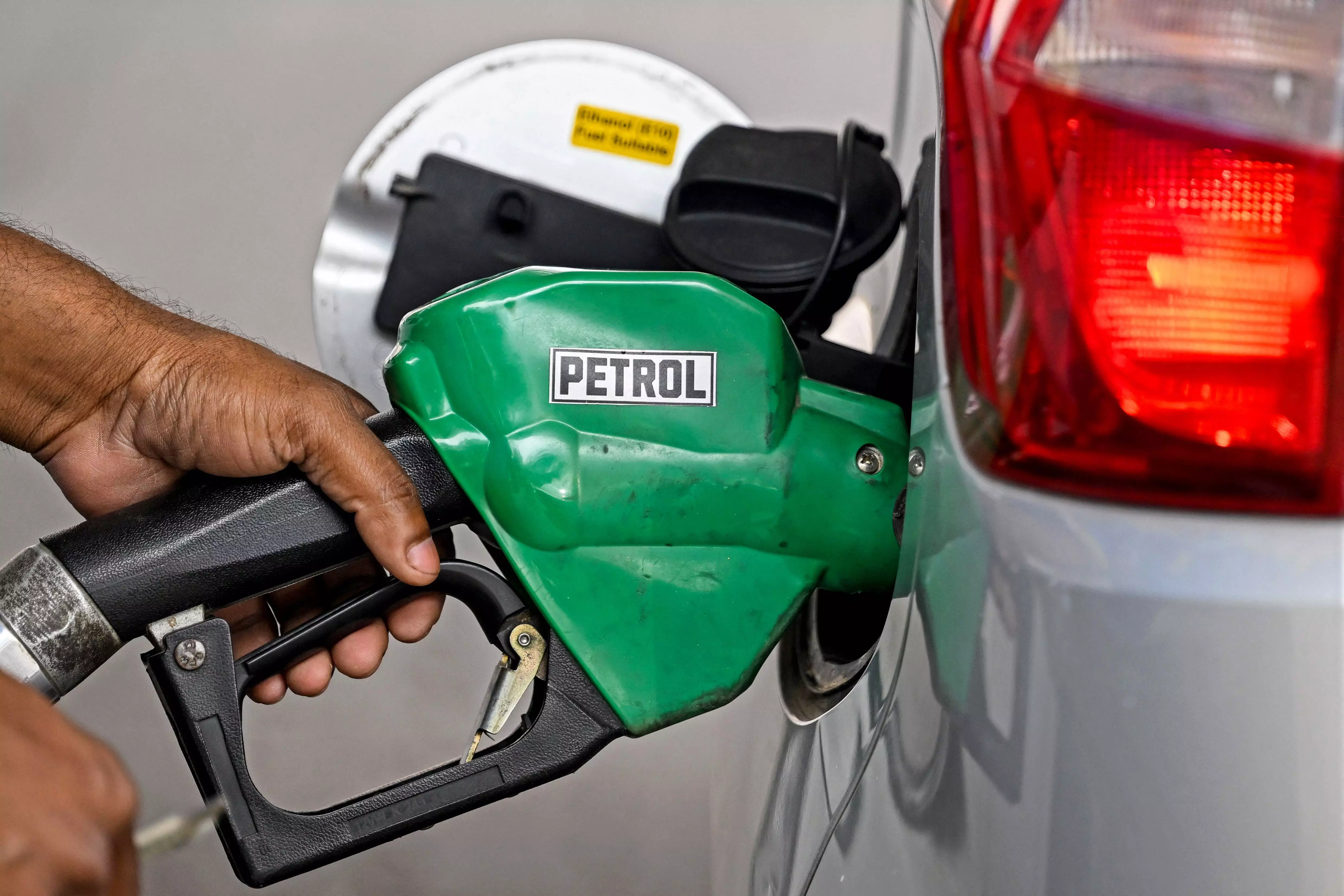
A petrol pump attendant refuels a vehicle at a Bharat Petroleum (BP) gas station in New Delhi (Sajjad HUSSAIN / AFP)
Chennai: In order to tide over the fuel crisis, India should temporarily stop exports of petroleum products and enter into a long-term supply contract with Russia, finds GTRI.
“The government can invoke national energy security provisions to prioritize domestic fuel availability. Redirecting refinery output toward domestic markets would help build fuel reserves, cushion inflation and ensure uninterrupted supply for transport, agriculture and industry if disruptions in Gulf oil flows intensify,” said Ajay Srivastava, founder of GTRI.
India exported 64.7 million tonnes of petroleum products valued at $47.7 billion in FY25. India refines crude and exports, petrol, diesel, motor spirit, liquefied petroleum gas (LPG) and aviation turbine fuel (ATF) to countries, including Saudi Arabia, Singapore and Netherlands.
According to GTRI, several Asian economies have already taken similar precautionary steps. China ordered its state refiners to suspend new export contracts for diesel and gasoline and cancel existing shipments to protect domestic inventories. Thailand also suspended petroleum exports and prioritized domestic supply. In Singapore, disruptions in feedstock supplies forced the Petrochemical Corporation of Singapore (PCS) to declare force majeure and cut production and shipments. Across Asia, refiners have curtailed exports to conserve fuel supplies until shipping through Hormuz stabilizes.
India should also enter into long-term crude oil supply contracts with Russia. Since the Ukraine conflict began, Russia has emerged as India’s largest crude oil supplier, providing about 35% of India’s crude imports in fiscal 2025—worth nearly $50 billion. Discounted Russian crude has helped Indian refiners reduce the impact of global price spikes and lower the country’s import bill.
India’s alternative supply options remain limited. Although imports from the United States rose 82% to $9.8 billion in 2025, the U.S. itself runs a net crude deficit and has limited spare export capacity. West African and Latin American crude supplies involve higher freight costs and longer shipping times. Long-term contracts with Russia would provide India with stable volumes, predictable pricing and a stronger buffer against global market volatility.
“India should also ignore the US instructions to purchase Russian oil. India’s energy security cannot depend on permissions issued by America,” it said.
On March 5, the US Treasury issued a one-month waiver allowing India to buy Russian oil cargoes already stranded at sea, but the volumes involved are small and offer little real relief to Indian refiners. More fundamentally, India and Russia are sovereign states, and their bilateral energy trade does not fall under US jurisdiction. Attempts by Washington to authorize or restrict such trade raise serious questions about extraterritorial control over commerce between sovereign nations.
( Source : Deccan Chronicle )

Next Story