India Should Explore Underutilised Opportunities of Exports With ASEAN: Exim Bank

Top 10 products accounted for only 16.2 per cent of the overall imports of textile and allied products by the five ASEAN countries
Chennai: Despite India’s protectionist stance after entering a trade deal with ASEAN countries, imports from the trade partners have grown faster than exports to these nations. As India is currently reviewing its FTA with ASEAN, it has to renegotiate the FTA terms to achieve equitable market access and unlock trade potential, especially in textiles, finds EXIM Bank.
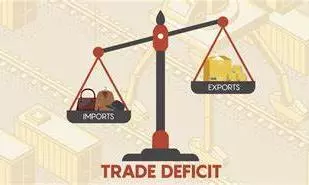
Since India entered a trade deal with ASEAN in 2010, India’s exports have increased by nearly 1.7 times till 2023, while imports from ASEAN witnessed a sharper growth by more than 2.2 times. As a result, India’s trade deficit with ASEAN countries has grown by more than four-fold from $ 6.7 billion in 2010 to $ 27.2 billion in 2023.
Exim Bank finds underutilisation of opportunities in ASEAN markets by Indian exporters despite zero-duty under the trade deal across several markets.
A significant proportion of textile products have been placed under exclusion lists and sensitive tracks by major ASEAN trading partners, such as Indonesia, Thailand, and Malaysia, restricting duty-free market access for India. In addition, exporters are under utilising opportunities of zero-duty access in markets such as the Philippines and Vietnam.
India too has maintained a protectionist stance in textile imports from the top 5 ASEAN countries - Vietnam, Indonesia, Thailand, Malaysia and Philippines, with majority of the tariff lines being placed under the tariff range of 20 per cent and above. Despite this, India’s imports of textile and allied products from these countries have grown substantially, except in the case of the Philippines.
The five ASEAN countries under consideration have lowered tariffs on their textile imports from India, yet India’s exports and market share in these countries have grown only marginally. This is despite having substantial export capacities in India and import demand in these markets.
Top 10 products accounted for only 16.2 per cent of the overall imports of textile and allied products by the five ASEAN countries.
India should leverage its strong presence across multiple segments of the textile value chain, from fibres to finished products. ASEAN countries like Indonesia and Thailand exhibit moderate positioning in fibres and yarns. In certain sub-segments, such as man-made fibres, India and ASEAN possess complementary strengths, presenting opportunities for collaboration and deeper value chain integration.
To maximise benefits, it is crucial to strengthen value chain linkages in complementary areas while ensuring that India does not concede market access to competitors in segments where competition is intense.
