India Should Address Structural Gaps To Attract Global Funds for Startup Ecosystem

Tax reforms, growth funding and stronger exits are key to drawing global investors
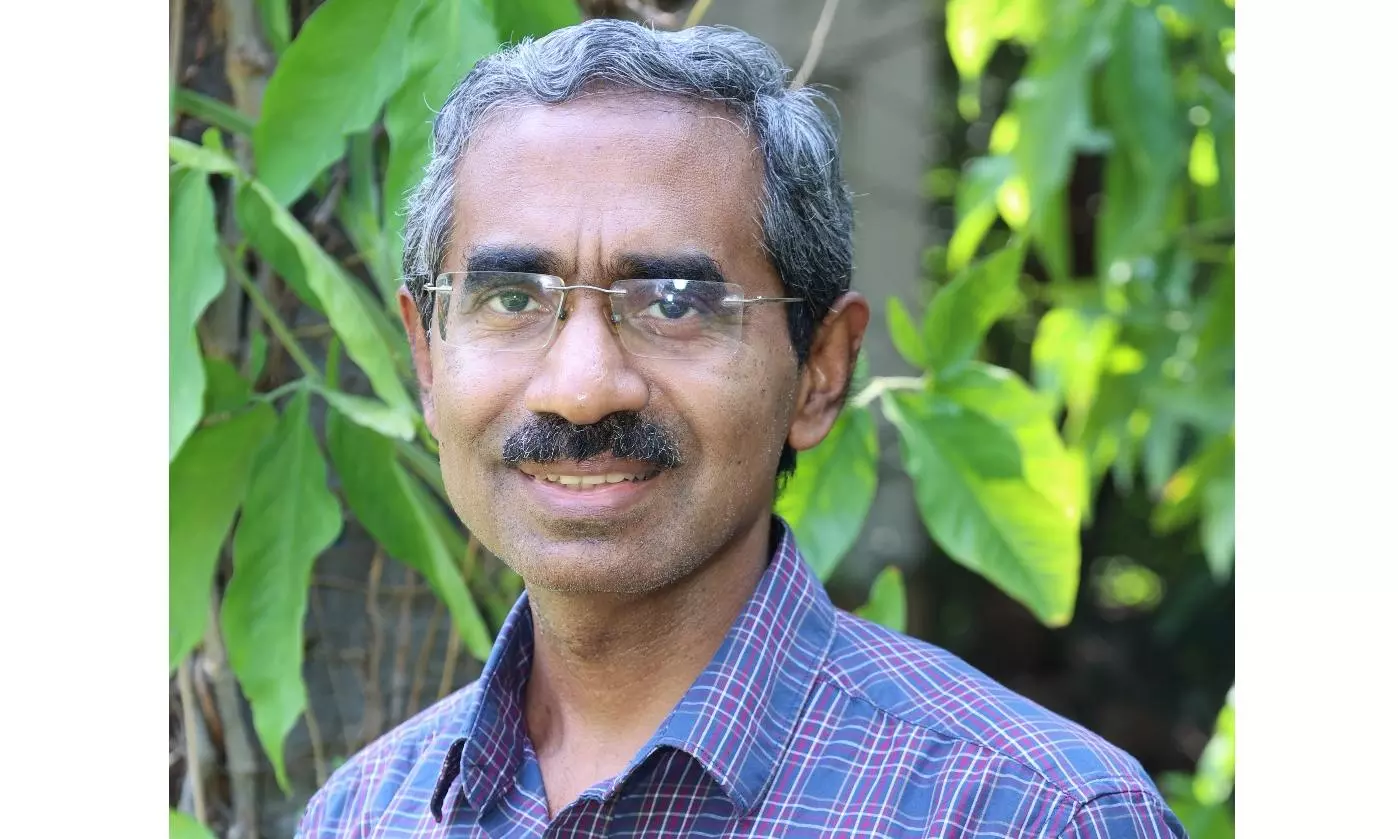
Chennai: As Commerce and Industry Minister Piyush Goyal urges global private equity (PE) and venture capital (VC) investors to back Indian startups, experts say the country should first put “the house in order”. It must first address structural gaps in its innovation ecosystem, which includes Indian frugality mindset and unfavourable tax regimes, if it hopes to attract a larger share of global capital, particularly in the artificial intelligence (AI) space, says A Thillai Rajan, Professor of Finance, IIT Madras.
India is the world's third-largest startup ecosystem. How does venture capital funding received by Indian startups compare with that of global startups, particularly in the US and China?
Venture capital investment is best viewed over a longer period rather than a single year because funding trends can be volatile. Looking at the past decade, US startups have attracted nearly $2 trillion in funding, while China has received around $1 trillion. India, by comparison, has attracted about $400 billion. If debt funding is excluded, the actual equity funding flowing into Indian startups is only around $200-250 billion. This highlights a significant funding gap between India and the two leading startup ecosystems.
What is India's share in global private equity and venture capital funding?
Globally, startup funding is concentrated in a handful of countries, primarily the US, China, India, the UK and Israel. Collectively, these markets account for around $5 trillion in startup investments over the last decade. India's share is roughly $240 billion, which works out to about 10%.
If we look specifically at 2025, India's share appears to be much smaller, around 1%. Is that correct?
Yes. However, 2025 is a unique year because artificial intelligence has dominated startup investments globally. A handful of AI companies, particularly in the US, have attracted enormous amounts of capital. The US received around $124 billion in startup funding in 2025, largely driven by AI. China attracted about $17.2 billion. India received only around $1.35 billion. Consequently, India's share of global AI startup funding was close to 1%.
Why have Indian AI startups struggled to attract the same level of funding as their global counterparts?
In technology, first movers tend to capture the majority of investor attention and market opportunities. The US established an early lead through companies such as OpenAI and Anthropic. China has also managed to catch up in several areas. India, however, has largely focused on India-specific models and applications rather than creating breakthrough foundational technologies.
Global investors typically seek innovations that are original, disruptive and capable of serving worldwide markets. While Indian startups are building relevant solutions, they are not yet producing enough globally transformative innovations to attract large-scale capital.
Should India focus on foundational AI models, or is enterprise AI and language models a more realistic opportunity?
India's startup ecosystem has traditionally been driven by frugality and efficient use of capital. That approach has worked well in many sectors, but deep-tech and AI require massive investments within very short periods. Technology evolves rapidly, and delays can make products obsolete.
Competing with global AI leaders requires access to large pools of capital. In India, even raising a few crores can take months, whereas leading global AI firms can secure billions of dollars quickly. India therefore needs a new investment paradigm capable of supporting capital-intensive innovation.
There are concerns that the current AI boom could resemble the dot-com bubble. Do you see similarities?
There are certainly signs of exuberance in AI investments. However, the dot-com boom offers an important lesson. Although many companies failed after the crash, the technologies and infrastructure developed during that period eventually transformed the global economy.
A similar outcome is possible with AI. Not every company will survive, and only a few foundational-model players may ultimately dominate the market. Nevertheless, the investments being made today could create valuable technologies, talent pools and spin-off innovations that generate long-term benefits.
How have private equity and venture capital inflows and outflows evolved in India over the past five years?
One positive trend is the growing participation of domestic capital. A decade ago, nearly 90% of venture funding came from overseas investors. Today, corporates, family offices and domestic investors are contributing more capital to the ecosystem.
However, the challenge lies in exits. Many Indian startups have struggled to provide strong returns to investors. While capital inflows have been healthy, the ecosystem still lacks sufficient growth-stage funding, which is critical for scaling companies and enabling successful exits.
Many Indian venture capital firms are now investing in US-based AI startups. What does that indicate about opportunities in India versus the US?
Capital is global and naturally flows to the opportunities that offer the best returns. As Indian investors become more comfortable with venture investing, they are broadening their horizons and evaluating opportunities worldwide.
Investors are not restricted by geography. If they believe returns will be higher in global markets, they will invest there. That is a natural evolution of a maturing investment ecosystem.
Commerce Minister Piyush Goyal recently urged global investors to back Indian startups. How prepared is India's AI startup ecosystem to attract global capital?
The government's proactive efforts to help startups access funding are encouraging. Policymakers recognize that startups will play a crucial role in India's economic ambitions.
However, attracting global capital requires more than promotion. India must first "set its house in order." Investors look beyond marketing efforts and assess the underlying ecosystem. This includes institutions, policies, market access and growth opportunities. Significant groundwork still needs to be completed before India can attract global capital at scale.
What reforms would have the greatest impact in attracting long-term global capital into Indian innovation?
The first priority is making capital flows easier through supportive regulations, tax policies and smoother mechanisms for investors to repatriate capital.
Secondly, programmes like Bharat Innovates, which connect startups with global buyers, investors and markets, should become ongoing initiatives rather than one-time events.
India should also recognize that opportunities exist beyond deep-tech. Sectors such as construction, food and beverages are seeing significant startup activity. Building on India's unique strengths rather than simply replicating models from other countries may create stronger outcomes.
How important are policy stability and an investment-friendly tax regime in attracting investors?
They are extremely important. India has already demonstrated remarkable policy continuity in supporting startups. The Startup India initiative has seen support across ministries, public-sector organisations and state governments, making it one of the most coordinated policy efforts in independent India.
The next step is to remove remaining bottlenecks. Investors need confidence that they can earn attractive returns and exit investments efficiently. Entrepreneurs should be able to focus on building businesses rather than navigating complex tax structures or regulatory hurdles.
What is your overall message for policymakers seeking to attract more global capital into Indian startups?
India has made substantial progress in building a vibrant startup ecosystem. However, attracting global capital at a much larger scale requires deeper reforms, stronger growth-stage funding, better exit opportunities, investor-friendly regulations and globally competitive innovation.
The opportunity is enormous, but India must focus on strengthening the ecosystem itself. Once startups can scale faster and generate stronger returns, global capital will naturally find its way to India.
