India Received Investment Commitments Of $12 billion Under Semicon 2.0.

Vaishnaw’s comments come at a time when the government is pushing hard for the second phase of its semiconductor programme towards building out more parts of the supply chain. Without naming the specific companies, the minister, however, said that the players are expected to make announcements after securing approvals from their respective boards and shareholders
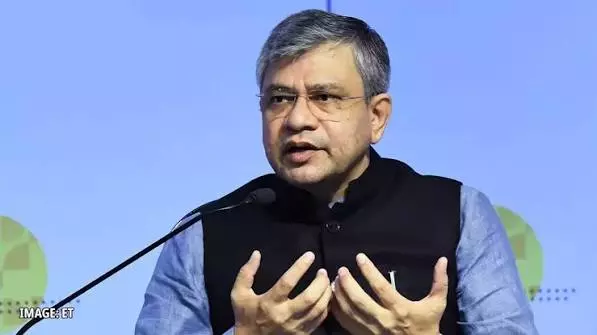
New Delhi: Union IT minister Ashwini Vaishnaw on Thursday said that India has received some investment commitments of around $12 billion under Semicon 2.0. “The commitments include investments across areas such as semiconductor equipment, materials, gases, chemicals and substrates. Such investments are expected to come over the next 2-3 years and the semiconductor firms will make those announcements as they get board nod,” the minister said at a briefing in Semicon India 2026 here.
Vaishnaw’s comments come at a time when the government is pushing hard for the second phase of its semiconductor programme towards building out more parts of the supply chain. Without naming the specific companies, the minister, however, said that the players are expected to make announcements after securing approvals from their respective boards and shareholders. “The investment commitment numbers that we are seeing today, is of the order of about 11 to 12 billion US dollars under Semicon 2.0,” he said.
Semicon 2.0 has already been approved with an outlay of Rs 1.27 lakh crore, covering six areas, including chip design, semiconductor equipment and materials, fabs, advanced packaging, research and development and talent development. A series of agreements have been announced where Tata Electronics inked an deal with Ascendas First Space to develop a 363-acre vendor park aimed at building the supplier ecosystem around its semiconductor fab in Dholera, Gujarat.
It also signed agreements with Fujifilm for localisation of critical semiconductor materials and JSR Corporation for photoresists and advanced chemicals for the Dholera fab. Another agreement between Tata Electronics and Semi-Conductor Laboratory covers semiconductor design services, process technology, supply-chain localisation and talent development.
Earlier in the day during his inaugural speech, Vaishnaw also said that the Centre is targeting 1 lakh individuals for training under the Semicon 2.0 initiative to build a talent pool for domestic manufacturing facilities in India. The minister, however, outlined the next phase of the India Semiconductor Mission (ISM), which will be structured around six core pillars.
“Semicon 2.0 could generate close to one lakh new jobs across the semiconductor ecosystem, adding that the eventual employment creation could be higher. India has started the semiconductor manufacturing journey with a measured and calibrated programme, which was focused on getting the right talent, making sure that the ecosystem builds in our country,” he said, while speaking at the 3-day-long event.
The minister also said that the pipeline gives the government a clear view of the investment trajectory ahead under the ambitious second phase of India's semiconductor programme. The investment interest comes within weeks of the government notifying the second phase of its semiconductor programme, aimed at broadening India's presence across the global chip value chain.
“This time our ambition is much bigger. We would be targeting at least 200 start-ups and companies, which design chips in India across the spectrum of semiconductor requirements. The country had built the foundational base for a domestic semiconductor industry over the past few years through Semicon 1.0, a calibrated programme focused on nurturing talent and building the ecosystem. Now, we have to build the building over this foundation," Vaishnaw said.
The minister also said companies would ultimately decide where to locate their semiconductor projects based on factors including policy certainty, government support and the strength of the surrounding ecosystem. “Industry chooses the location depending upon where they feel more comfortable, how much policy certainty they see, what kind of support they see from governments, from the other ecosystem fields,” he said.
