Sustainable Hospitality Begins with the Land and its People

On World Sustainability Day, Tipai offers a reminder that responsible hospitality is measured not only by the materials used in construction or the systems installed to conserve resources, but also by the livelihoods it supports, the food it sources and the care it takes in sharing space with nature. Its approach demonstrates that sustainability becomes meaningful when it is practised in everyday decisions, even when those decisions require greater investment, patience and adaptation.
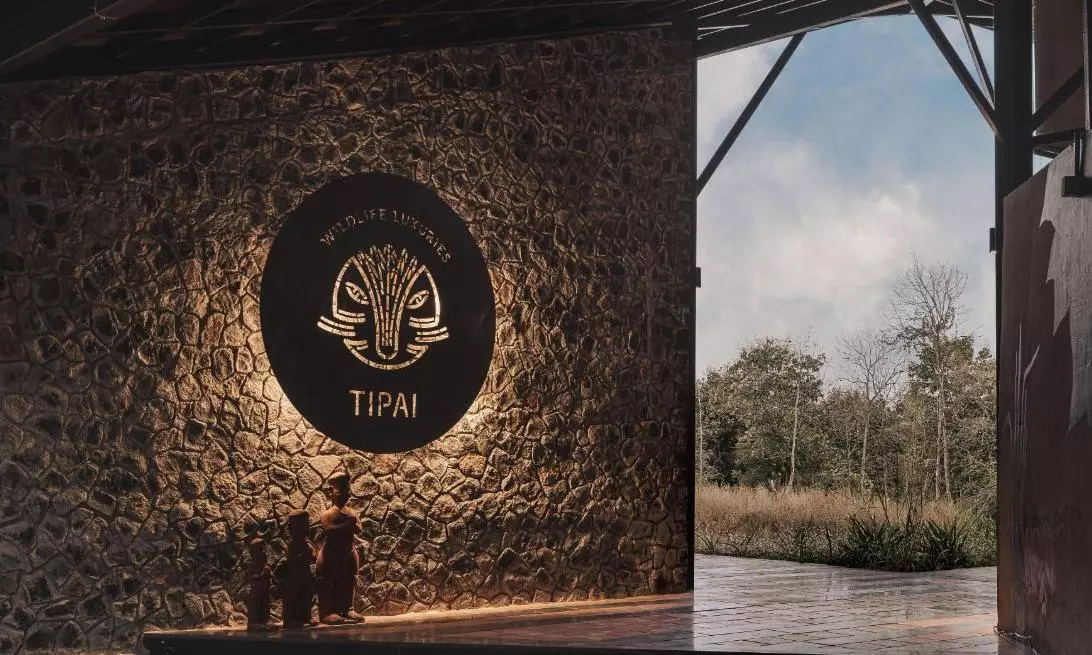
At Tipai Wildlife Luxuries, a 34-acre reforested sanctuary near Tipeshwar Wildlife Sanctuary in Maharashtra’s Yavatmal district, sustainability extends from water conservation and solar energy to hyperlocal food and employment for village women. Its Palash restaurant brings together traditional cooking methods, ingredients from the surrounding region and a women-led kitchen, demonstrating how hospitality can support both the environment and the local community.
Luxury in the wilderness is often associated with spacious villas, carefully designed interiors and personalised service. At Tipai Wildlife Luxuries, however, the experience is also shaped by how the property uses its resources, works with the surrounding community and responds to the landscape it inhabits.
The resort has been developed on reforested land with a focus on preserving its natural surroundings. Rather than maximising the number of villas, the property has retained a relatively low-density layout, allowing guests to experience the forest without the scale and activity of a conventional hotel.
For the resort’s management, sustainability is not merely a stated commitment but a practice that influences everyday operations. Water conservation, renewable energy, waste management and the avoidance of single-use plastic form part of this approach.
The property has its own water harvesting and storage systems, including tanks beneath the villas and the main building. These are designed to meet the water requirements of the accommodation and food and beverage operations without having to purchase water from outside. The resort also has a wastewater management system and solar power infrastructure to support its electricity needs.
Maintaining these systems requires investment and constant attention. Solar installations, water storage and conservation measures involve additional costs, but the resort continues to operate them as part of its sustainability commitment. The approach is particularly relevant in a region where water availability can become uncertain.
The challenge has become more pronounced this year, with inadequate rainfall affecting the surrounding vegetation and the resort’s own kitchen garden. The garden typically supplies around 30 per cent of the property’s vegetable requirements, including brinjal, bitter gourd, cucumber, basil and microgreens.
The resort’s efforts to reduce its environmental footprint also extend to procurement and interiors. It avoids plastic wherever possible, opting for wood, metal, ceramics and other alternatives. Furniture and decorative elements are selected with an emphasis on local materials and traditional craftsmanship. Cotton produced in the region is another part of the property’s design story, with fabric sourced through the local market and printed in Ahmedabad.
The surrounding community is central to this model. Approximately 85 to 90 per cent of the resort’s staff come from nearby villages. Many join without formal hospitality qualifications, and training is provided according to the requirements of their respective departments. The process includes everything from housekeeping and room preparation to food presentation and restaurant service.
This emphasis on local employment finds a particularly meaningful expression at Palash, the resort’s women-led restaurant. Named after the Palash trees that grow abundantly in the vicinity, the restaurant draws its identity from the landscape. The trees, known for their striking orange flowers during summer, are an important part of the region’s vegetation.
At Palash, women from a neighbouring village are trained to work in a professional kitchen, taking on responsibilities that extend beyond home cooking. Under the guidance of award winning chef Amninder Sandhu, the women learn the techniques required for restaurant service, including plating, portioning, temperature control and the presentation of dishes. The initiative gives them an opportunity to develop skills, earn an income and participate directly in the hospitality industry.
The kitchen’s hyperlocal philosophy is reflected in its menu, which draws from the food traditions of Maharashtra, Madhya Pradesh and Telangana. The geographical proximity of these regions provides the basis for a menu that explores their ingredients and cooking practices rather than relying on produce transported over long distances.
At Palash, traditional methods remain integral to the experience. Much of the cooking takes place over charcoal and wood, with an emphasis on slow cooking and techniques that predate modern kitchen equipment. One of these is khad cooking, in which food is placed in a pit and covered with leaves, mud or other available materials before being cooked over heat. The restaurant also uses clay pots and banana leaves, while its preparation brings together seasonal vegetables and other locally available ingredients in an inverted clay pot. The cooking process allows the ingredients to release their own moisture and flavours.
The menu is designed to make use of ingredients in different ways, reducing unnecessary waste. Ambadi (roselle aka gongura, a locally grown and abundantly available leaf), for instance, is used to prepare chutney and other accompaniments, reflecting the versatility of plants that are familiar to the surrounding communities. The restaurant aims to keep food wastage low by cooking according to reservations and anticipated demand rather than preparing large quantities in advance.
The idea of hyperlocal dining at Tipai also extends to Perch, where the emphasis on sourcing ingredients from the surrounding land connects the menu with the immediate environment. By working with what is available locally and seasonally, the kitchen seeks to reduce dependence on distant supply chains while giving familiar ingredients a contemporary presentation. The result is a dining experience that retains a sense of place without being limited to conventional interpretations of regional cuisine.
Across the property’s dining spaces, the emphasis is on understanding the ingredients and their origins. The approach is not simply about presenting local food as a traditional experience. It is also about demonstrating how regional produce and cooking knowledge can be adapted to contemporary hospitality while retaining their connection to the land. A good example for this is Talabwaloi, another kitchen within the property, where nizam food gets a modern twist. Since Adilabad (a region is Telangana), is only a few kilometres away from the property, this kitchen dishes out biryani and other spicy dishes which suits the palette of Telugus who choose this place often as a weekend getaway.
The relationship with the environment is equally important beyond the kitchen. The resort’s landscape is shared with wildlife, and the management recognises that the animals’ movement cannot be dictated by the presence of guests. Visitors are advised to follow basic precautions, particularly after dark, while the property maintains procedures for assistance and emergencies. The principle is one of accommodating the natural environment rather than expecting it to conform entirely to human activity.
The resort employs around 125 to 130 people across departments, including housekeeping, gardening, security, food and beverage and guest services. Its emphasis on training and local recruitment has also drawn interest from people studying sustainable hospitality practices, with researchers and other visitors coming to understand how the property manages its resources and operations.
For Tipai Wildlife Luxuries, the larger ambition is to establish a hospitality model in which the natural environment and local communities are not secondary considerations. The experience is shaped as much by the land, the people and the resources available in the region as by the comforts expected of a luxury resort.
