The Missing Link in India’s Trillion-Dollar Dreams

The G.R.O.W.T.H. Dialogue in Mumbai brought this into focus, underscoring that while policies, investments, and infrastructure lay the groundwork, the true determinant of success will be human capital.
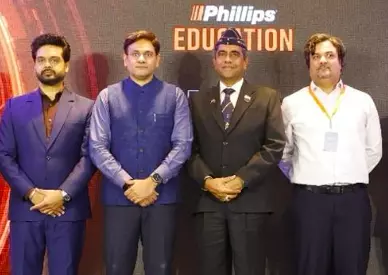
India’s aspirations to lead the world in semiconductors, aerospace, defense, renewable energy, and AI are no longer distant ambitions — they are national goals with concrete targets. The G.R.O.W.T.H. Dialogue in Mumbai brought this into focus, underscoring that while policies, investments, and infrastructure lay the groundwork, the true determinant of success will be human capital.
With the country aiming for a $64 billion semiconductor market by 2026, a $70 billion aerospace and defense sector by 2030, and 500 GW of renewable energy capacity, the challenge is clear: who will power these industries? The World Economic Forum warns that 44% of today’s skills will become obsolete by 2030, while McKinsey estimates that effective skilling could add $500 billion to India’s GDP in the same timeframe. The stakes could not be higher.
At the dialogue, Shri Saurabh Bahuguna, Hon’ble Minister for Skill Development & Employment, Uttarakhand, emphasized: “India’s demographic dividend is our greatest strength, but it will only yield results if we channel it through the right skilling pathways. By enabling industry-academia partnerships and investing in practical, job-ready training, we can ensure that our youth are not just employable but ready to lead India’s growth story on the global stage.”
Rakshit Kejriwal, Global President of Phillips Education, added: “Providing women employable skills in high-growth sectors is more than a question of equity; it is crucial for India’s growth. Entrepreneurship, efficiency, and inclusive economic impact are boosted nationwide when women hold positions of power in industries like advanced manufacturing, AI, and renewable energy. Phillips Education and Arthan are bridging this gap with Centers of Excellence, industry-academia partnerships, and inclusive skilling initiatives to ensure women, young people, and underserved communities are ready for roles that will shape India’s industrial future.”
The discussion highlighted that India’s trillion-dollar dreams risk remaining just that — dreams — unless the skilling gap is addressed with urgency. The conversation went beyond job creation; it was a call to match talent with opportunity, and to recognize that the country’s true competitive advantage lies not just in its infrastructure but in its people. As Rakshit Kejriwal concluded: “If infrastructure builds nations, skills build civilizations.”
