RBI Simplifies Small-Value Trade Compliance, Brings Relief to MSME Exporters

19 Jan 2026 6:54 PM IST19 Jan 2026 6:54 PM IST
In a notable relaxation, the RBI permits value reductions in declared export or import amounts based on self-declaration, simplifying the process for genuine cases of short realisation or pricing adjustments.
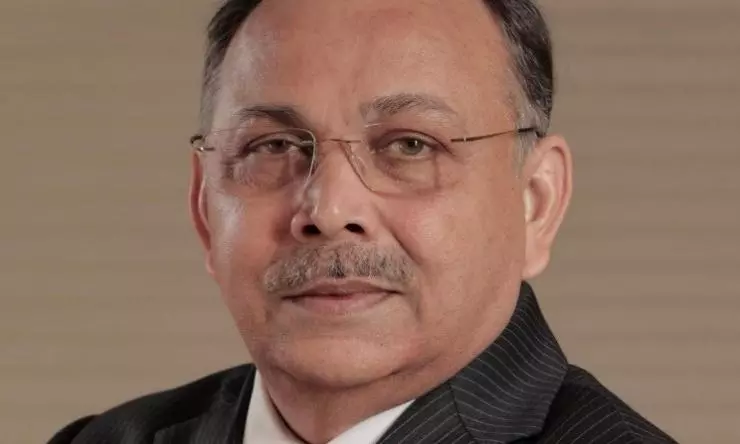
Ram Rastogi, Chairman of the Governance Council, Fintech Association for Consumer Empowerment (FACE). (Photo by arrangement)
The Reserve Bank of India (RBI) has introduced a major compliance reform aimed at easing regulatory pressure on small exporters, importers and cross-border e-commerce sellers. The move allows export and import transactions of up to ₹10 lakh (or equivalent) to be closed through a simplified declaration-based process, replacing the earlier requirement of transaction-wise documentation.
Under the revised framework, exporters and importers can now submit a quarterly consolidated self-declaration to authorised dealer (AD) banks instead of furnishing documents for each shipping bill under the Export Data Processing and Monitoring System (EDPMS) and Import Data Processing and Monitoring System (IDPMS). The change is expected to substantially reduce paperwork, reconciliation effort and compliance costs for MSMEs handling frequent low-value shipments.
The reform addresses long-standing concerns of small businesses, particularly those operating in direct-to-consumer (D2C) exports and e-commerce, where hundreds of small invoices are generated each quarter. Under the earlier system, transaction-wise compliance often led to delays in bill closure, repeated follow-ups with banks and higher operational costs.
Easier value adjustments and backlog clean-up
In a significant relaxation, RBI has also allowed reductions in declared export or import values to be accepted on the basis of self-declaration. Previously, value reductions beyond 25 per cent required explicit approval from AD banks, adding to processing time and uncertainty. The revised approach simplifies closure of cases involving genuine short realisation, post-shipment discounts or pricing adjustments.
Importantly, the relaxation applies not only to future transactions but also to existing outstanding EDPMS and IDPMS entries. This enables exporters and importers to regularise legacy compliance backlogs without submitting fresh documentation, an issue that has long affected MSMEs facing penal charges and blocked transactions.
Lower charges, faster closures
RBI has directed banks to review and rationalise handling charges and to refrain from levying penal fees for delays in closing small-value transactions. For many MSMEs, such charges have eroded already thin margins, sometimes outweighing profits on individual shipments.
Industry participants say that, if implemented uniformly, the new framework could lead to meaningful savings while speeding up closure of shipping bills and realisation of export proceeds. Faster closures could also improve access to trade finance and working capital, easing cash flow pressures for small businesses.
Banks’ execution critical
The success of the reform will depend on how effectively banks operationalise the new norms. With quarterly declarations replacing transaction-wise scrutiny, banks can aggregate data, automate invoice-remittance reconciliation and focus attention on genuine exceptions rather than routine cases.
However, banks will need to issue clear standard operating procedures, train trade finance teams across branches and proactively communicate the changes to exporters. While some lenders have begun rolling out internal advisories, consistent adoption across all authorised dealer banks remains key.
Boost for MSME-led exports
The reform is expected to benefit MSMEs dealing with small and frequent shipments, e-commerce exporters, import-dependent small manufacturers and first-time exporters. By shifting towards a trust-based, declaration-driven system for small-value trade, RBI has addressed a structural gap that long constrained India’s digital and MSME exporters, aligning regulation more closely with modern trade models.
( Source : Deccan Chronicle )

Next Story