Cosmos Diamonds, Skyroot Launch India’s First Space-Provenance Jewellery Collection

21 July 2026 9:48 PM IST21 July 2026 9:48 PM IST
COSMOS Diamonds and Skyroot Aerospace have created history by sending the first fine jewellery into space aboard Vikram 1. The space-inspired Lotus Collection launches on 1 August 2026 in Bengaluru.
The Cosmic Bloom, a lotus of 32 lab-grown diamonds totalling 16.9 carats, set in BIS hallmark 18-karat gold and valued at Rs 11 lakh, is the first piece of fine jewellery to reach space. (Photo by arrnagement)
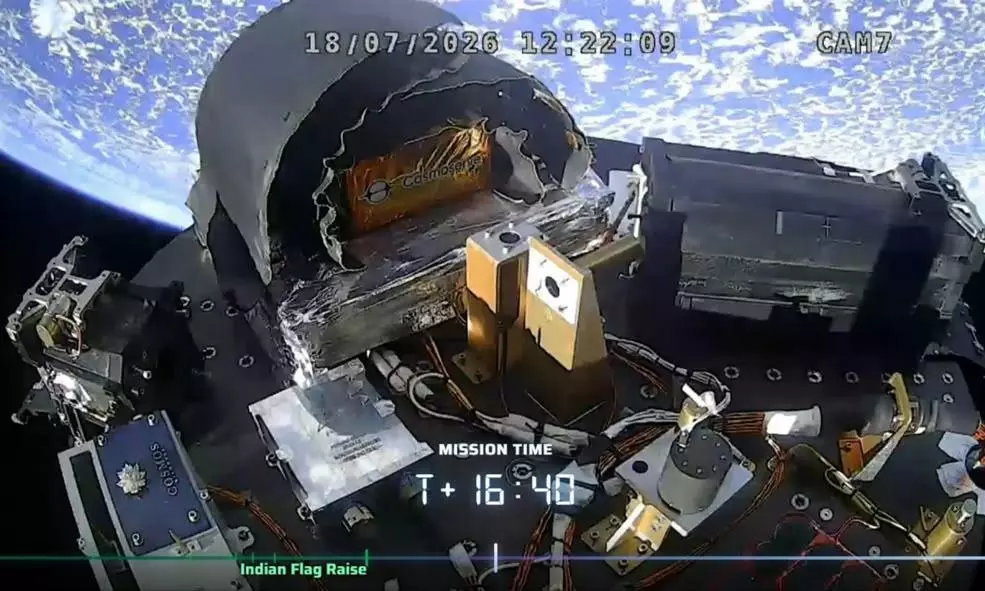
Bengaluru: On 18th July 2026, at 12:05 IST, Skyroot Aerospace's Vikram 1 lifted off from Satish Dhawan Space Centre, Sriharikota, and reached Low Earth Orbit at 453 km in 16 minutes, making India the third country after the US and China with a private company capable of orbital launches. Among its six payloads was the Cosmic Bloom, a lotus-shaped diamond artwork by COSMOS Diamonds: 32 lab-grown pear-cut diamonds totalling 16.9 carats, set in BIS hallmark 18-karat gold, engineered to pass structural, vibration, and G-force testing as a certified space payload while retaining the full integrity of its craft. It is the first piece of fine jewellery to go to space. COSMOS has submitted an application to Asia Records for recognition as the first diamond jewellery brand from India to send a diamond jewel into space.
This collaboration has no precedent. No Indian fine jewellery brand has worked with a private space company before. No Indian spacetech company has carried a fashion payload of this nature before. COSMOS Diamonds, founded in 2021 by Sanjana Tripuramallu, is one of India's first exclusive lab-grown diamond brands. Skyroot Aerospace, founded in 2018 by former ISRO scientists Pawan Kumar Chandana and Bharath Daka, is India's first spacetech unicorn with a valuation of $1.1 billion. Both companies were built in the same five-year window. Both entered industries where legacy players held all the power. Both chose transparency and precision over convention. The Cosmic Bloom is the point where those decisions intersected.
The connection between the two companies runs deeper than the collaboration. A lab-grown diamond is created by subjecting carbon to temperatures of around 1,500 degrees Celsius under intense pressure in a controlled environment until it crystallises into a stone. A rocket engine operates on the same fundamental principle: fuel combusted under controlled pressure at extreme temperatures to produce orbital thrust. Both are products of the same science, heat, pressure, and human precision applied exactly right to produce something extraordinary. One produces a stone. The other reaches orbit.
Mission Aagaman also carried a satellite from Cosmoserve Space featuring a robotic arm designed to test space debris collection in orbit, built to capture dead satellites and space junk and keep orbital pathways clear for future missions. The mission carried a robotic arm reaching into space to remove what no longer serves a purpose and make room for what comes next, alongside a lab-grown diamond grown from carbon, the most fundamental element in the universe, shaped by human precision into something new. Both, in different ways, were about creating the conditions for the future.
The choice of the lotus was not aesthetic. In Indian cosmology, the lotus is the origin of creation. A lab-grown diamond is grown from carbon under controlled pressure and heat, the same forces that shape the universe at its most fundamental level. The lotus cut is one of the most technically demanding cuts in diamond craftsmanship. Skyroot CEO Pawan Kumar Chandana described the Cosmic Bloom as a nod to the nursery rhyme line the world has sung for generations: twinkle twinkle little star, like a diamond in the sky. On 18th July 2026, that line became a fact.
The Lotus Collection, which will be unveiled on 1st August 2026 at the COSMOS store in HSR Layout, Bengaluru, is the first jewellery collection in India with a direct and documented connection to a space mission, born from the Cosmic Bloom and the history it made. Every piece is designed and made in India, from lab-grown diamonds grown and finished in India, built for everyday wear. The Lotus Collection means people will be able to wear a piece of that historical moment long after the launch, not as a commemorative object but as jewellery that carries the provenance of the day Indian fine jewellery reached orbit. There is nothing else like it in Indian jewellery right now.
COSMOS Diamonds was founded after Sanjana Tripuramallu could not find a single diamond brand willing to give her honest pricing or sourcing information while shopping for her own wedding jewellery. She built the brand she was looking for. COSMOS now operates stores in Bengaluru and Vijayawada, has grown 50,000 diamonds, sold 120,000 carats, and offset 25,000 tons of carbon. The brand is 100% female-run and offers a 100% buyback and exchange policy on every piece.
"COSMOS was built to make the diamond industry honest. Skyroot was built to make space accessible. Neither of us was supposed to be in this position this quickly. The fact that an Indian lab-grown diamond brand and India's first private orbital rocket company found each other and put a diamond in space together is the kind of thing that does not happen by accident. The Lotus Collection exists because of what we built together. That is not something either of us could have done alone." Sanjana Tripuramallu, Founder, COSMOS Diamonds.
"The payloads on Vikram 1 included a robotic arm for debris removal, an Earth observation camera, a German satellite, and a diamond lotus from a Bengaluru jewellery brand. That list tells you everything about what India's private space sector is becoming. Space is no longer just infrastructure. It is a canvas for what Indian companies can build and imagine." Pawan Kumar Chandana, Co-Founder and CEO, Skyroot Aerospace.
( Source : Deccan Chronicle )

Next Story