The Council also announced that luxury and sin goods will come under a separate 40% GST slab
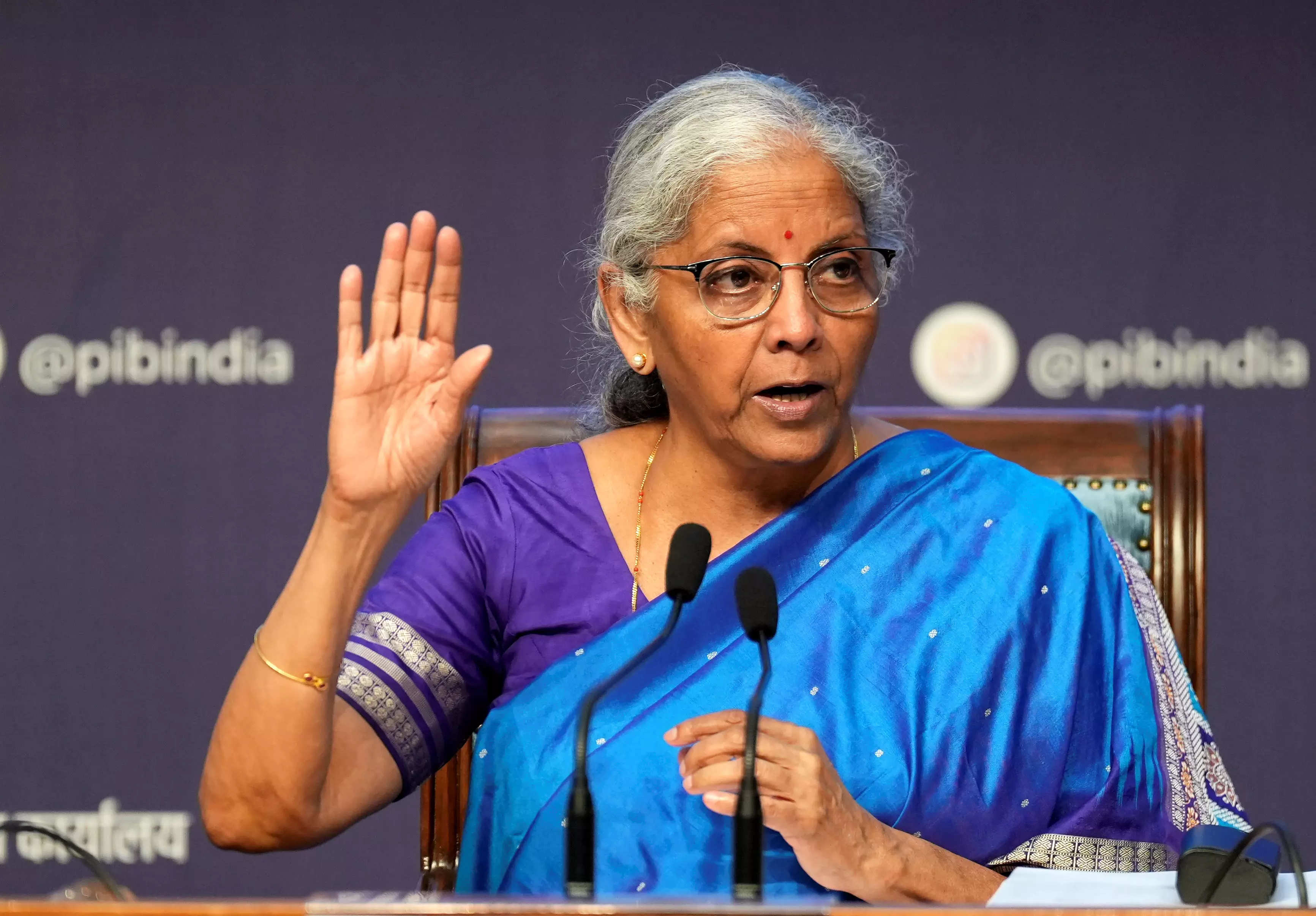
Union Finance Minister Nirmala Sitharaman addresses the media regarding the 56th GST Council meeting, in New Delhi, Wednesday, Sept. 3, 2025. — PTI
New Delhi: In a major push towards simplifying India’s indirect tax regime in GST 2.O, the Centre unveiled the sweeping next-gen GST reforms on Thursday, potentially ushering in a two-slab structure and a 40 per cent rate. The 56th GST Council meeting chaired by Union finance minister Nirmala Sitharaman, approved the rate rationalisation. There will be a 2-slab GST with 5 per cent and 18 per cent as the tax rates along with a 40 per cent special rate for sin goods. The new rates are set to take effect from the 22nd of September.
The GST tax rates on common use items ranging from hair oil to corn flakes, TVs, and personal health and life insurance policies were slashed after the all-powerful GST Council approved a complete overhaul of the tangled GST regime. Besides, almost all personal use items will see rate cuts as the government looks to boost domestic spending and cushion the economic blow of the US tariffs.
Briefing the media after the GST Cou sil meeting, Sitharaman said that the government is making reforms with a focus on the common man. "We have ensured that daily-use items for the common man get cheaper.
We are extending strong support to labour-intensive industries. Besides, we are ensuring farmers and agriculture benefit from today’s decisions. Also, we are prioritising health as a key driver of the economy and carrying out reforms to ease living and improve transparency as the PM has been pushing for providing relief to the people of India.”
Lauding the decision of GST Council on new GST rates in next-generation reforms, Prime Minister Narendra Modi said that the wide ranging reforms would improve lives of our citizens and ensure ease of doing business for all, especially small traders and businesses. "During my Independence Day Speech, I had spoken about our intention to bring in the GST. The Union government had prepared a detailed proposal for broad-based GST rate rationalisation and process reforms, aimed at ease of living for the common man and strengthening the economy," the PM said in a post on X.
The finance minister also said that the revised GST rates will come into effect from September 22, coinciding with the first day of Navratra. "However, pan masala, gutka, and cigarettes will continue to be taxed at existing rates until loans taken under the compensation cess are fully discharged. The GST will now be levied on the retail price instead of the transaction value for pan masala, gutka, tobacco products and cigarettes, with a 40 per cent tax rate applicable on pan masala, cigarettes, chewing tobacco and other tobacco goods," she said, adding that the same 40 per cent GST will also apply to aerated drinks containing sugar or other sweeteners, flavoured or caffeinated beverages, carbonated beverages, and fruit-based drinks with added juice.
The finance minister also said that while daily use food items will continue to attract nil tax rate, common use food and beverages ranging from butter and ghee to dry nuts, condensed milk, sausages and meat, sugar boiled confectionery, jam and fruit jellies, tender coconut water, namkeen, drinking water packed in 20-litre bottles, fruit pulp or fruit juice, beverages containing milk, ice cream, pastry and biscuits, corn flakes and cereals, and sugar confectionery are likely to see a cut in tax rate to 5 per cent from the current 18 per cent.
"All forms of chapati and paratha will be charged nil tax, down from the current rate of 5 per cent. Consumer goods such as tooth powder, feeding bottles, tableware, kitchenware, umbrellas, utensils, bicycles, bamboo furniture and combs will see rate cut from 12 per cent to 5 per cent. The rates on shampoo, talcum powder, toothpaste, toothbrushes, face powder, soap and hair oil has been cut down to 5 per cent from 18 per cent," she said.
The finance minister announced that individual life insurance policies and individual health insurance policies will now be exempted from GST, making insurance more affordable for households. "To make insurance more affordable, all individual life insurance premiums have been exempted from GST, along with premiums on individual health insurance, floater policies, and policies for senior citizens," she said.
She also announced that cement will cost less with the tax rate coming down from 28 per cent to 18 per cent. "Petrol, LPG and CNG vehicles of less than 1,200 cc and not more than 4,000 mm length and diesel vehicles of up to 1,500 cc and 4,000 mm length, too, would move to 18 per cent rate from 28 per cent. All cars larger than 1,200 cc for petrol and 1,500 cc for diesel will be charged at 40 per cent", the finance minister said.
"Motorcycles up to 350 cc, consumer electronics like air-conditioners, dishwashers, and TVs, too, will be taxed at lower GST of 18 per cent as against 28 per cent currently. All automobiles above 1,200 cc and longer than 4,000 mm as well as motorcycles above 350 cc, yachts and aircrafts for personal use, and racing cars will attract a 40 per cent levy. EVs will continue to be charged at 5 per cent GST," she said adding that the government is correcting the inverted duty structure in the fertiliser sector by reducing GST on sulphuric acid (H₂SO₄) and ammonium.
( Source : Deccan Chronicle )


Next Story