For Every $10 Hike in Crude, Import Bill Will Go Up by $14 Billion

ICRA says $10 crude rise adds $13–14 bn to annual import bill
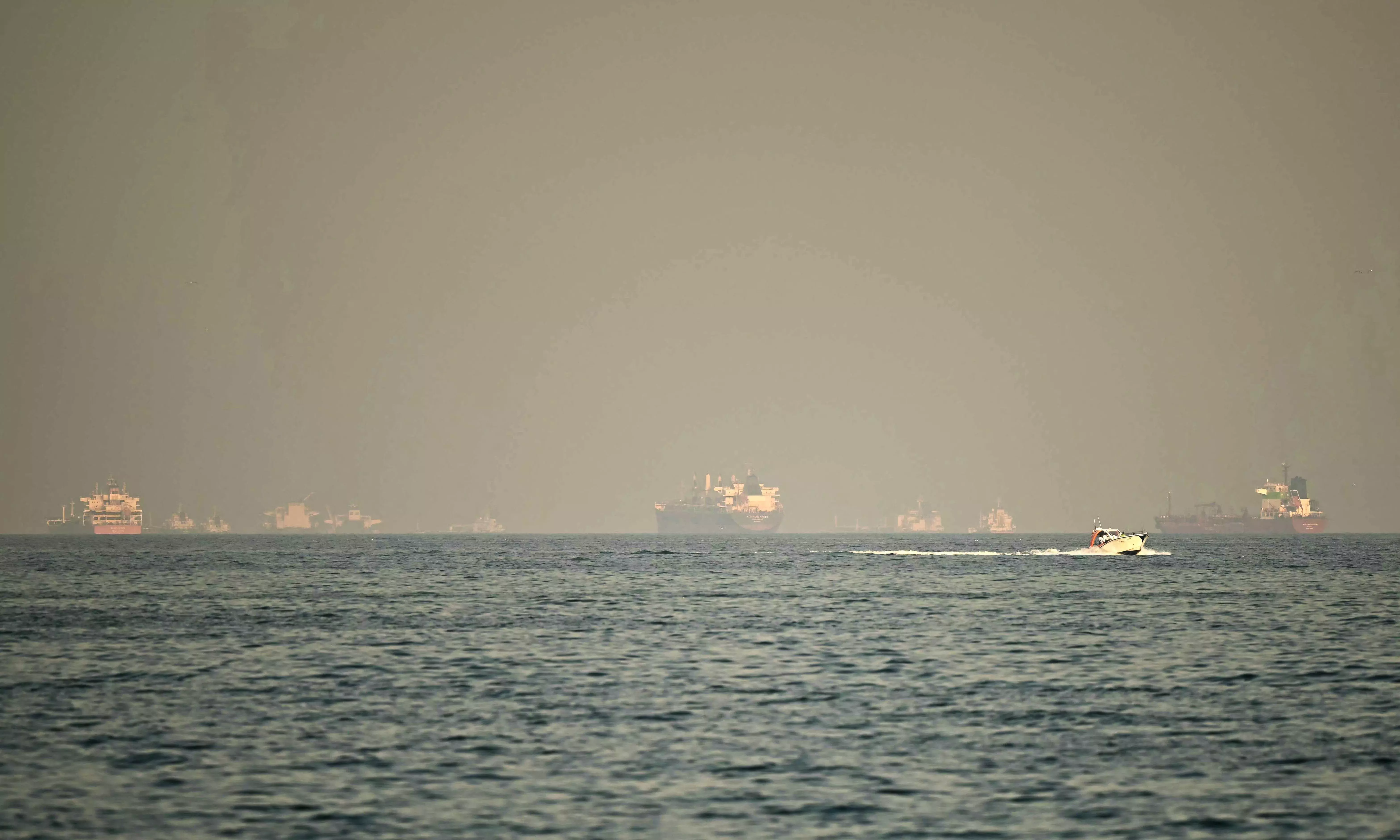
Chennai: The tensions around the Strait of Hormuz as well as the conflict in the Middle East region will have a significant impact on India's crude and natural gas supply, its trade and inflation. Prashant Vasisht, Senior Vice President and Co-group Head, Corporate Ratings, ICRA finds that for every $10 of increase in the crude oil price on an average basis, the annual impact on India's crude oil import bill is about $13 to $14 billion.
Q) What is the situation in the state of Hormuz now and how important is this strait in our crude and natural gas supply as well as trade?
About 20 to 21 million barrels of oil, accounting for about 20% of the global petroleum liquids consumption is routed through the Strait of Hormuz. This is now an area where there is a lot of active kinetic action. And accordingly, what we see here is that the Strait of Hormuz along with the Red Sea route are both closed. Now about 50% of our Indian imports of crude oil and 54% or 55% of our LNG is routed through the Strait of Hormuz. And if this situation is prolonged, where no ships can sail through safely through this strait, then these supplies could be impacted.
Q) Do we have some alternative routes avoiding the Strait of Hormuz? Probably, they will also increase freight costs and shipment time. How viable are these routes?
So there aren't many alternative routes. There are a couple of pipelines, but they can accommodate only a fraction of the crude oil that actually passes through the strait. So because a lot of these countries straddle along the strait, so there aren't any alternate routes for routing this crude oil or LNG. So in that sense, there could be a supply situation where supplies are restricted.
Then there are alternative sources, which would have to be other geographies like the US, South America, Africa, etc. But in case this oil route is disrupted for a prolonged period of time, crude oil prices would go up, in which case even if you get alternative supplies, these would be at higher prices and higher freight costs, which would lead to a higher import bill.
Q) We have been increasing our procurement from Middle East, Venezuela and the US after the Russian sanctions. We have been decreasing our crude oil import from Russia as well. So how will that escalate our crude oil import bill?
Certainly it will as crude oil from the Middle East, just in pure in terms purely in terms of freight costs, because Middle East is in proximity. Crude oil from the Middle East costs about 40 to 70 cents per barrel, whereas from the US it can cost as high as 2.5 to $4 per barrel, as you know, the freight rates also are very volatile. Other things being equal, this is the trade cost differential alone. But here we are talking about a large part of the global supply itself being disrupted. And if this continues for long, then it could lead to higher crude oil prices, which would mean not just higher trade cost, but also higher crude oil prices, even if it's sourced, even if crude is sourced from other locations.
Q) In your opinion how much increase in crude prices are anticipated in the near and medium term and how will this impact our inflation?
It is very difficult to quantify how much could be the impact now since the build-up started or the tension started that is about a week, about two weeks back. We have already seen crude oil prices going up from about $65 per barrel to about $72, $73 now. And depending on how the situation evolves and how long this prolongs. And this hugely important energy choke point is disrupted. That will decide the future course of crude oil prices.
Q) If you consider the previous tensions that have happened in the Middle East region, how much can the crude oil prices move up in the near to medium term?
If you look at the example of 2008, when a crude oil tanker and a military vessel came head to head, we saw that crude oil prices jumped to about $140 per barrel. Fortunately, this time we are seeing there was about $7 to $8 increase in the crude oil prices since this whole situation started. over the past one and a half days, crude oil prices have stayed in that region of $72 to $73 per barrel. so overall, how the situation develops would have an important bearing on the crude oil prices.
It will be difficult to predict as such. We will have to see how things develop here.
Q) What about the trade of non-oil goods with the Middle East? We have a very good trade with this region also. Which goods are likely to be impacted?
So I believe the Middle East also, we have a very active trading relationship besides crude oil. A huge diaspora lives there. So there's a lot of consumer goods that are transported along with goods like gems and jewellery, textiles. So given that these two important routes are now closed, or at least temporarily closed as of now, these all could also be impacted.
Q) Apart from the trade, we have a very large diaspora in the region. mean, jobs are likely to be under threat. And what about remittances?
Remittances would probably spike in the initial phase when people send out money to their native country, which is India. And then there could be a dip depending on how long this war escalates, how long this war continues. So that is probably what we've seen in the past.
Q) Overall, when you look at if this crisis prolongs and we have the crude supply being disrupted, what could be the larger impact on the economy?
Higher crude oil price would the first impact would be on the import bill. For every $10 of increase in the crude oil price on an average basis, the annual impact on the India's crude oil import bill is about $13 to 14 billion. Then the oil marketing companies could see their margins being compressed because of marketing margins being lower. And this could also impact inflation if crude oil prices. If petrol or diesel prices increase at pump level, then this could have an inflationary impact as well on the economy, given that these fuels are widely used for transporting goods. So, those could be some of the impacts that higher crude oil prices would entail.
Q) We have been reducing our imports from Russia after the sanctions and our interim framework for the US trade deal. Do you think we will have to go back to our Russian crude oil once there is a disruption and the oil from the Middle East becomes very difficult to procure?
Two large suppliers of crude oil from Russia have been sanctioned by the US. So, Indian companies have been compliant with the sanctions. so, whatever is the non-sanctioned crude, India could procure from those suppliers.
