GST: T M Thomas Isaac eyes 3,000 crore more

“The extra money we earn can be pumped into sectors that have lost out,â€Dr Isaac added.
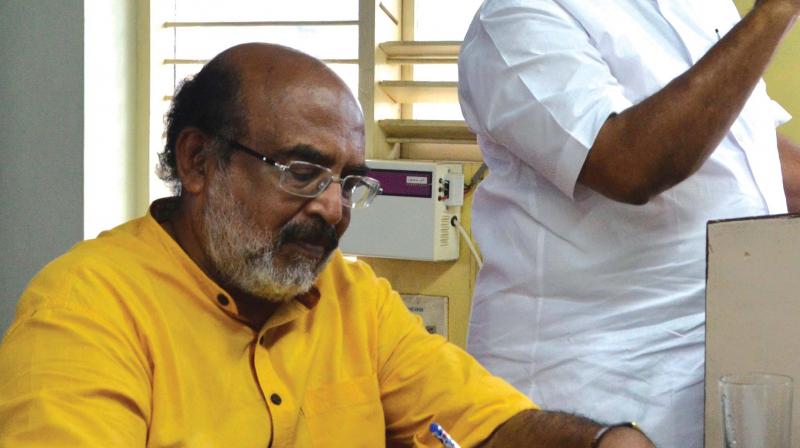
Thiruvananthapuram: Finance minister T.M. Thomas Isaac said that the GST regime might have usurped the state’s autonomy by centralising tax administration, but the revenue gains that the new regime could bestow on the state would be used to subsidise investment in primary sectors.
“It is true that some of our sectors, because of high production cost, will not be able to stand up to competition from other states under the new regime. However, on the other hand, we expect an increase in revenue by Rs 2,000 to Rs 3,000 crore annually,” Dr Isaac said while speaking at a discussion on GST organised by Rajiv Gandhi Institute of Development Studies here on Wednesday.
“The extra money we earn can be pumped into sectors that have lost out,” he added.
Dr Isaac said that it was not the GST that took away the states competitiveness. “The states had lost their autonomy long before, right when VAT was introduced. The only difference is, with the arrival of GST, a de facto loss has become a de jure loss,” he said. Nonetheless, Dr Isaac said the GST, by being a destination-based tax, promised the state a higher revenue. “We will invest this money to improve competitiveness in sectors like agriculture. We will use the money to encourage value addition in traditional areas like coconut production,” he said.
Further, the finance minister said the GST would, in the next five years, help in bridging the revenue and fiscal deficits. “At the moment, the expenditure growth is 15 per cent, and the revenue growth 10 per cent. Post GST, the estimate is revenue will grow by 20 per cent or more,” Dr Isaac said. “If we can sustain our expenditure growth at the existing level, then we could bring down deficits in five years,” he added.
AICC spokesperson P.C. Chacko argued that an already regressive taxation regime had been made more regressive by the GST. He said that the upper GST limit should have been 18 per cent. Dr Isaac countered this by saying that if 18 per cent was the upper limit then the taxes on essential commodities would have had to be raised to arrive at a revenue neutral rate.
