GST roll out: Tax slabs make garments' bills hard

Traders said the billing turned most complicated with multiple tax slabs for different commodities.
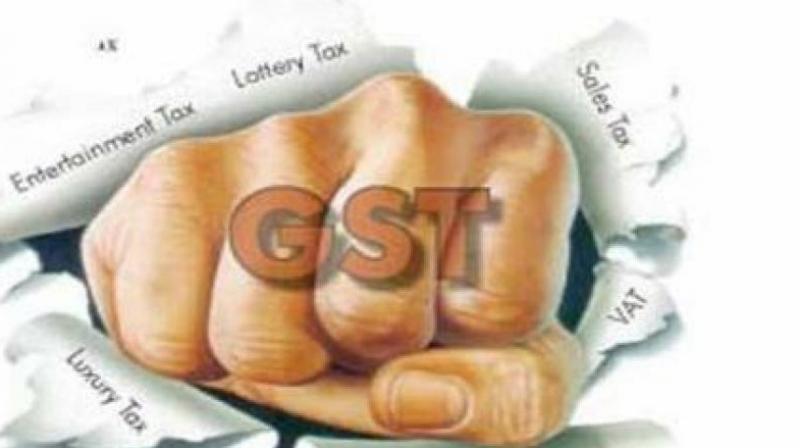
Hyderabad: On Day 1 of GST only big retail chains, supermarkets, hotels and restaurants etc could roll out GST-compliant bills.
There were delays in the billing process and some products taken by consumers had to be returned with software not displaying GST rates. In some cases, the software displayed higher MRP rates than those printed on the product, which annoyed consumers.
However, consumers expressed happiness to see only tax on their bills in the GST regime against multiple taxes in the VAT regime. There was clear demarcation of tax revenue sharing between Centre and state government on GST bills in the ratio of 50:50. “The earlier VAT bills were so confusing but GST bills are very clear with single tax. In VAT, they used to levy taxes on taxes but in GST, the tax is levied only once on the overall bill,” said P. Bhavana, a consumer.
Traders said the billing turned most complicated with multiple tax slabs for different commodities. They engaged IT professionals with expertise in accounting and chartered accountants to deal with the new GST regime.
But majority of the kirana stores and others have not installed the online billing system to issue GST bills. Some of them which had an online billing system said they could not afford to hire technical and accounting experts to get their work done.
“We cannot afford to pay Rs 20,000 salary per month to technical and accounting experts to comply with GST norms. We also need to do paper work to file online returns every month which only experts can do. This has only increased our operational expenditure,” said P.Laxminarayana, a kirana shop owner in Ramanthapur. Confusion prevailed among grocery, garment and food outlets as many have not yet prepared for GST. Outlets say, the system would take a week to 10 days to compile and includes the goods and service tax. A few malls, have not included the revised tax slabs in their billing.
A large chunk of groceries stores, for instance Ratnadeep at Marredpally, had no GST slab in the bills, informed Sravan Reddy, a customer. Also, GST implementation on services’ sector seemed to be a big challenge. The ground check on the first day of GST, has revealed that establishments offering services like beauty salons, medical, photo developing laboratories, unregistered cab services, mechanics, repair stores, that make big money on bills, can evade the revised service tax slabs by seeking payment in cash and not online transactions.
Service sectors that have minimal or zero raw product exchange or no online transaction or no billing system in place, there is a high scope of evading tax.
While in the case of goods industries, the goods tax can be tracked through transportation, production, depots, physical inspection and more. But in the service sector, those registered and unregistered, will be difficult to track, if the service provider and service taker, decide to make payment in cash and not online.
