Trump liberates world from American dependence

3 April 2025 1:02 PM IST3 April 2025 1:02 PM IST
New US tariffs manageable for India, offer upside over Asian rivals
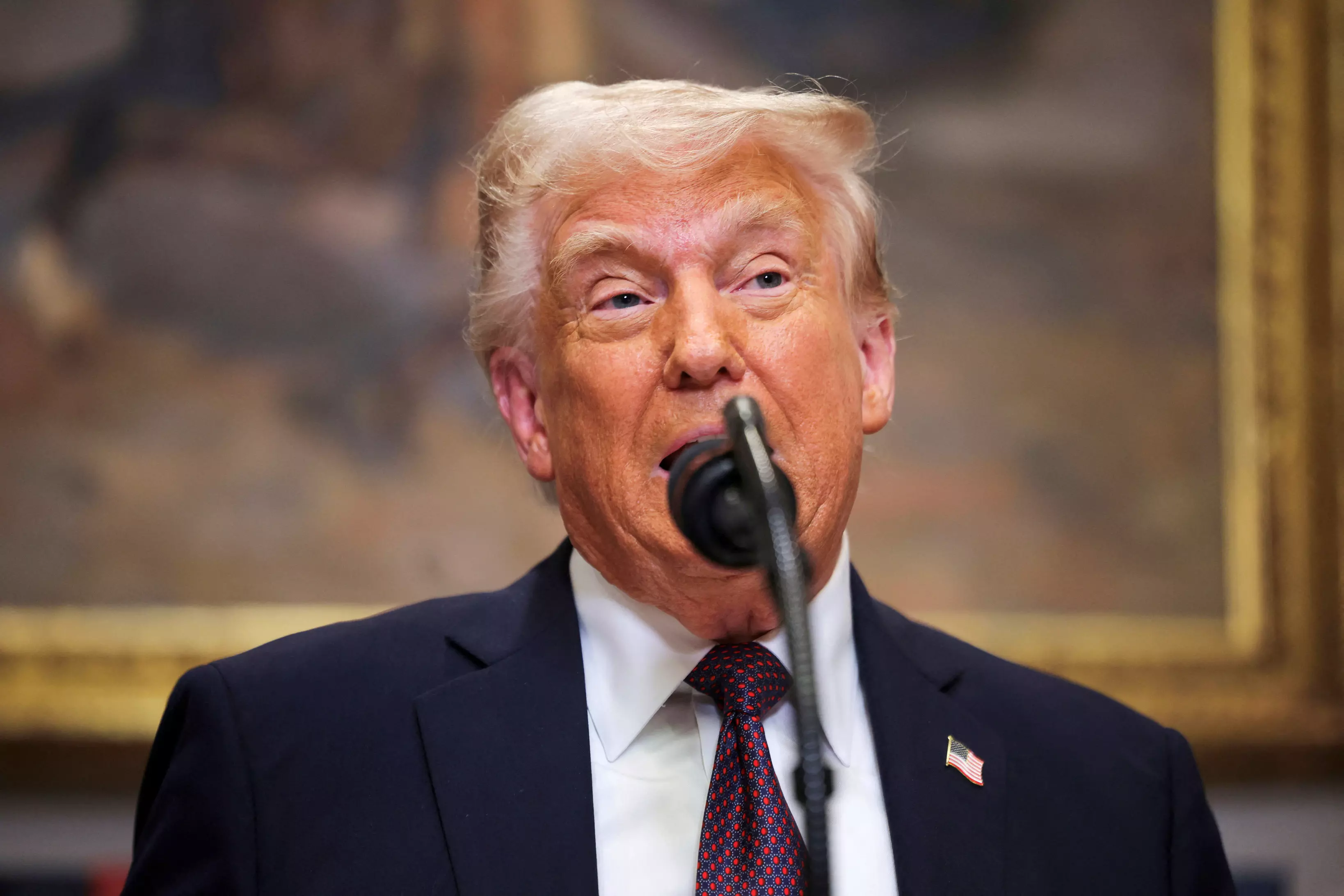
US President Donald Trump (File image)
Hyderabad: After days of uncertainty, it finally became clear at around 2 a.m. on April 3 (IST) that Indian exports to the United States will face a 26 per cent duty — 10 percentage points more than the base tariff that every import into America from any country would attract. Since every country will have to pay at least 10 per cent import duty to sell its products in the US, the penal tariff applicable to Indian products would be 16 per cent.
While investors may loathe a situation like this, where the leader of global free trade is bent on dismantling it, a dispassionate analysis shows that India has escaped Trump’s onslaught with relatively little damage compared to other Asian countries. China will have to pay an exorbitant tariff of 54 per cent, Cambodia 49 per cent, Vietnam 46 per cent, Sri Lanka 44 per cent, Bangladesh 37 per cent, Thailand 36 per cent, Indonesia 32 per cent, and Pakistan 29 per cent — giving India a considerable tariff advantage.
With a considerably lower tariff in Asia, India will have a distinct advantage in textiles and apparel over Bangladesh (which faces a 37 per cent tariff) and in footwear over Vietnam (46 per cent) and Cambodia (49 per cent). Similarly, India will enjoy an advantage over Sri Lanka (44 per cent) and Thailand (36 per cent) in toys, leather goods, and home furnishings.
In electronics and chemicals, India will have an advantage over China, which will have to surmount a steep 54 per cent tariff wall. However, it will face intense competition from the European Union, which will be subject to a 20 per cent duty — six percentage points lower than India’s. Compared to countries like the United Kingdom and several Latin American nations, which face a 10 per cent import duty, India will be at a disadvantage of 16 percentage points.
Nevertheless, a coordinated approach by central and state governments, along with innovative steps by companies, could reduce the tariff disadvantage India faces with these countries. For instance, the central government could introduce next-generation reforms in legal redressal mechanisms and improve logistics. State governments should reduce the number of interactions businesspersons have with officials. Corruption is also a major contributor to higher business costs in India.
Apart from the government, Indian companies too need to rethink their business strategies to become more agile and competitive. Currently, a considerable number of companies in India seek to own assets like land, which ties up valuable capital and does not contribute directly to production. If companies shift to an asset-light model — leasing land instead of buying it — they could reduce costs. Poor cost-control measures and internal corruption, which reflect poor management, also increase costs and inflate product prices.
On the whole, Trump’s reciprocal tariff policy has turned out to be manageable for India, with a significant upside. However, India must brace for the ripple effects of the flux in the global economic order or a potential global slowdown in the years to come. Trump called April 2 the "Day of Liberation." It is indeed so, but for the world, as he has liberated it from its dependence on America.
While investors may loathe a situation like this, where the leader of global free trade is bent on dismantling it, a dispassionate analysis shows that India has escaped Trump’s onslaught with relatively little damage compared to other Asian countries. China will have to pay an exorbitant tariff of 54 per cent, Cambodia 49 per cent, Vietnam 46 per cent, Sri Lanka 44 per cent, Bangladesh 37 per cent, Thailand 36 per cent, Indonesia 32 per cent, and Pakistan 29 per cent — giving India a considerable tariff advantage.
With a considerably lower tariff in Asia, India will have a distinct advantage in textiles and apparel over Bangladesh (which faces a 37 per cent tariff) and in footwear over Vietnam (46 per cent) and Cambodia (49 per cent). Similarly, India will enjoy an advantage over Sri Lanka (44 per cent) and Thailand (36 per cent) in toys, leather goods, and home furnishings.
In electronics and chemicals, India will have an advantage over China, which will have to surmount a steep 54 per cent tariff wall. However, it will face intense competition from the European Union, which will be subject to a 20 per cent duty — six percentage points lower than India’s. Compared to countries like the United Kingdom and several Latin American nations, which face a 10 per cent import duty, India will be at a disadvantage of 16 percentage points.
Nevertheless, a coordinated approach by central and state governments, along with innovative steps by companies, could reduce the tariff disadvantage India faces with these countries. For instance, the central government could introduce next-generation reforms in legal redressal mechanisms and improve logistics. State governments should reduce the number of interactions businesspersons have with officials. Corruption is also a major contributor to higher business costs in India.
Apart from the government, Indian companies too need to rethink their business strategies to become more agile and competitive. Currently, a considerable number of companies in India seek to own assets like land, which ties up valuable capital and does not contribute directly to production. If companies shift to an asset-light model — leasing land instead of buying it — they could reduce costs. Poor cost-control measures and internal corruption, which reflect poor management, also increase costs and inflate product prices.
On the whole, Trump’s reciprocal tariff policy has turned out to be manageable for India, with a significant upside. However, India must brace for the ripple effects of the flux in the global economic order or a potential global slowdown in the years to come. Trump called April 2 the "Day of Liberation." It is indeed so, but for the world, as he has liberated it from its dependence on America.
( Source : Deccan Chronicle )


Next Story