The Prime Minister has already urged people to avoid investing in gold to the extent possible. Fund of Funds offer a particularly convenient route because investors can purchase gold exposure without opening a demat account. A large number of people already invest in mutual funds, and the intention may be to avoid encouraging this additional investment habit among them
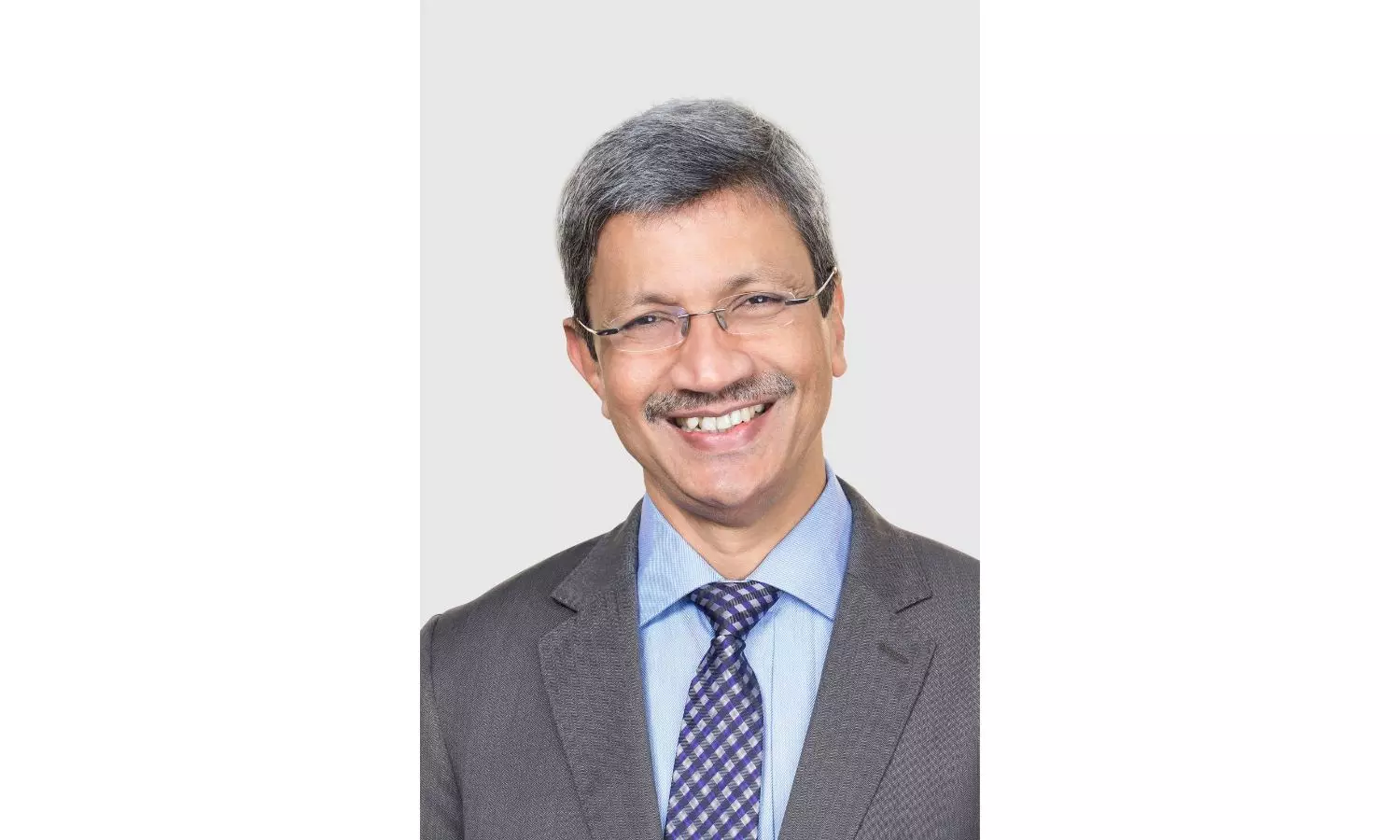
Chennai: As the past few years have seen increased financial inclusion, surging gold loans, a greater number of demat accounts and digital transactions, the time has come to push for financialization of gold. This will include renouncing some of the gold myths and bringing in gold-backed financial products like gold savings accounts, gold-based insurance, gold monetisation, and India Gold Coin, as well as increasing recycling. For this, the gold industry and banks have to come together, and the government must form a gold financialization policy for the next 10-20 years, finds PR Somasundaram, director on the board of India International Bullion Exchange.
Why have restrictions been imposed on fresh investments in gold ETF Fund of Funds? What do these restrictions mean for existing and new investors, and what is the rationale behind them?
The SEBI chairman has reportedly described this as a temporary measure. The restriction applies specifically to fresh investments in gold Fund of Funds. Existing SIPs can continue, and existing investments are not affected. This is not a restriction on gold ETFs, jewellery purchases or physical gold in any form.
Fund of Funds are different from ETFs in that investors do not need a demat account. They can invest just as they would in any other mutual fund. The restriction addresses one particular investment channel and does not curb gold buying as a whole. It is essentially a short-term measure.
How significant is the contribution of Fund of Funds to overall gold demand and imports? Will restricting fresh investments make a meaningful difference?
Gold ETFs have an asset under management of around Rs 1.9 lakh crore and have grown substantially. Of this, Fund of Funds account for approximately Rs 63,000-65,000 crore, nearly a third of the total ETF market. That is a substantial amount in terms of assets under management, but it should not be confused with annual demand or fresh inflows.
The actual inflows into Fund of Funds are relatively small. Therefore, restricting this channel is unlikely to have a significant impact on overall gold demand or imports.
The idea is not necessarily to reduce overall gold demand but to discourage an easy investment route. Investors who want exposure to gold can still invest through ETFs, which require demat accounts, or purchase coins, bars and jewellery. All these avenues remain open.
Is the restriction also intended to send a signal to mutual fund investors to stay away from gold?
The Prime Minister has already urged people to avoid investing in gold to the extent possible. Fund of Funds offer a particularly convenient route because investors can purchase gold exposure without opening a demat account. A large number of people already invest in mutual funds, and the intention may be to avoid encouraging this additional investment habit among them.
I would look at this more as a signal than as a measure that will necessarily bring down gold imports.
The signal is that when the rupee is under pressure because of external factors, including rising oil prices, everyone needs to contribute towards managing the situation. That is the broader message.
Have gold ETF inflows been affected by the restrictions, or is the moderation largely due to falling gold prices?
The restriction has certainly created some confusion among investors. Some may have wondered whether they could continue holding gold or whether gold investments were being discouraged altogether. Investors who did not want to examine the issue in detail may have stayed away temporarily.
However, gold ETFs have been growing rapidly, even as prices have moderated. There may have been some softening of demand following the restrictions, but it is difficult to establish how much was due to the measure and how much was due to falling prices.
The impact on overall gold demand is unlikely to be massive. There are arguments both for and against restricting investment through Fund of Funds. Gold ETFs are among the most transparent ways of investing in gold. If we discourage organised channels without addressing India's structural appetite for gold, we must ask whether that is the right approach.
Households see gold as a hedge against inflation, currency depreciation and financial uncertainty. Should the government realistically persuade them to reduce their purchases?
Gold demand is not unique to India. Demand has increased in China, the US and several other countries. Central banks themselves have accumulated substantial quantities of gold over the past seven to eight years as a hedge against currency depreciation and uncertainties surrounding fiat currencies and monetary policies.
Buying jewellery and keeping it at home, however, comes with an economic cost. It involves sending foreign currency out of the country, while the gold remains largely unutilised. People often hold it as insurance and bring it out only when they need a loan.
Instead of trying to curb gold demand, the government should find practical ways to channelise people's appetite for gold into organised financial markets and ensure that at least a portion of household gold is put to productive use.
Look at the growth in gold loans after COVID. They have increased by more than 100% in several years, and banks and NBFCs are now able to offer better credit against gold collateral. The old perception that gold loans are necessarily distress loans has changed. People are increasingly using them for business purposes as well.
The challenge is to shape future gold-buying behaviour towards the organised financial sector. India has tried various measures to curb gold demand, but that approach is unlikely to succeed. Gold has served an important purpose for households and central banks alike. We need to find ways to put it to better use.
Should the government have a clear long-term policy on gold, particularly when investors are increasingly looking at it as a wealth-preservation tool amid global uncertainties?
The government should address gold through a policy framework covering the next 10-20 years. We need to recognise how much India has changed.
For decades, gold was considered a parallel investment stream, particularly among rural households that did not have access to banking facilities. Financial inclusion was limited, and demat accounts numbered barely two crore.
Today, the number of demat accounts is estimated at around eight to 10 crore. Financial inclusion has improved considerably, giving the government more practical ways to bring household gold into the formal financial system.
The growth in gold loans itself demonstrates this change. People are now comfortable walking into banks with their jewellery and using it as collateral. The fear that doing so would automatically attract tax scrutiny has also diminished. If a person pledges gold for a Rs 10-lakh loan, the question about its source can arise just as it would under a gold monetisation scheme. Yet gold loans have grown without any tax amnesty.
We must therefore move beyond myths, including the belief that women will never melt their jewellery or that temple gold cannot be recycled. We are not talking about the entire estimated 35,000 tonnes of household gold. Even starting with 3,000-5,000 tonnes would be meaningful. In fact, bringing in even 1,000 tonnes through monetisation would be a significant achievement.
What are the financial products and initiatives that could help bring household gold into the organised market?
Banks should consider offering gold savings accounts and gold-based insurance policies. For instance, a family saving gold for a daughter's wedding could be offered an insurance policy that promises a specified quantity of gold at the time it is needed.
We must recognise that some jewellery has emotional and cultural significance and will never be monetised. There is no need to change that. But there is also a substantial stock of surplus jewellery and future gold purchases that can be channelled into financial products.
India's annual purchases of bars and coins are estimated at around 200-300 tonnes. We should make this segment more recyclable. The India Gold Coin initiative could help. If a person holds a 10-gram gold coin, it should be possible to exchange it at a jeweller for jewellery or take it to a bank. The system must ensure that gold remains recyclable rather than getting locked away.
Similarly, temple gold needs to be approached sensitively. We are not talking about jewellery used to adorn the main deity. Temples receive different kinds of jewellery, and instead of accumulating such items, they could consider standardised one-gram or half-gram gold coins. These would be easier to recycle and bring back into circulation. Temples could even mint coins under their own brands for devotees.
The objective is not to force people to give up gold but to change the manner in which they buy, hold and use it.
What prevented earlier gold monetisation initiatives from succeeding? Have the conditions changed now?
Between 2015 and 2026, India has witnessed a massive transformation in its financial sector. Ideas that could not be implemented earlier may be feasible now.
Gold monetisation was operationally cumbersome. People had to take their jewellery to designated centres, where it would be melted and tested. There was insufficient trust between banks and jewellers, and the movement of gold involved several areas of risk that stakeholders were unwilling to assume.
Today, we have hallmarking centres, better risk-management tools and greater public familiarity with organised financial services. Jewellers have also indicated their willingness to act as conduits for banks, without necessarily transporting the gold themselves.
Another fundamental problem was the absence of clear ownership and responsibility for gold within the financial system. Even Indian banks traditionally did not import gold in their own names; they largely acted as consignment agents. This reflected a longstanding distance between gold and the formal financial sector.
The India International Bullion Exchange has helped address some of these concerns through its vaulting and bullion deposit receipt mechanisms, with transactions being cleared quickly. The infrastructure now exists to make gold transactions operationally easier.
Who should take the lead in developing a comprehensive gold financialisation policy?
It will not work unless banks play a central role. However, this is not simply a matter of the RBI or SEBI issuing individual instructions. We need an overall policy architecture, after which each regulator can address its respective responsibilities.
Consider the success of gold loans, which are directly regulated by the RBI. People are physically carrying gold into bank branches and accessing credit. The market has grown to levels that would have seemed unimaginable a decade ago.
But the gold pledged as collateral largely remains unused in the banking system. Imagine if the same gold were available in a standardised form or through a gold deposit mechanism. Banks could potentially put it to productive use while providing credit to customers.
We need to look at gold differently and build on the progress already made.
How can the government address the uncertainty in gold policy, where import restrictions and duty changes often push demand towards unofficial channels?
The government needs to reassemble stakeholders and focus on two or three practical initiatives rather than announcing another broad policy that may not be implemented.
There was an earlier NITI Aayog exercise on gold. We could revisit that work with a fresh perspective. Alternatively, the industry could come together and prepare a concise, actionable proposal for the government.
The proposal must address the risks faced by every stakeholder. Jewellery associations, for instance, must understand the banking industry's risk-management requirements. The banking associations and jewellers need to speak in one voice.
Hallmarking is a good example of how coordinated action can improve quality and purity standards. A similar approach could help formalise the gold market.
If I were to suggest a priority, the government should include a dedicated gold financialisation component in the committee being formed on banking for Viksit Bharat. The objective should be clear: bring household gold into the formal financial system and ensure that it is put to productive use.
The government should not try to fight people's appetite for gold. It should transform the way gold is purchased, held and utilised.