Sustaining 7% Growth Uphill Task For India: Duvvuri Subbarao

Capital investment is a long-term bet on the future; businesses will place those bets only when they have deep confidence in both long-term demand and the stability of the regulatory environment. Without a robust private investment cycle, sustaining growth rates above 7 percent over the next decade will be an uphill battle, Subbarao said in an article written for the IMF
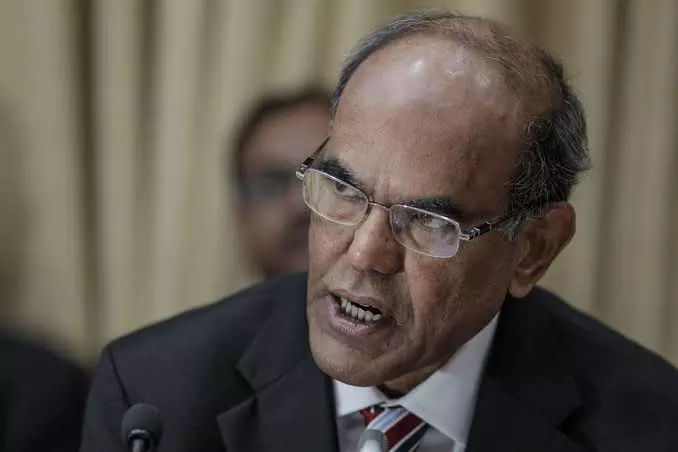
Chennai: Sustaining growth rates above 7 percent over the next decade will be an uphill battle for India without a robust private investment cycle, finds former RBI governor Duvvuri Subbarao. The structural disconnect between output and employment, uneven distribution of wealth created in the past decade, research and development deficit and innovation deficit will work against India’s demographics.
Capital investment is a long-term bet on the future; businesses will place those bets only when they have deep confidence in both long-term demand and the stability of the regulatory environment. Without a robust private investment cycle, sustaining growth rates above 7 percent over the next decade will be an uphill battle, Subbarao said in an article written for the IMF.
The bulk of recent growth is coming from public capital expenditure, while private corporate investment remains stuck at about 11 percent of GDP, far below its historical peak of nearly 17 percent in 2008. This imbalance matters, because public spending can kick-start an economy, but it cannot sustain it indefinitely.
Further, the structural disconnect between output and employment is widening. The ultimate test of India’s economic model is not the headline GDP growth rate, but whether that growth generates productive employment for its massive workforce.
The structural disconnect between output and employment is widening. Agriculture contributes just about 15 percent of GDP, but it accounts for nearly half the total workforce. Manufacturing, responsible for about 13 percent of GDP, absorbs only about 11 percent of workers, while high-value modern sectors, including information technology, finance, and business services, which generates roughly 15 percent of GDP directly employs just 3 percent of the workforce.
As growth is concentrated in capital and skill-intensive sectors, the aggregate wealth generated over the past decade is distributed unevenly. This K-shaped cleavage between people who are prospering and those who are not has created a highly fragmented consumer market, where growth in demand for premium goods vastly outpaces that for entry-level mass-market consumer staples.
“This divergence is not just a moral or social issue; it is a structural economic bottleneck,” he said.
These vulnerabilities point to a deeper structural challenge as India attempts to escape the middle-income trap. Moving from middle-income to advanced economy status cannot rely on cheap labour, capital accumulation, or favourable demographics alone. It must be powered by domestic innovation, total factor productivity, and deep investment in human capital.
India possesses an elite pool of engineering talent and a vibrant software ecosystem, yet its total spending on R&D remains stuck at roughly 0.7 percent of GDP. It is a marginal producer of core intellectual property in semiconductors, artificial intelligence, biotech, and advanced manufacturing.
A youthful population without adequate economic opportunity could turn a demographic dividend into a demographic liability.
The government must revive private investment through a more predictable regulatory environment and lower compliance burdens. India must move towards modern services through investment in skills, logistics, and urban infrastructure. Limited fiscal resources should increasingly prioritize human capital—including education, health, and R&D— alongside physical infrastructure, he added.
