According to reports, the RBI is studying measures to draw in more dollar flows to curb rupee weakness and plug the balance of payments gap. This includes a plan for state-owned banks to sell foreign currency bonds, reviving a measure that was utilized nearly three decades ago
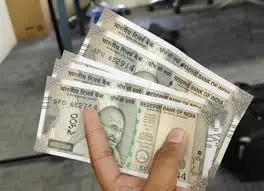
Mumbai: The Indian rupee strengthened for the second consecutive session on Thursday, appreciating 36 paise to close at 94.25 to a dollar, tracking a steep decline in crude oil prices amid rising optimism over a potential breakthrough in US-Iran negotiations. Traders said that stop losses on short rupee positions alongside dollar sales in the
non-deliverable forward (NDF) also supported the domestic currency.
At the interbank foreign exchange market, the rupee opened at 94.73 to a dollar. It touched an intraday low of 94.91 and a high of 94.06 before finally closing at 94.25 after Brent crude prices fell below $100 per barrel to touch a day’s low of $95.66/bbl. The rupee’s previous close was 94.61. Traders said that the RBI may have been present selling dollars near to 94.90 levels during the day.
The retreat in oil prices also lifted Asian currencies broadly which were up between 0.2 per cent and 0.6 per cent, while the dollar index eased 0.2 per cent to 97.87.
Radhika Rao, Senior Economist & Executive Director at DBS Bank, “The rupee is likely to enjoy a temporary reprieve on global and local cues through a protracted rally is unlikely until the flows outlook improves materially.”
According to reports, the RBI is studying measures to draw in more dollar flows to curb rupee weakness and plug the balance of payments gap. This includes a plan for state-owned banks to sell foreign currency bonds, reviving a measure that was utilized nearly three decades ago. In late-90s, the biggest lender State Bank of India had successfully raised more than $4 billion via Resurgent India Bonds, followed by India Millennium Deposits in 2000 worth $5.5 billion via papers denominated in dollars, euros and pounds.
“At this juncture, any foreign currency bond might also be accompanied by swaps for participating lenders to hedge currency risks, in turn helping to improve returns for investors. These swap arrangements will need to factor in higher prevailing US rates vs past cycles (including 2013 taper tantrum), which in turn implies higher subsidy support from the RBI. The quantum of issuance will also need to at least partially commensurate with current funding requirements,” added Rao.

