Economic Survey Says Rupee a Victim of Geopolitics & Strategic Power Gap

Rupee at 91.96 as foreign outflows and strategic power gap weigh on currency
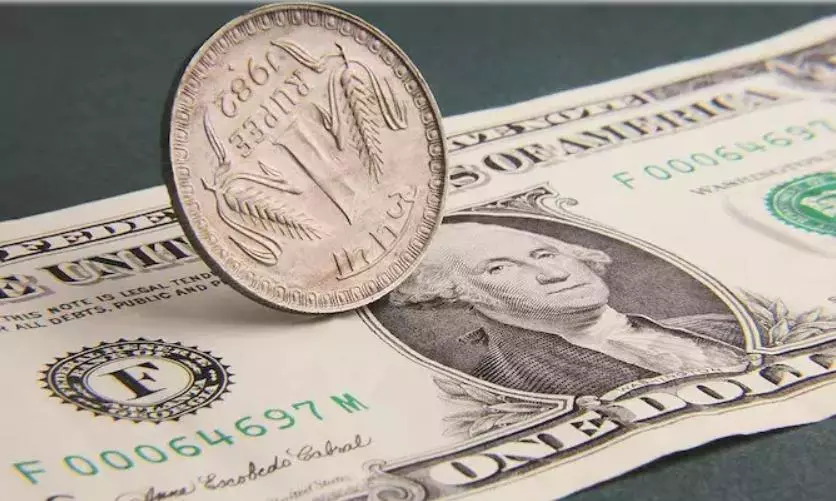
Mumbai: The Indian rupee's valuation does not accurately reflect India's stellar economic fundamentals and it has become a victim of geopolitics and a strategic power gap, said the Economic Survey 2025-2026.
The comments come at a time when the rupee has emerged as one of the weakest currencies in Asia, breaching past the 92 mark against the US Dollar. The Indian rupee on Thursday settled near its all-time closing low at 91.96 against the US dollar, amid selling pressure from foreign funds that have pulled out a record $ 19 billion from Indian stocks last year as risk-off sentiment prevailed in global markets.
The survey noted that even as economic growth outlook remains favourable, inflation is contained; rainfall and agricultural prospects are supportive, external liabilities are low; banks are healthy; liquidity conditions are comfortable; credit growth is respectable; corporate balance sheets are strong; and the overall flow of funds to the commercial sector is robust, the rupee is punching below its weight.
Between April 1 and January 22, 2026, the Indian rupee depreciated by approximately 6.5 per cent against the US dollar. Other Asian peers during this period experienced relatively lower depreciation, such as the Philippine peso (-3.8 per cent) and the Indonesian rupiah (-1.9 per cent). In contrast, currencies of economies such as Australia, Brazil and South Africa appreciated during this period, supported by favourable terms-of-trade movements.
However, the movement in the INR has been orderly. Over the medium to long term, exchange rate dynamics are expected to be guided by structural fundamentals, such as productivity gains, export diversification towards higher-value goods and services, deeper integration into Global Value Chain and a stable policy environment rather than short-term fluctuations, said the Survey.
"India runs a trade deficit in goods. Its net trade surplus in services and remittances is not enough to offset it. India depends on foreign capital flows to maintain a healthy balance of payments. When they run drier, rupee stability becomes a casualty," the report explained.
Finally, the report added that having a weaker rupee doesn't necessarily hurt right now, as it offsets some impact of the American tariffs due to the lower cost of currency.
"Of course, it does not hurt to have an undervalued rupee in these times, as it offsets to some extent the impact of higher American tariffs on Indian goods, and there is no threat of higher inflation from higher-priced crude oil imports now. However, it does cause investors to pause. Investor reluctance to commit to India warrants examination," the report said.
The report noted that India’s external sector is placed comfortably in the short run with forex reserves sufficiently placed to cover over 11 months of imports as of January 16, 2026 and approximately 94 per cent of the external debt outstanding as of the end of September 2025, offering a comfortable liquidity cushion.
Prepared by the Department of Economic Affairs under the Finance Ministry, the Survey acts as an official report card on the state of the economy for the year ending March 31, while also framing the risks, opportunities and policy priorities that could shape Budget and economic decisions.
