DME is Magic Bullet to End India’s Dependence on LPG

Though India meets 40 per cent of its demand for Liquified Petroleum Gas (LPG) from local sources, the world’s most populated country depending on imported fuel to cook is foolhardy and requires urgent steps to indigenous our cooking fuels
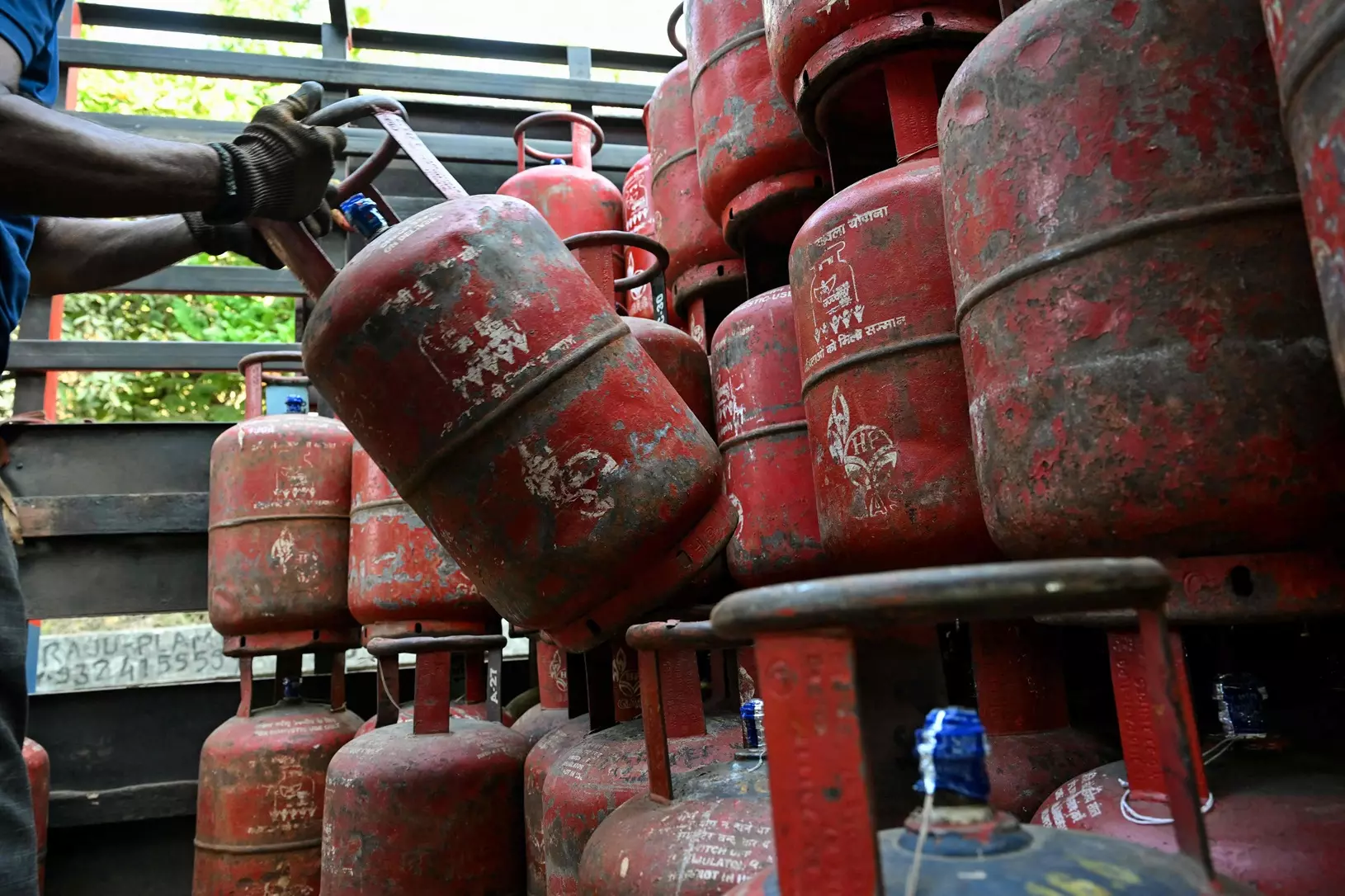
Hyderabad: With nearly 98 per cent Indian households using LPG for cooking, its shortage would throw life out of gear for over 140 crore people in the country. If required, the government may ask people to stop unnecessary travelling as happened during the Covid lockdown. But any government asking people to stopping cooking would be committing political suicide.
Though India meets 40 per cent of its demand for Liquified Petroleum Gas (LPG) from local sources, the world’s most populated country depending on imported fuel to cook is foolhardy and requires urgent steps to indigenous our cooking fuels.
While piped gas networks, which use Liquified Natural Gas (LNG) or methane, and electric induction tops are the easy alternatives, the government should scale up its research on a domestic alternative Dimethyl Ether (DME), which could be transported to users in pressurised cylinders.
DME is a clean-burning synthetic fuel that behaves almost exactly like LPG. It can be liquefied under moderate pressure, making it compatible with the infrastructure we already have. But unlike LPG, which is a byproduct of oil and gas refining, DME can be manufactured from India’s own vast resources such as coal, agricultural waste, and even captured carbon dioxide from factories.
Experts suggest that Dimethyl Ether could also be blended with LPG. India currently spends over `1.1 lakh crore annually on LPG imports. If India scales up DME blending to 20 per cent — the limit currently allowed by the Bureau of Indian Standards (BIS) — the country could save nearly `24,000 crore.
While PNG requires the government or industry to lay pipelines, whose security in remote areas could be at risk, the DME cylinders could be transported using the existing LPG distributor network.
In terms of its impact on the environment, DME is a cleaner fuel than LPG. It burns with a blue and soot-free flame. Unlike LPG, it produces zero particulate matter, which is a major contributor to respiratory issues.
If produced from biomass, DME offers a dual victory. The crop residue that farmers across the country currently burn can be converted into DME. This transforms an environmental liability into a revenue stream for farmers, effectively powering Indian kitchens with the remains of Indian harvests.
The DME production technology is not at a concept stage. CSIR-National Chemical Laboratory (NCL) in Pune has already developed a patented indigenous catalyst for DME production. Industry should join hands with NCL to operationalise demonstration plants and gradually set up one or more DME factories in each state to diversify its production. The domestic LPG production, which meets the country’s 40 per cent needs, could be used for industrial purposes or for exporting.
India's transition to DME is more than a fuel switch; It will protect households, increase farmers’ income, curtail pollution and proclaim India’s energy independence.

