Conflict Surcharge on Middle East-Bound Shipments Increase Freight Cost by 250 PC

Freight surges 250% as ships halt; exporters face losses and delayed cargo
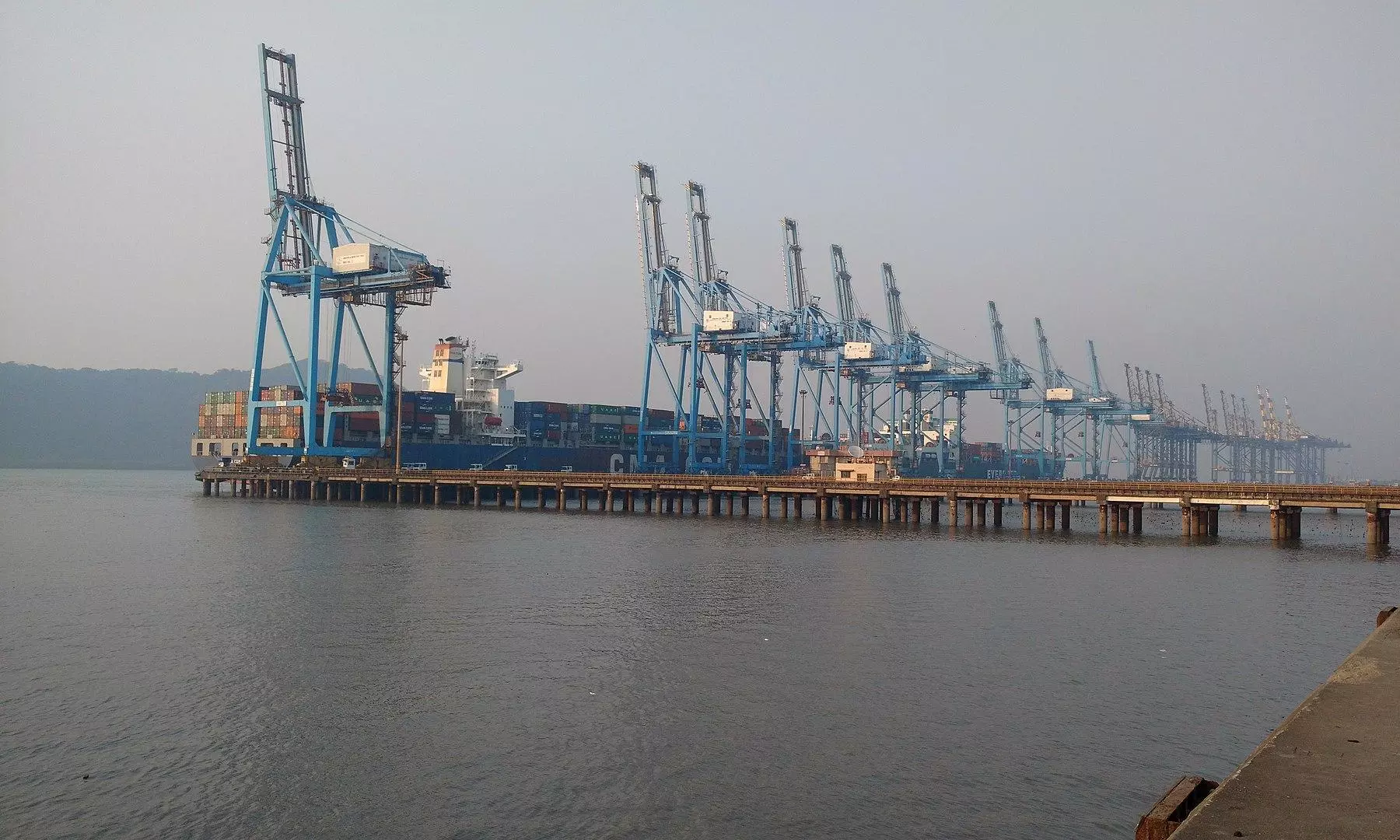
Chennai: While exports to the Middle East have been struck since February 28, exporters are hoping that some ships will start sailing from Mundra to JNPT and then to Khorfakkan port in Sharjah this week. Some of the flights are also carrying freight. However, Emergency Conflict Surcharge has increased freight cost by 250 per cent even on cargo that has been billed, says Ajay Sahai, Director General of Federation of Indian Exporters Organization. Nil shipments for the past 10 days will hit India’s overall exports in the March quarter.
Q) The conflict in Iran reached a flashpoint after the death of their supreme leader. How did this affect our exports to the region? How important is this region for our exports?
Iran exports have not been very important for us because in the last few years we have seen exports declining. Particularly after we stopped importing oil from Iran. Last year our exports were around 1.25 billion dollars, dominated by rice and other food products. But if I'm looking into the entire West Asia, my current export is in the range of 60 to 65 billion dollars and we have potential to increase it further.
Almost all the shipping lines have stopped sailing and from 28th January onwards, they have not sailed. The good thing is that some of them are commencing their sailing from 8th of March, and priority is of course on the agricultural product because perishables are the worst hit. We've been given to understand that sailing will start from Mundra to JNPT and from there it will go to Khorfakkan, which is a port in Sharjah. And if there is congestion, it may move to Fujairah also. And if this route is successful, we will see many more shipping lines coming because this route, of course, is not touching the Strait of Hormuz, which is the most disputed area where India, Iran has formally or informally said they will not allow any ship to come into the region.
But this is a good development. Since passengers are getting evacuated, some lines have started the operation also, though of course it's very limited and with the flight operation starting, we know that some of the flights are allowing freight also in the belly of the aircraft. So some relief has come, but it's extremely minuscule. We want that good sense prevai,l and the logistical disruptions are addressed as quickly because we are concerned that once the goods start coming back, a lot of the shipping lines have unfortunately told us that they will be abandoning the cargo at the nearest port, which is very concerning for us. And if all these cargo has to be brought back by the exporter, it not only entails a cost, it will create a problem at the Indian ports. And if the congestion happens, it will affect India's exports to other destinations also. Because if you're looking into the port like JNPT or Mundra,
They are very important for export to Europe and also to the US. So we have to be very, very safeguarded on this matter so that there is no congestion at the port and evacuation of the returned cargo is extremely fast.
Q) You were talking about an alternative port in Saudi Arabia as well as using flights for freight. How much share of the goods can we actually take through these alternative routes?
It will be very, very limited because I have to see whether the large shipping lines would like to operate on these routes. And we also have to see whether the ports have the capacity to evacuate that much cargo also. Because if all shipping lines started using the port, the port should have the handling equipment to take care of that. So that is also very limited. The flights also have only limited operation.
The freight itself has gone up substantially. Yesterday when I was in Jaipur, I was told that freight to the US, which was 200 rupees per kg for garments, has already gone to 600 rupees per kg. So this problem is not just confined to the Middle East, probably the entire world will be impacted in some form due to this challenge.
Q) As we just mentioned about perishables like rice, and fruits, do we have any alternative markets where we can divert these products till the war goes on?
The Middle East with such a large Indian diaspora and people who have the taste like Indians is one of our biggest markets. For example, if you're talking about Basmati rice, 80 % goes to the Middle East. Therefore, finding the alternative market is a challenge. Secondly, I think ⁓ those shipments which have not been cleared by the customs, they may be brought back.
And this by the exporters may be sold in the domestic market. It has already depressed the domestic prices. For example, banana prices have dropped substantially in the domestic market because alternative export is not there. So we are pinning our hope that once the sailing starts and the sailing takes place on the regular basis, perishables should be given the priority. They have a limited shelf life and they will be the worst affected if the evacuation is not taking place quickly.
Q) During this crisis, how have the freight and shipping costs gone up?
So in fact, shipping cost has gone up drastically after the imposition of Emergency Conflict Surcharge by the shipping lines. Between JNPT and Dubai, the freight may be around $700 to $800 on a 20 feet container. The surcharge is $2,000. So the surcharge itself is 250 % of the freight cost. And the irony of the matter is that these charges are not only levied on the shipment, has yet to be given to the shipping line for which they have to issue the bill of lading. This is also levied on the bill of lading, which has already been issued. And also those who have already reached the destination where the shipping line has to hand it over the cargo. We will request the shipping line. I think they should not look into the exploitation of the situation. I agree that they have some over.
additional costs which are coming on that. But that's a business when you have issued the bill of lading, you have agreed to deliver the cargo at a destination. So whatever risks are involved that need to be borne by the shipping line. Secondly, where cargo has already reached the destination, there is no issue of taking additional insurance or paying an additional cost. So just handing over the cargo after this 28th, you should not charge such an exorbitant amount from the exporters because the exporter in the given situation is the worst sufferer and therefore we expect all stakeholders to behave responsibly.
Q) Overall, the cost has gone up only for the Middle East region or for other regions also, now that the ships will be probably taking a longer route to all the nations?
Right now, what they have said, they have identified the ports on which the additional costs will be levied. These are the ports which are not confined to just the Middle East. There are ports in Africa also. And therefore, we are presuming that it will cover those who are on a longer route. But shipping lines have yet to give the freight for the, let us say, for Europe and also for the East Coast of the US, because there the longer route will be involved.
I'm pretty sure these rates will be much more than the existing rate. So we are yet to see what would be the rate, but surcharge itself is increasing the freight cost substantially because surcharge is also being a factor as an element of the freight only.
Q) Overall value wise, how much drop are you anticipating in our total exports due to the crisis?
I think it will depend on the duration of the crisis and the spread. If we are able to contain the crisis and bring it to a peaceful solution, probably the export hit will not be much because we will be rolling over those consignments over the next few weeks. Of course, some of that consignment has already come. It has been diverted to the domestic market, but that will be a minuscule percentage to that. But if the prices continues,
And the fact that exporters may not be able to pass on the freight to the customer, there's some hit is expected. But that is applicable to most of the countries and is not something which is exclusive to the Indian exporter. And therefore, we presume that there will be a better sensitization of this problem at the buyer's end also.
Q) We are already in the last month of this quarter, will the exports get affected in this quarter and what about the next quarter also?
I will go not by a very long prediction, but the very fact that sailing has not happened from 28th till 10th, so 10 days gap is already there. 10 days technically account for roughly one third of India's exports. So I'm expecting that this may be adversely impacting the export number for the month of
March and logically so also because neither the shipping lines are operating and very few airlines are operating. Lots of exports have not taken place also but if the situation is brought to normalcy quickly probably these deferred exports may also get reflected in the better export number for April-May.
Q) So anyway March could probably get affected.
Ten days have already gone and it is not that you will have adequate space on the ships because 10 days have already gone, a new sailing schedule has not been announced. So probably we will see a big hit in the month of March, but we expect that situation will be brought to normalcy quickly so that from April onwards, this kind of disruption is not there.
Q) How can the government help the exporters in this situation?
The government has proactively intervened in the matter as soon as the crisis started. They formed an inter-ministerial group on the third of March itself. The group is meeting on a daily basis, addressing the concern of the exporter also. You must have seen that many agencies have come with their regulations also. Customs yesterday have issued this regulation where they have asked those who are taking back the cargo that needs to be expedited. They have also requested ports to look into providing some relief on detention and damage also. Government is in touch with the banks also to provide some relief to the exporter because bills will not be realized on the due date. If the cargo is not reaching, we should not expect the buyer to make the payment also. Government is also looking into providing relaxation in terms of export obligation or wherever any period is specified. So they are very positively moving with the trade industry, trying to sensitize them and trying to provide some positive answer to that. But please bear in mind that all the stakeholders have to chip in.
It is not that today exporters on a defensive wicket need to exploit the situation. It may change at any given point of time. Tomorrow there may be a glut in the trade. The shipping availability may go up. It may also affect the shipping lines also. So all as a responsible stakeholder has to work in that direction.
Q) Has there been any directive to the banks as far as credit is concerned?
Banks are part of the inter-ministerial group and probably very soon they will be coming with some kind of relaxation. We have also sent a message to our members that if they have any problem they should revert back to us. A problem of the exporter with regard to the interest equalization where some clarification was required has been duly addressed by the DGFT and we expect that from Monday that subvention will flow to the exporter wherever it has been stuck up with the banks.
Watch interview at https://youtu.be/bKSnIGNFFro
