Cong. Calls Subhash’s ₹22,006.57 cr Debt A ‘Mundan’

NCLT Member (Judicial) Nilesh Sharma, ruling as a third member, on Tuesday approved the plan under Section 114 of the Insolvency and Bankruptcy Code (IBC), rejecting objections by lenders that the recovery was too meagre to merit approval
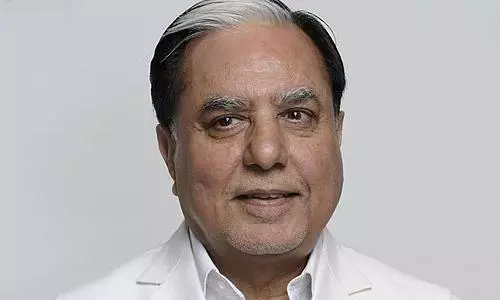
New Delhi: The Congress on Thursday attacked the National Company Law Tribunal’s approval of a ₹6.5-crore payout against admitted creditor claims of ₹22,006.57 crore involving businessman Subhash Chandra, calling it not merely a “haircut” but a “mundan” that made a “complete mockery” of the Insolvency and Bankruptcy Code, 2016.
Leader of Opposition Rahul Gandhi also targeted the settlement, accusing the government of creating “two systems” — one for a handful of billionaires and another for everyone else.
Calling the tribunal the “NCLT — Neta-Company Loot Tribunal”, Gandhi said, “If a farmer fails to repay ₹50,000, their land can be auctioned. If a salaried person misses even one EMI, bank recovery agents show up at their doorstep. Poor students, meanwhile, often struggle even to get loans for education.”
“But for a select group of ‘friends’, bank money appears to be treated as private property — withdraw as much as you want and repay whatever you please,” he said. “The Modi government has created two systems in the country — one for a handful of billionaires, and another for everyone else.”
Congress general secretary Jairam Ramesh said the settlement translated into a recovery of barely 0.03 per cent of the admitted dues.
“In finance terminology, when creditors are owed money and the debtor repays only part of it, the difference expressed as a percentage is called a haircut,” Ramesh said in a post on X.
“This is not just a haircut. It is actually a mundan and makes a complete mockery of the Insolvency and Bankruptcy Code, 2016,” he said.
The NCLT approved the repayment plan under Section 114 of the IBC. The order was passed on Tuesday by NCLT Member (Judicial) Nilesh Sharma, who was appointed as the third member after two members of the tribunal delivered a split verdict.
The plan had been opposed by a group of dissenting creditors led by LIC Housing Finance, which argued that the proposed recovery was “unviable and unlawful”. According to the tribunal order, LICHFL had an admitted claim of ₹1,322.39 crore, against which the proposed repayment was only ₹38.09 lakh, or about 0.028 per cent.
The dissenting lenders also argued that the ₹6.5-crore payout was only indicative and not certain, making the plan tentative and unsuitable for approval.
The tribunal, however, noted that the objecting creditors collectively held less than 20 per cent of the voting share, while the resolution plan had secured approval from creditors representing 80.81 per cent of the voting share.
In its 144-page order, the NCLT said Chandra’s personal estate was valued significantly below the amount offered under the resolution plan. It observed that rejecting the plan could result in bankruptcy and potentially lower recoveries for creditors.
The tribunal also held that its role was not to substitute the commercial wisdom of creditors or independently determine whether the settlement amount was adequate.
Chandra, meanwhile, disputed the figure cited by the Congress, saying the total claim against him in the personal insolvency proceedings was ₹3,992 crore and not ₹22,000 crore. He said he was only a personal guarantor and not the borrower.
“I have not borrowed any money from any lender,” Chandra said in a statement.
He said ₹620 crore of the claims had already been settled and a further ₹1,063 crore had been offered to be paid by the borrower entities.
“The borrowing entities for whom Chandra has provided personal guarantees have till date repaid ₹43,000 crore,” the statement said, adding that the entities had assured that any remaining amount would also be settled.
