The Original Scrambler Culture Was Born in Indian Garages

13 Oct 2026 5:29 PM IST13 Oct 2026 5:29 PM IST
The modern scrambler might be a familiar sight in motorcycle showrooms today, but the idea behind it has been around for decades
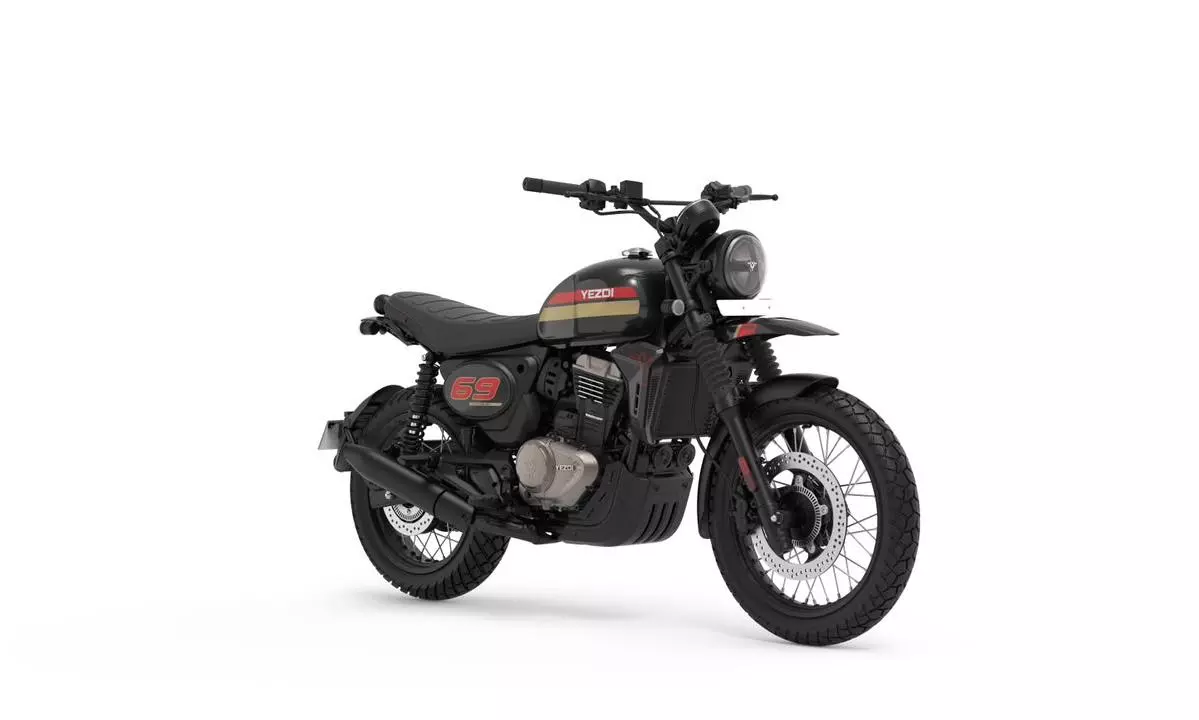
India developed its own version of this culture over the following decades.
Before scramblers were cool, Indian riders were already building them
The modern scrambler might be a familiar sight in motorcycle showrooms today, but the idea behind it has been around for decades. Long before manufacturers began packaging the format as a distinct category, Indian riders were taking their motorcycles off the beaten track, often with a few modifications and a willingness to see where the road ended.
In the 1970s and 1980s, a Yezdi was more than a way to get from one place to another for riders who wanted to explore beyond paved roads. With the right changes, it could be adapted for dirt tracks, loose surfaces and informal racing. Unnecessary weight could be removed, tyres changed and the motorcycle adjusted to suit the terrain. The objective was not to build the most specialised machine, but one that could handle different kinds of riding without losing its usefulness on the way home.
The word scrambler may not have been part of the everyday vocabulary of these riders, but the thinking behind the format was already there. Make the motorcycle work for the journey rather than let the road dictate where it can go.
“Around the world, scramblers came about as an act of instinct. They took shape in the late-1940s and -50s, when riders, racers, and mechanics began modifying standard road machines to tackle dirt tracks and rough roads. They were not born in factories but in garages, shaped by terrain, necessity and imagination,” says Anupam.
India developed its own version of this culture over the following decades. Yezdis became a familiar platform for riders who wanted to experiment with their machines, whether for competitive riding or the simple pleasure of taking a less predictable route. Names such as Farokh Bhathena and Somender Singh became associated with this spirit of mechanical ingenuity. Singh, a self-taught racer and tuner, was particularly known for his work on Yezdis.
It was a different relationship between rider and machine from the one encouraged by today's highly specialised motorcycle market. There was no single template to follow. Modifications depended on the rider, the terrain and whatever could be made to work. The motorcycle was not necessarily built for extreme off-roading. It needed to be manageable on ordinary roads, capable on rough ground and practical enough to return to everyday use.
That balance remains central to the scrambler's appeal. Its upright riding position, broad handlebars, raised stance and tyres suited to mixed surfaces have become recognisable features, but the format has always meant more than a particular silhouette. It occupies the space between a road motorcycle and a dedicated off-road machine, appealing to riders who want the freedom to change direction without having to plan an entirely different kind of ride.
There is also a contemporary reason for that flexibility. A ride can begin in city traffic, continue along a patch of damaged road and end on a loose stretch of dirt. Indian riding conditions can make versatility a practical consideration rather than simply a lifestyle statement. A motorcycle that feels at home across these changes offers a different proposition from one designed around a single environment.
“That same instinct is what connects those early machines to the Yezdi Scrambler today. Riders may no longer need to spend hours modifying a road motorcycle before taking it on a trail. Modern performance engineering has built that versatility into a modern classic format. The motorcycles don’t ask the rider to stay on one kind of road,” Anupam says.
Yezdi revived the format in India in 2022, positioning the Scrambler as a factory-built interpretation of a culture that had long relied on riders modifying their own machines. The 2026 edition carries that idea forward with its rugged stance and upright riding position, bringing the spirit of those earlier motorcycles to contemporary riders.
“The technology and engineering may be ready for today’s rider, but the reasons to ride beyond the road remain the same: a spirit to explore and not stick to the script,” says Anupam.
The evolution from garage modifications to a factory-built motorcycle also reflects a broader change in motorcycling. Manufacturers can now offer machines designed around specific riding styles, but the culture that gave rise to the scrambler was built on personal experimentation. Its appeal came from the possibility of doing more with the motorcycle already at hand, rather than waiting for a machine designed expressly for every eventuality.
“Perhaps that is why scramblers continue to find a place among Indian riders. A single journey can move from city traffic to broken roads and then onto a stretch of shifty dirt without warning. The motorcycle needs to be ready for all of it,” Anupam says.
The engineering has changed, and the motorcycles have evolved. The urge to see what lies beyond the tarmac has not.
( Source : Deccan Chronicle )

Next Story