Auto Sales Hit Fast Lane Growth in FY26, Set to Cross 3 Crore Mark, Says FADA

Three-Wheelers set their third consecutive annual record at 11.68 per cent growth, with the EV transition now accounting for over 60 per cent of the segment’s retail.
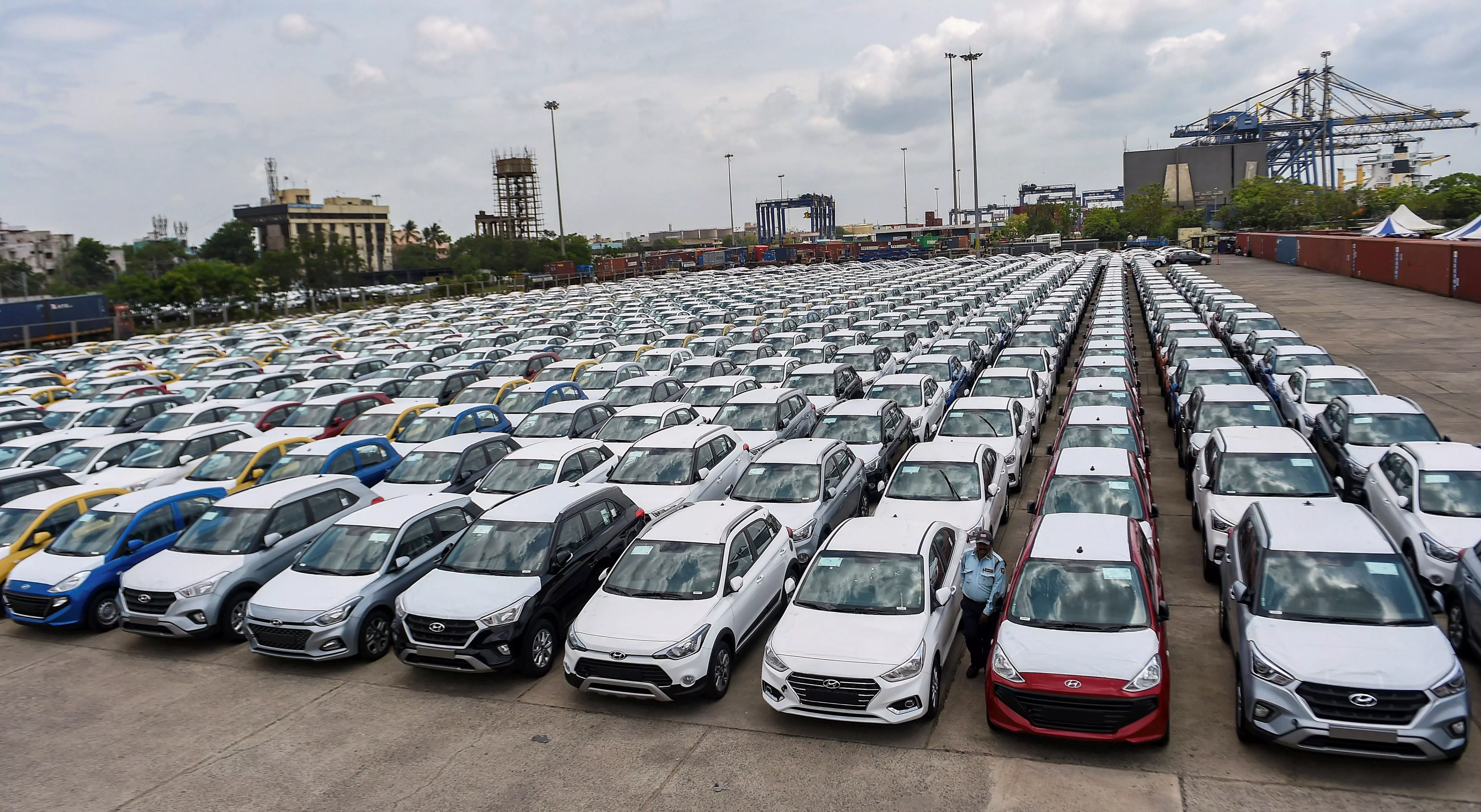
Pune: The Indian automobile retail sales posted an all-time high of 2,96,71,064 units in FY26 with a broad-based 13.30 per cent growth year-on-year, which also clocked five of six vehicle categories new annual records.
This represents the auto industry, the world’s third biggest, nearing the 3-crore mark in a financial year, a milestone that would have seemed distant just two years ago, the Federation of Automobile Dealers Associations (FADA) said on Monday.
“What makes this year particularly significant is that the growth was structurally sound, underpinned by improving affordability, widening mobility demand across urban and rural India, and a diversifying powertrain mix,” said FADA President C.S. Vigneshwar.
The strong performance was supported by record sales across most vehicle categories from 2025 and a sharp pickup in demand during the second half of the year.
The two-wheelers reclaimed their pre-COVID peak, retailing over 2.14 crore units and growing 13.40 per cent — a recovery that had been long awaited and was finally unlocked by the combination of GST-led affordability, improved rural cash flows, and a broadening product portfolio that catered to both entry-level and aspirational segments.
Passenger vehicles crossed the 47-lakh mark for the first time, growing 13 per cent, supported by a rich new-model pipeline, steady urbanization, and the sustained shift towards SUVs and alternative powertrains, the FADA data showed.
Tractors also were the year’s standout performer, crossing 10 lakh retail units for the first time in history at 18.95 per cent growth — a direct reflection of an excellent monsoon, strong rabi sowing, and improving farm economics.
Similarly, commercial vehicles clocked best ever figures and above the 10-lakh mark for the first time at 11.74 per cent growth, led by infrastructure-driven freight demand and a particularly strong MCV sub-segment.
Three-Wheelers set their third consecutive annual record at 11.68 per cent growth, with the EV transition now accounting for over 60 per cent of the segment’s retail.
“The turning point arrived in September with the implementation of GST 2.0,” Vigneshwar noted, adding that the rate rationalization — which meaningfully reduced the effective tax burden on mass-segment two-wheelers, small cars, three-wheelers, and select commercial categories — improved real affordability at a time when the consumer was already positioned to respond.
FADA said rural India continued to narrow the gap with urban markets. For FY26, total rural retail grew 13.05 per cent against 13.62 per cent in urban areas. Within PVs, rural demand outpaced urban meaningfully at 17.12 per cent versus 10.43 per cent.
Looking ahead to April, the near-term demand environment remains broadly constructive, though it enters a phase of measured transition after a strong year-end.
“Our survey indicates 50.56 per cent of dealers expecting growth in April, with 40.15 per cent expecting flat performance — a reading that reflects not pessimism but the natural recalibration that follows a record-setting March,” said FADA.
