A Year Of Liberation Day Tariffs Kept Global Trade in Tenterhooks

2 April 2026 9:27 PM IST2 April 2026 9:27 PM IST
The first shock from Donald Trump came on April 2, 2025, when he announced the reciprocal tariffs on its trade partners
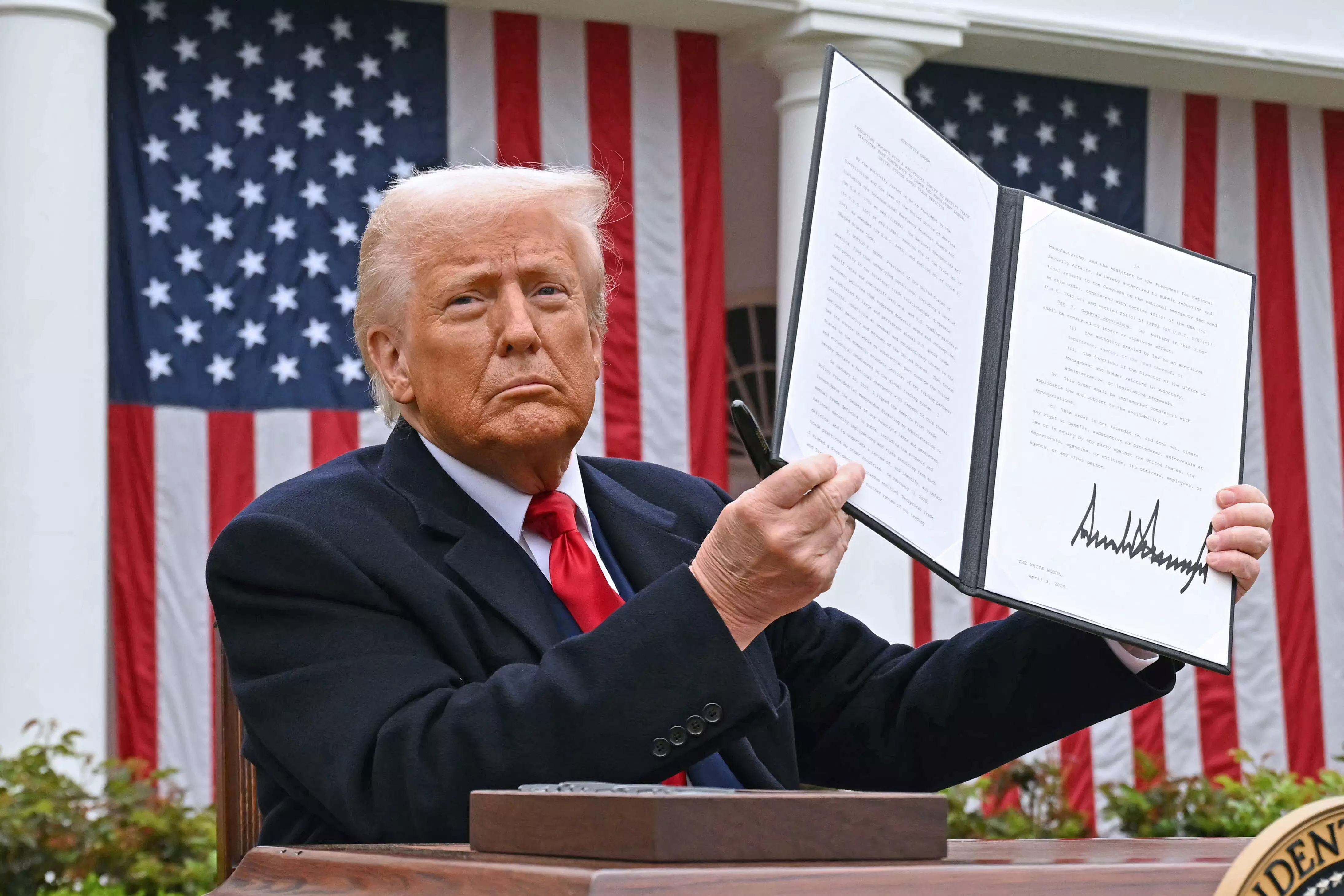
US President Donald Trump holds a signed executive order after delivering remarks on reciprocal tariffs during an event in the Rose Garden entitled "Make America Wealthy Again" at the White House in Washington, DC, on April 2, 2025. (AFP Photo, File)
Chennai: It has been a year since the US President announced the ‘Liberation Day’ tariffs and sent the global economies on a roller-coaster ride till they got some reprieve from the US Supreme Court. The talks for a trade deal with India, which started even before the announcement of the tariffs, still hangs in a limbo.
The first shock from Donald Trump came on April 2, 2025, when he announced the reciprocal tariffs on its trade partners. He imposed a 10 per cent tariff on all countries and levied additional tariffs on most of them. India was charged with a total of 26 per cent tariff over the existing most-favoured nation duties on different goods.
By April 9, he suspended the additional tariffs for 90 days, bringing India’s effective tariff burden down to 10 per cent along with MFN tariffs. This was a pause meant for the partners to enter trade deals, terms of which were dictated by the US. Trump had boasted that 90 bilateral trade agreements would be signed within the 90-day window.
The trade talks got a boost when US Vice President JD Vance visited India to formalise the structure of talks. Despite multiple rounds, differences regarding dairy, agriculture, patents and procurement persisted.
On July 31, the US once again announced the new reciprocal tariffs coming to effect by August 7 and imposed a 25 per cent tariff on Indian goods.
By August 7, reciprocal tariffs came into force and by August-end, the US imposed punitive tariffs of another 25 per cent on India alone for buying Russian oil. Both these tariffs continued till February 2 when Trump announced that the trade deal has been finalised. It agreed to reduce tariffs on Indian goods to 18 per cent from 25 per and scrap punitive tariffs of 25 per cent.
In return, India committed to lowering tariffs on a wide range of US goods, and to significantly increase purchases of American energy, technology and other commodities, potentially exceeding $500 billion. The interim framework on the trade deal also sought to remove non-tariff barriers on agriculture products and address digital rules.
However, in the same month, the US Supreme Court struck down reciprocal and punitive tariffs imposed by Trump. However, he imposed 10 per cent and later 15 per cent duties on most of the products from all the countries. The trade deal with India still hangs in a limbo, while several economies, including the European Union, Japan, South Korea, Bangladesh and Malaysia entered deals during the interim period.
“The “Liberation Day” tariffs violated World Trade Organization rules, yet no country opposed them—showing that global trade rules are no longer effective in checking even the most blatant violations. The world should thank the U.S. Supreme Court for stepping in and striking them down,” said GTRI. Malaysia has already walked away from the trade deal with the US and India should also reassess its position.
( Source : Deccan Chronicle )

Next Story