A Group of WTO Members Adopt E-Com Agreement, Extension of Moratorium

66 nations back e-commerce pact, extend duty-free moratorium for five years
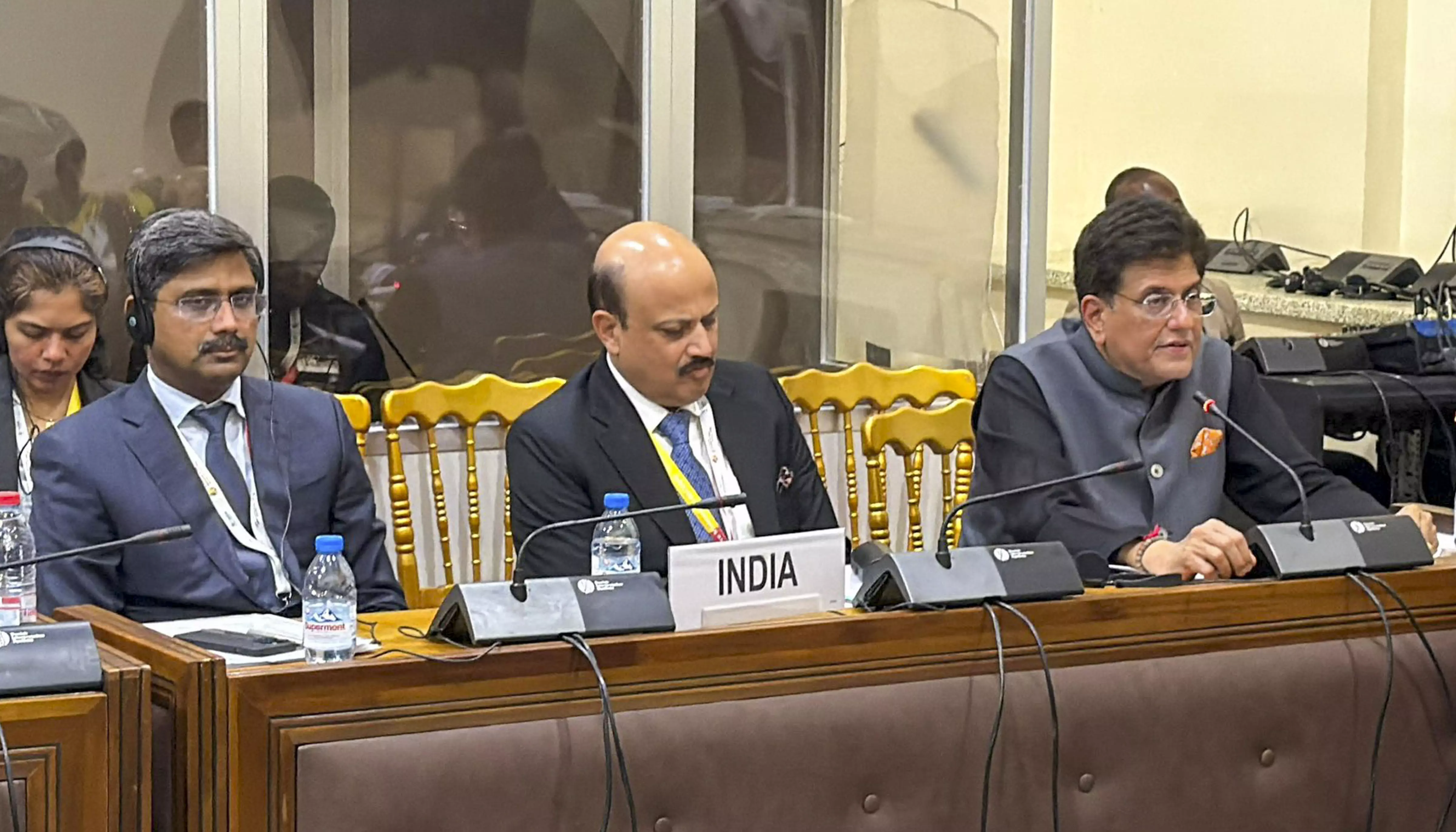
Chennai: Indicating increasing plurilateral agreements among World Trade Organisation members, 66 members of WTO adopted a pathway to implement the world's first baseline set of global digital trade rules. As a part of this agreement, moratorium on imposing customs duties on e-commerce will continue for five more years, despite countries including India seeking lifting of the moratorium at the World Trade Organisation’s Ministerial Conference.
“The E-Commerce Agreement adopted at the conference prohibits the imposition of customs duties on electronic transmissions between a person of one party and a person of another party. This provides businesses the certainty to trade openly in the new global digital economy. Parties may review the Article after five years and consider whether any amendments are appropriate,” WTO said in its release on e-commerce agreements entered by 66 countries. However, WTO on Sunday evening had not released any release on a moratorium decision based on the consensus of all members.
After several extensions, the moratorium was due to expire this month. In 1998 when the moratorium decision was taken, the digital economy was at its earliest inception. At that time, the world wide web was only starting to be used by the general public. There was no clarity regarding how the economy would be transformed by digital advancements.
However, the digital economy has grown rapidly and has given rise to multinational giants like Amazon, Google, Netflix and Microsoft. New technologies like 3D printing, Big Data Analytics, and Artificial Intelligence are transforming the global economy. Three economies – the US, China and the EU - account for 80 per cent of the cross-border e-commerce in the world.
The loss of the use of tariffs for the digitized goods due to the moratorium results in potential tariff revenue loss of $10 billion per annum to developing countries. Tariff revenue loss to WTO LDCs is estimated at $1.5 billion, while for Sub-Saharan African countries the loss is around US$ 2.6 billion, India’s Commerce Ministry said in its joint submission. India and the US had maintained opposing views on the subject, with the US pushing for a permanent moratorium.
Among the 166 members, 66 adopted a clear and immediate pathway to implement the world's first baseline set of global digital trade rules. WTO has been witnessing a trend of small groups of members making agreements without a broad-based consensus.
According to WTO, if implemented by all WTO Members, the e-commerce agreement would boost global GDP by $8.7 trillion by 2040, with low- and lower middle-income economies projected to reap the most benefits.
The E-Commerce Agreement also locks in a commitment from parties to put in place legal frameworks that provide for the protection of personal data to increase business and consumer trust and confidence in digital trade. It also encourages compatibility between different data protection regimes to ensure consistently high levels of protection across borders.
With digital transactions accounting for over 60 per cent of global GDP, there is an urgent need to implement global digital trade rules that allow businesses and consumers to seize the benefits of digital trade. WTO and OECD research shows that not implementing the E-Commerce Agreement leaves around US $159 billion worth of trade on the table every year.
The E-Commerce Agreement will significantly bolster stability and predictability for businesses and consumers around the world. It will unlock new opportunities for micro, small, and medium enterprises by reducing regulatory barriers and enhancing access to global markets, WTO said.
