Aabhas Maldahiyar’s Babur:The Quest for Hindustan is Out

It brings to light revealing findings on the destruction of the Ram Mandir, questions the idealized narrative of Ganga-Jamuni Tehzeeb, and uncovers the unequal nature of interfaith marriages under Timurid rule
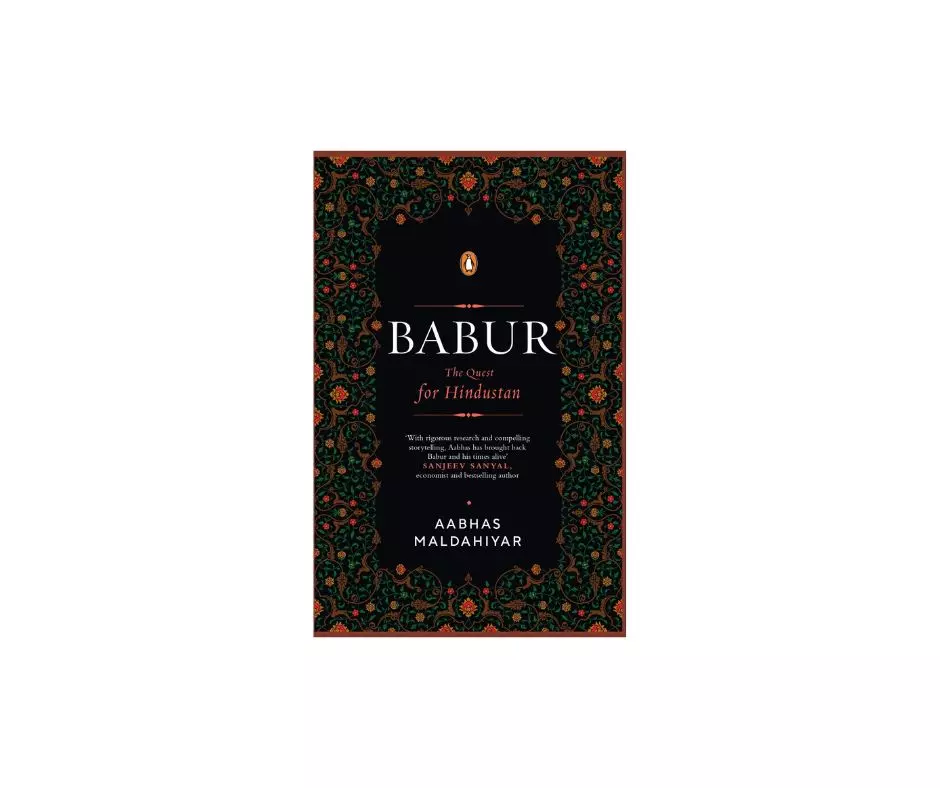
Following the success of his first book, Babur: The Chessboard King, celebrated author and historian Aabhas Maldahiyar returns with the highly anticipated sequel, Babur: The Quest for Hindustan (Penguin India) — a meticulously researched, powerfully written exploration of one of the most complex figures in South Asian history.
Drawing from the original Persian manuscript of the Baburnama, presents a clear, thoughtful, and deeply personal portrait of Babur — not just as the founder of the Mughal Empire, but as a man caught between different worlds. It brings to light revealing findings on the destruction of the Ram Mandir, questions the idealized narrative of Ganga-Jamuni Tehzeeb, and uncovers the unequal nature of interfaith marriages under Timurid rule.
At its heart, the book delves into Babur’s inner struggles, his poetic and military strengths, and his search for belonging in a foreign land. It also reveals how his conquests led to the transfer of wealth from Hindustan to Central Asia, reshaping the region’s economy and culture. Clear, insightful, and well-researched, Babur: The Quest for Hindustan is essential reading for anyone interested in understanding the true legacy of Babur and the foundations of the Mughal Empire.
BOOK EXCERPT
In Bābur I, I termed it Tīmūrid Gūrkāniya, not Mughal—a misnomer born of later confusion. The term ‘Mughal’ derives from ‘Mongol,’ a label applied by Persians to denote Bābur’s distant Chinggisid ancestry through his mother, but Bābur himself never used it, identifying instead as a Tīmūrid.
I introduce the Humāyūn–Karnavati rakhi narrative here—not to delve deeply, as I reserve that for future works—but to cast a discerning eye on its origins and to foreshadow the distortions that envelop Bābur’s successors, distortions that echo the Ganga-Jamuni Tehzeeb myth my Holi poem challenges.
Consider the tale:
Rānī Karnavati, Chittor’s widow in 942 AH (AD 1535), sends a Rakhi to Humāyūn, seeking aid against Bahādur Shāh of Gujarat. Humāyūn, then far afield on his Bengal expedition, rode hard to answer the silken plea of his so-called ‘sister,’ the Rakhi tied in hope across the cruel expanse of distance. But fate, indifferent to
royal vows and bound by its own ruthless tempo, moved faster than the emperor’s cavalry. By the time he reached the embers of Chittor, the fortress had already drowned in its own flames. Rānī Karnavatī, along with the proud daughters and wives of Mewār, had embraced Jauhar—leaving behind only ashes and echoes in the stone corridors.
Where does this story appear from? James Tod recounts this in Annals and Antiquities of Rajasthan:
When her Amazonian sister, the Rāṭhōr queen, was slain, the mother of the infant prince took a surer method to shield him in demanding the fulfilment of the pledge given by Humāyūn when she sent the Rākhi to that monarch.
I regard this with measured scepticism—a colonial fabrication, nothing more. My Bāburnāma concludes in 937 AH and no rakhi is mentioned. The truth surely is far from the reality. Let us look at the truth based on historical records.
Gulbadan Begum’s Humāyūnnāma is completely silent about the matter.
As the storm of Bahādur Shāh’s ambition swept through the heart of Rājputāna, Rānī Karnāvatī stood like the last flickering lamp in a fortress drowning in shadow. When her appeals to Humāyūn received no answer beyond his distant march to Gwalior and a languid two month stay there, hope withered against the walls of Chittor. Left with no shield but her own dignity, the queen was forced to barter peace on humiliating terms—ceding the conquered districts of Mālwā, surrendering the jewelled crown and belt once stripped from Maḥmūd II, along with ten elephants, a hundred horses, and five crores of tankas. Bahādur withdrew—for a time.
But peace, like a desert mirage, quickly dissolved. In 1533, Bahādur turned north once more, capturing Ajmer and Nāgore, driving a dagger into the belly of Rājputāna, splitting it clean through. Then, in November of 1534, the second siege of Chittor began.
The sun had barely risen on Mewār’s hope when Bahādur’s forces again gathered at its gates. The Rana’s vassals deserted him like rats f leeing a sinking ship, and the Rana himself stood silent in defeat. It was left to the iron will of Rānī Karnāvatī, a mother forged of Rajput steel, to rally the kingdom’s scattered pride. Her fiery appeal roused the Sisodias from across the hills and valleys. The unpopular Vikramāditya and the infant Udai Singh were spirited away to safety in Boondi, while Rawat Bāgh Singh of Devlia-Pratāpgarh took command of the defence.
But the fate of Chittor had already been inked in blood. Rūmī Khān, Bahādur’s master of artillery, scaled the heights south-west of the fort and unleashed his cannons like thunderbolts hurled by a wrathful god. By early March of 1535, twenty-two yards of Chittor’s ancient defences lay in ruin.
Rajput swords flashed like lightning against a drowning sky, but it was a fight of mortals against fate. At Bhairava Pol, Bāgh Singh fell beside his nephew Rawat Narbad. At Hanumān Pol and Gaṇesh Pol, Solanki Bhairava Dās and Rājrānd Sajja of Dailwāra fought to the last breath before falling to the flood of enemies. The list of martyrs read like a lament etched in stone—Rawats Dūdā, Sattā, Kammā, the Chandāwats, Mālā of Songarh, Rawat Devī Dās, Rawat Nandā, and Dodiyā Bhānd—all swallowed by the fires of their own courage.
And as the citadel fell, the women of Chittor lit the final flames. Draped in crimson, their bangles shattered and their vows unbroken, they stepped into the roaring pyres. The Jauhar of 1535 consumed not just flesh, but the very soul of Mewār’s defiance. Rajput chronicles mourn the loss of 32,000 warriors, and countless women who chose f ire over dishonour.
On 8 March 1535 CE (3rd Ramazān 941 AH), the lion’s den of Chittor fell silent. Bahādur Shāh, with the taste of pyrrhic victory on his tongue, denied Rūmī Khān the reward he had promised and instead gifted the charred remains of Chittor to Burhān-ul-Mulk Banbānī. Thus, even among the victors, bitterness festered, and the smoke of Chittor’s flames drifted far beyond its ruined gates—into legend, into lament, and into the immortal song of Rājputānā.
It becomes abundantly clear from the above account that Humāyūn was stationed at Gwalior during the critical hour when Bahādur Shāh vanquished Chittor, and remained there in a calculated stillness for two long months. Far from the romanticized tales of a brother rushing to defend his rakhi-bound honour, the historical record speaks of imperial indifference cloaked in political prudence.
Even more telling is the preserved correspondence between Humāyūn and Bahādur Shāh, where the veil of hesitation is lifted entirely. In these letters, Humāyūn makes no attempt to conceal his position—he expressly refrains from intervention, rationalizing his inaction on the grounds that Bahādur Shāh was engaged in a campaign against kāfirs. The emperor, guided less by the bonds of honour and more by the compass of religious expediency, chose not to cross swords with a fellow claimant of Islam’s standard.
Let us now examine these letters, which lay bare the realpolitik that triumphed over the much-celebrated ideals of chivalry and duty. Ferishta quotes Humayun writing to Bahadur Shah as below:
O thou the ravage of Chittor,
In what way wilt thou subdue infidels?
Knowest thou, that while employed at Chittoor?
A king cometh to subdue thee?
Ferishta further records Bahadur Shah’s reply which is as under:
I, who am the ravager of Chittor,
Will conquer the idolaters by valour;
And he who dares not succour Chittor.
Shall see in what way he himself shall be conquered. Following his calculated reply to Humāyūn, Bahādur Shāh convened a council of war. There, amidst the clang of conflicting ambitions, the dominant view emerged: since Humāyūn had gathered his full force, it would be wiser to abandon the siege and march directly against him—deliver a swift and decisive blow that might cripple Tīmūrid pretensions in Hindūstān.
Yet, among the more astute courtiers, a colder logic prevailed. They argued that Humāyūn, shackled by his religious scruples, would not dare raise his sword against a fellow Muslim monarch engaged in what was, by his own creed, a righteous campaign against idolaters. Why risk the uncertain thunder of battle when the slow grind of siege engines already echoed against the walls of Chittor?
Bahādur Shāh, embraced this latter counsel. The siege was pressed with renewed ferocity, and before long, the defiant ramparts of Chittor crumbled. All the while, Humāyūn—the would-be saviour, the emperor of delayed resolves—idled away precious days amidst the gardens of Sārangpur, caught between the silk threads of hesitation and the iron chains of religious politics.
Abdul Qadir Badayuni too tells us that Humāyūn hesitated to intervene precisely because Bahādur Shāh was waging war against kāfirs—infidels in the parlance of the time. This candid admission strips away the romantic veneers later draped over the episode. It reveals that Humāyūn’s decision was not delayed heroism, but a deliberate calculation, choosing the bonds of shared faith over the calls of honour and alliance.
