China subtly throws shade at the NEET paper leak after a trouble-free Gaokao exam.
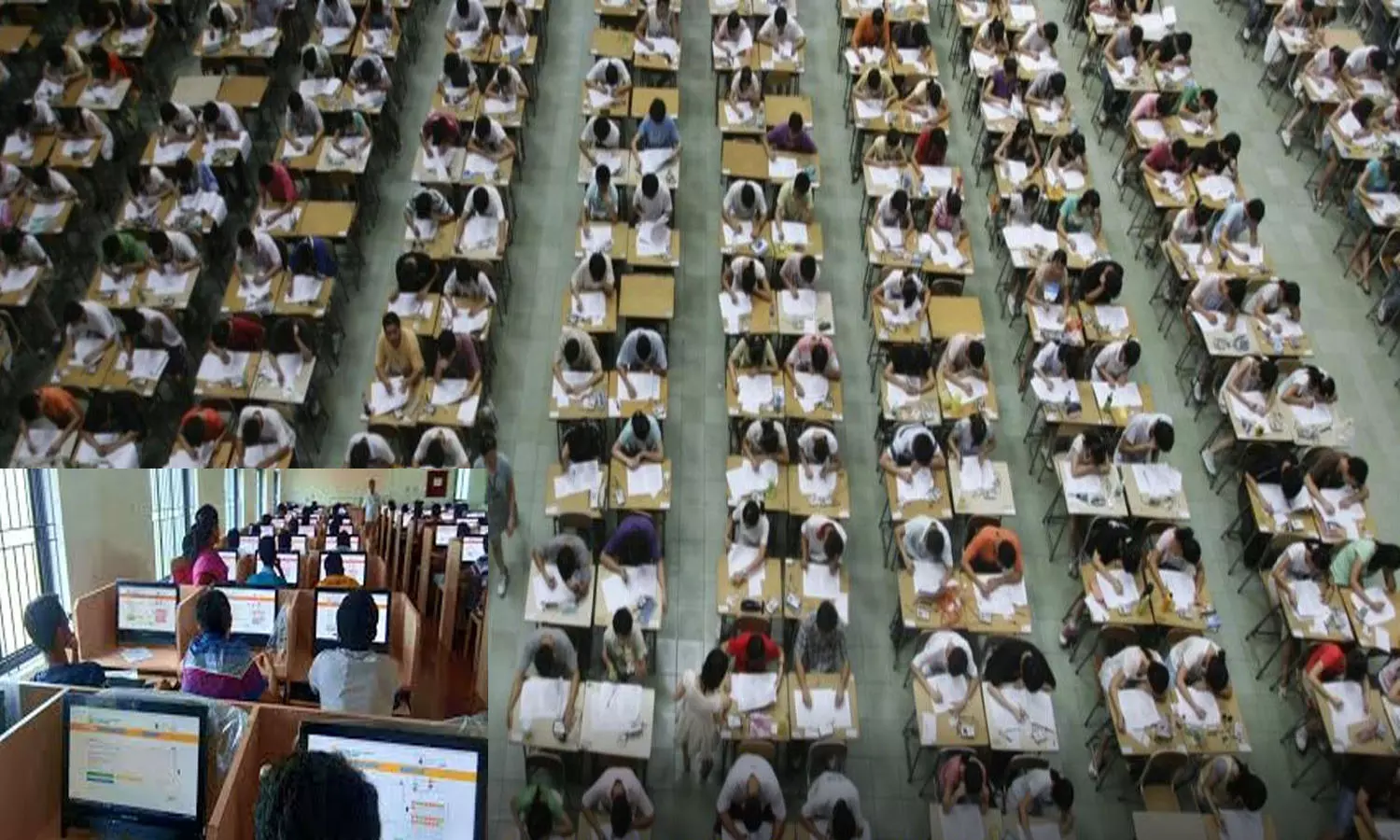
The public’s indignation over the NEET paper leak has put China’s Gaokao examination into the limelight lately. Amassing over six times as many candidates as NEET, Gaokao, which is also a pen-and-paper test, has been acclaimed as a stringent and well-implemented examination.
With 13.3 million students taking Gaokao in 2025 against 2.3 million who attempted NEET in 2026, China boasts “military-grade security” in logistics and printing of question papers. Factories are shut down, public celebrations are limited to eradicate disturbance, traffic is regulated, special transport is provided, and police escort students to their centres.
China has been hailed for its rigorous process of conducting the high-stakes entrance exam that decides students’ admission to universities and the courses they may be eligible for. “China's Gaokao — the world's largest exam & India's equivalent of JEE/NEET rolled into one — was conducted smoothly for 1.3 crore students in just 2 days.
Factories paused. Roads quieted. The entire nation rallied for its students”, wrote Chinese Embassy spokesperson Yu Jing on X. This has sparked a disputable conversation on X, with some calling for India to learn from China, while others declared these to be false claims from China.
Data released in 2024 by the Supreme People’s Court of China has resurfaced, pointing to over 11,000 people who faced penalties for partaking in cheating, selling question papers and impersonation. Five major cases of cheating transpired, including one where a teacher was sentenced to four years in prison for organizing a cheating ring in the 2020 Gaokao. To this day, thousands of students are penalized for cheating in Gaokao each year.
Cheating and paper leaks occur everywhere in the world, but what distinguishes a strong system from a broken one is how firmly it punishes those who undermine it. In China and several other countries, examination fraud is termed a serious attack on public institutions and prosecuted with urgency. In India, outrage often peaks when a scandal breaks and declines when the news cycle moves on. In the NEET scandal of 2024, the perpetrator was granted default bail due to the inability to file a charge sheet against him within 90 days. This insinuates a deplorable culture where the fear of punishment is swept under the rug by the temptation of corruption.
A society can never truly claim to reward merit when the system allows resorting to money, influence and criminal networks as an equally moral substitute for hard work. The greatest vulnerability of a paper leak lies not in the leak itself but in the gradual destruction of faith in fairness.
All lies on the line with the 2.28 million students who applied for the ReNEET being held on June 21. This will be a make-or-break situation for the NTA and a dealbreaker for the final ounce of the nation’s trust in the education system.
This article is written by Hridya Lakkadi, a student of CBIT, interning with Deccan Chronicle.

